
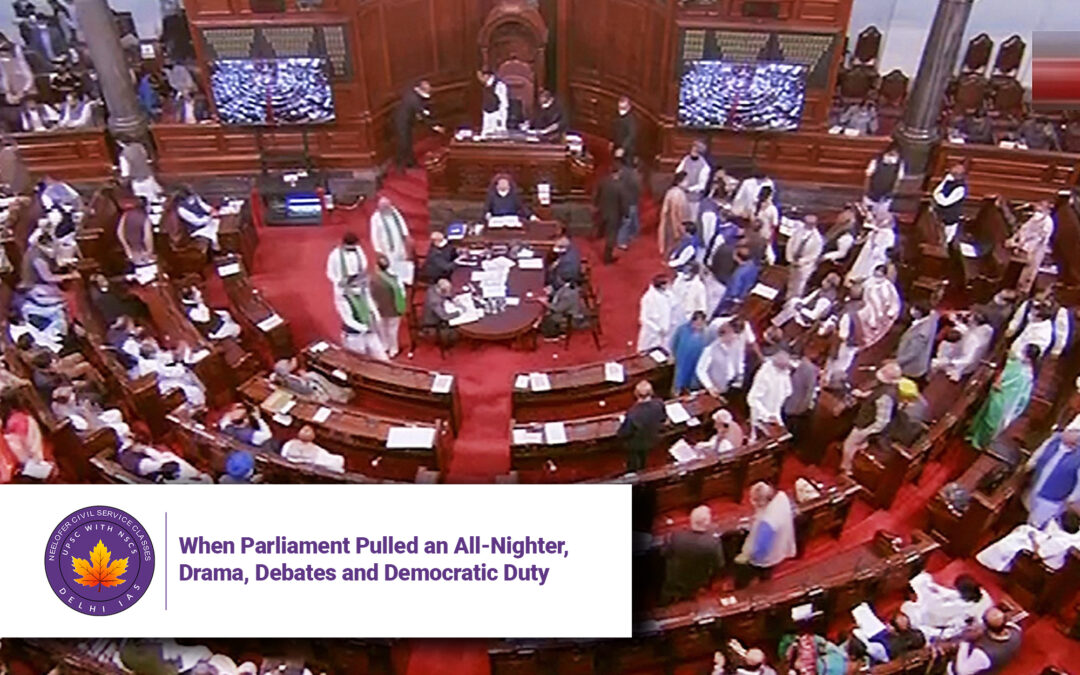
When Parliament Pulled an All-Nighter, Drama, Debates and Democratic Duty
Why in News?
The recently concluded Budget Session of the Indian Parliament made history by continuing through the night, with both Houses conducting proceedings until just before dawn. This rare all-night session combined urgency, drama, and significant legislative activity, offering a glimpse into the dynamic nature of India’s democracy. 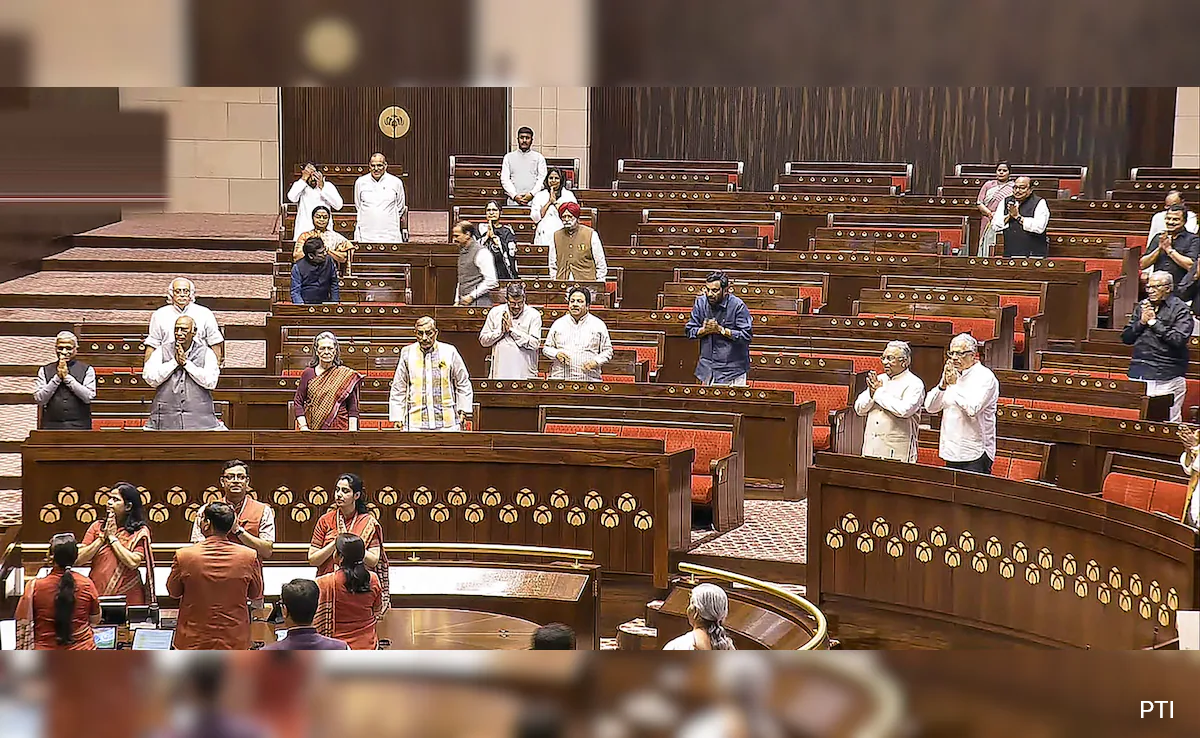)
Introduction
In an event that captured attention across political and media circles, the Indian Parliament sat through the night, with the Lok Sabha recording 118% productivity and the Rajya Sabha reaching an impressive 119%. While not the first overnight sitting in history, this session stood out for the energy, urgency, and high drama that unfolded throughout.
Key Highlights and Observations
1. Unprecedented Productivity and Pacing
With over 22 members scheduled to speak even as late as 8:30 p.m., the session stretched into the early morning hours. Despite the length, MPs maintained a sense of urgency, quickly working through their talking points, often asking the Chair for extra minutes to conclude with impactful statements.
2. Intensity and Flair in Parliamentary Debates
Far from dull, the session was laced with passionate monologues, pointed insults, and theatrical moments. A notable example was a woman MP who, while advocating for the Waqf Bill, mistakenly called Victor Hugo a British author—adding to the night’s curious moments. Another minister known for speaking in rhymes added a poetic twist to legislative procedure.
3. Challenges for Parliamentary Reporters
The session posed unique difficulties for reporters. Journalists like the author of the piece had to juggle staying alert to catch key moments while racing against print deadlines. Missing a line or misunderstanding a speech could mean missing critical political nuance.
4. Clause-by-Clause Legislative Work at Night
The Waqf Bill, debated intensely during the night, eventually passed around 2:30 a.m. after clause-by-clause voting. The Chair’s instructions like “Those in favour may say ‘aye’…” and “Those against may say ‘no’…” echoed deep into the night, highlighting the rigor of legislative procedure even at odd hours.
5. Historical Parallels and Press Access
The article draws parallels with the British Parliament, where debates weren’t fully public until the 19th century. In India, while access to parliamentary proceedings is robust in theory, physical restrictions—like red lines on the floor of the new Parliament—hinder full journalist movement. Still, reporters persist in their commitment to transparent democracy.
Conclusion
The all-night session of Parliament wasn’t just a procedural oddity; it was a vibrant display of India’s democratic spirit. Despite the logistical challenges and the occasional fumble, it reaffirmed the dedication of elected representatives to debate, legislate, and perform their duties—day or night. It also reminded us of the critical role of the press, working behind the scenes to document democracy in action.
Q&A Section
Q1. Why was the recent Budget Session of Parliament notable?
It was notable because both Houses of Parliament conducted an all-night session, concluding only at dawn. This rare instance saw exceptionally high productivity—118% in the Lok Sabha and 119% in the Rajya Sabha.
Q2. What were the challenges faced by parliamentary reporters during the session?
Reporters struggled to keep up with lengthy speeches while also racing to meet print deadlines. Missing key nuances or hearing repeated arguments risked either losing context or failing to capture important developments.
Q3. What moment stood out during the debate on the Waqf Bill?
A woman MP passionately defending the Waqf Bill referenced Victor Hugo, mistakenly calling him a British author. The minister responding in rhymes and the final passage of the Bill at 2:30 a.m. added to the night’s memorable drama.
Q4. How does this session reflect India’s parliamentary transparency compared to historical norms?
The article references British parliamentary history where full access to debates was delayed until the 20th century. In India, while reporters have formal access, practical limitations like restricted zones still impede full coverage.
Q5. What is the broader significance of such night-long parliamentary sessions?
They demonstrate the vibrancy and resilience of democratic processes, highlighting that even at odd hours, critical legislative functions can be carried out with urgency, passion, and accountability.

