
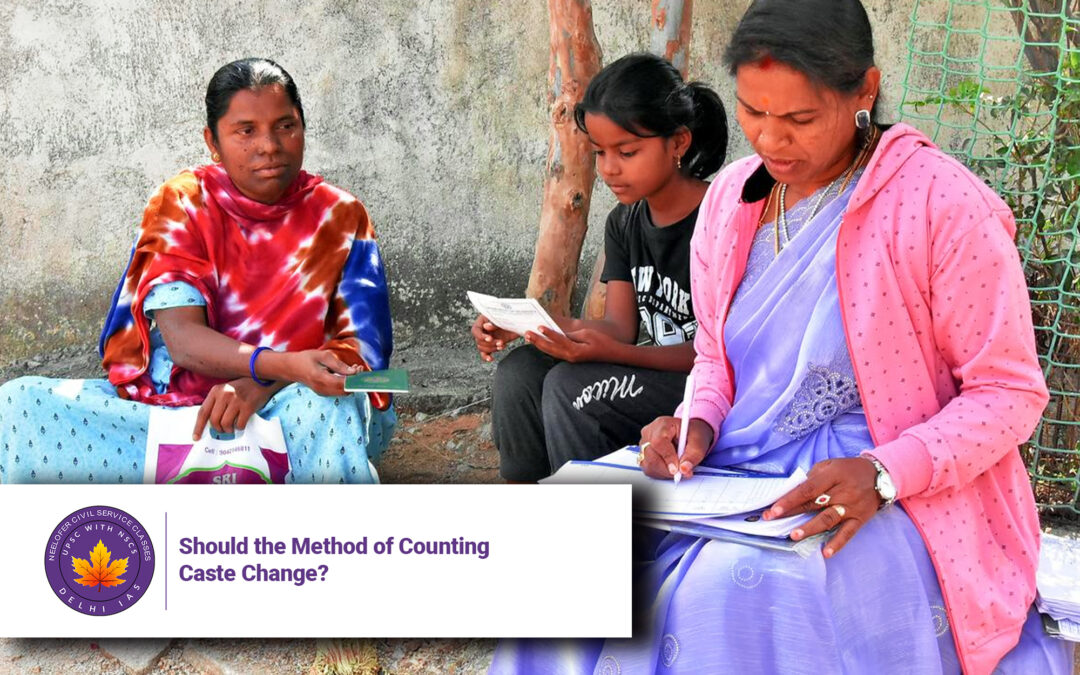
Should the Method of Counting Caste Change?
Why in News?
The Central Government has announced that the next Census would be held in 2024–25 and would also collect data on caste. As this marks a major change from past practice, serious questions are being raised about how caste data should be collected, who should be counted, and what changes the Census process needs to undergo. 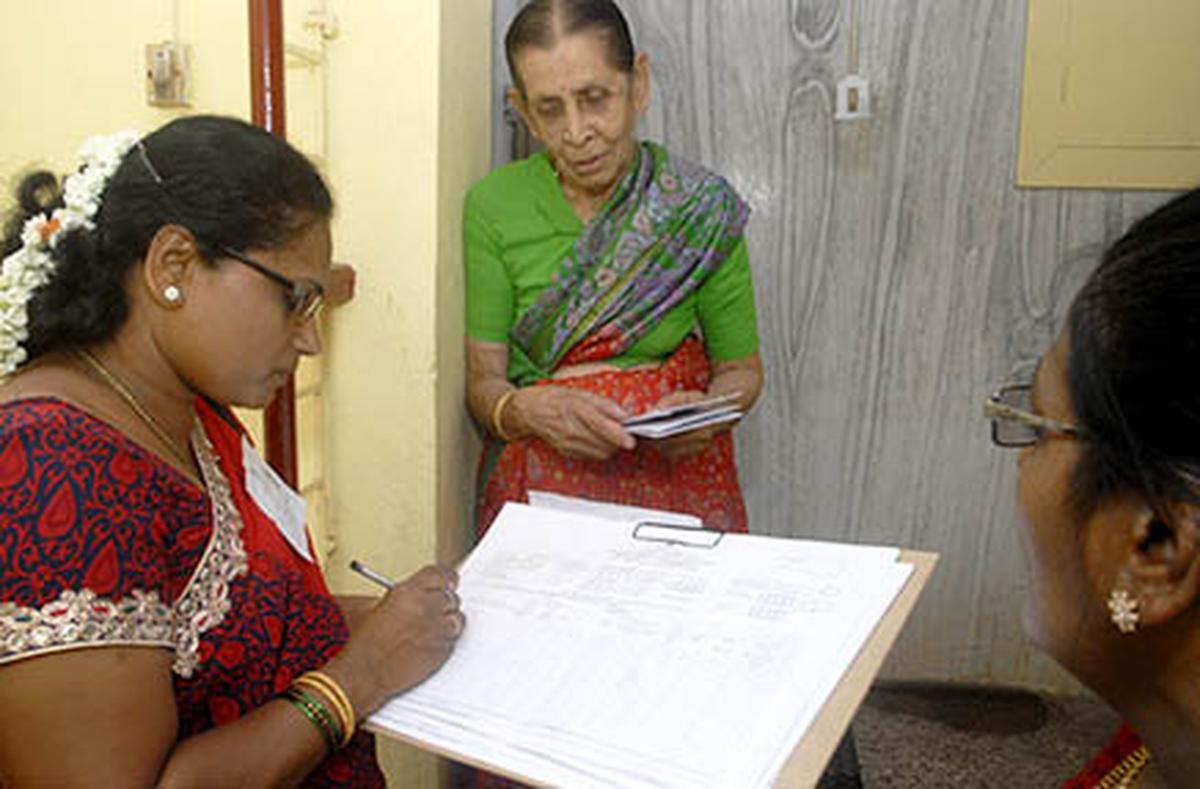
Introduction
The upcoming Census is expected to be conducted in two phases — the first phase covering house listing and housing data, and the second phase involving population enumeration. With the inclusion of caste enumeration, the focus now turns toward its methodology and utility, especially to ensure that the data collected can help marginalised communities gain better access to services and representation.
Key Issues and Institutional Concerns
Caste Enumeration Challenges
The idea of collecting caste data is not new. It was previously done during the colonial Census but later dropped due to political and logistical complexities. Even when attempted again during the 2011 Socio-Economic and Caste Census (SECC), the data was found to be unusable for policy due to errors and inconsistencies.
In its current format, the Census questionnaire may be ill-equipped to handle caste classification correctly. Individuals often respond based on perception, not official classification. Additionally, castes are dynamic and regionally varied — the same caste may be counted under different names or sub-categories.
Challenges with the Questionnaire and Structure
-
Overburdened Format: The existing household schedule includes over 30 questions. Adding new questions on caste may reduce data quality.
-
Complex Identity Issues: Individuals may identify differently in various regions or hesitate to share their caste due to stigma.
-
Data Utility vs. Privacy: Without proper anonymisation, caste data could reinforce social divisions.
-
Mismatch in Occupational Data: Linking caste with occupation may help analyse social inequality but must be done cautiously to avoid bias.
Challenges and the Way Forward
-
Data Accuracy: To make the data usable, the format must be revised. Enumerators must be trained, and caste classification should follow standardised norms.
-
Integration with Other Indicators: Combining caste with income, education, and occupation can help design inclusive policies.
-
Digitisation and Reform: Updating the Census process using digital tools can streamline data entry and analysis.
The best model might be similar to the National Family Health Survey (NFHS), where caste is collected but not overly centralised. Alternatively, caste enumeration could happen in targeted sample surveys rather than in the main Census.
Conclusion
As India aims to uplift its most marginalised citizens and close the development gap, reliable caste data could be a powerful tool — but only if collected and used with caution, accuracy, and dignity. Instead of sticking to legacy methods, a reimagined Census must strike a balance between comprehensive data collection and privacy protection.
Q&A Section
1. What are the two phases of the Census?
The first phase covers house listing and housing, and the second phase includes population enumeration.
2. Why is caste enumeration being included in the new Census?
The government believes caste data can help identify and uplift marginalised groups and bring them into the mainstream.
3. What problems have emerged in previous caste enumerations?
The 2011 SECC data was found to be inconsistent, with misreporting and classification errors making it unusable for policy purposes.
4. What reforms are recommended to improve caste data collection?
Reforms include redesigning the questionnaire, using digital tools, training enumerators, and possibly limiting caste data to sample surveys.
5. What is the ultimate aim of caste enumeration?
To bring socio-economic justice and targeted welfare by understanding the structure of disadvantage and providing evidence-based policy support.

