
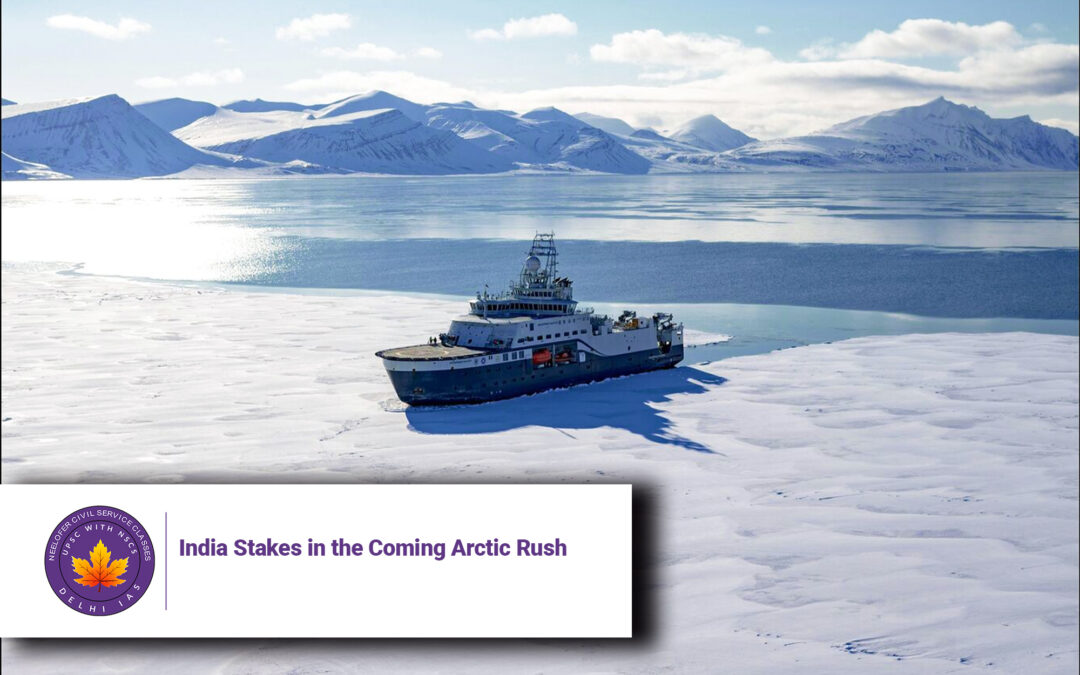
India Stakes in the Coming Arctic Rush
Why in News?
India must remain actively engaged in the Arctic region, which is rich in energy sources, minerals, and strategic shipping routes that will soon become accessible due to rapid Arctic ice melt and changing global geopolitics.
Introduction
In March, Rear Admiral Arun Prakash addressed a conference on the geopolitical future of the Arctic in New Delhi. His remarks underscored India’s need to maintain engagement with this evolving region.
As global warming rapidly transforms the Arctic, melting sea ice is opening new economic and strategic opportunities. Nations such as China and Russia are increasing their influence, and India must ensure its interests are protected.
Key Issues and Global Trends
1. The Shrinking Ice Cap
-
The Arctic has been warming four times faster than the rest of the planet.
-
The 2023 summer ice extent fell to its sixth-lowest level on record.
-
This rapid melting is making shipping lanes such as the Northern Sea Route (NSR) viable for longer periods each year.
2. Energy and Mineral Riches
-
The Arctic hosts 13% of the world’s undiscovered oil and 30% of undiscovered natural gas.
-
Rich mineral deposits (nickel, rare earths, and others) make the region a strategic resource frontier.
-
Russia is already exploiting these resources, while China has staked claims under its Polar Silk Road initiative.
3. Military and Geopolitical Competition
-
The Arctic Council has seen divisions, particularly after Russia’s invasion of Ukraine.
-
NATO’s Arctic presence has increased.
-
China, though geographically distant, is building polar research capabilities and infrastructure in the Arctic.
-
Russia has expanded its nuclear submarine patrols under the ice.
India’s Interests and Engagement
1. Research and Scientific Presence
-
India operates the Himadri Research Station in Svalbard, Norway.
-
The country participates in Arctic research programs focusing on climate change, glaciology, and ecosystems.
2. Shipping and Trade Opportunities
-
Northern Sea Route (NSR) could cut shipping times between Europe and Asia by up to 40% compared to traditional routes via the Suez Canal.
-
India’s growing merchant fleet and interest in energy imports make access to these lanes economically significant.
3. Strategic Engagement
-
India must balance ties with both Russia and Western nations in the Arctic.
-
Active participation in scientific forums and international dialogues ensures India’s voice is heard.
-
India must also protect its stake in Arctic governance, especially as geopolitical competition intensifies.
Challenges and the Way Forward
1. Navigating Great Power Rivalries
-
The Arctic is becoming a theatre of great power rivalry.
-
India must avoid being sidelined and should actively engage diplomatically.
2. Technological Readiness
-
India needs to build expertise in Arctic shipping operations, ice-class vessels, and polar technologies.
3. Environmental Stewardship
-
As a responsible stakeholder, India must promote sustainable practices and advocate for environmental protection in the Arctic.
Conclusion
The Arctic Rush presents both opportunities and challenges.
India must stay invested in the region through scientific, commercial, and diplomatic channels.
Engagement today will ensure that India remains a respected voice and beneficiary in the Arctic’s evolving future.
5 Questions & Answers
Q1: Why is the Arctic region becoming geopolitically important?
A: Due to rapid ice melt, new shipping routes, energy sources, and minerals are becoming accessible.
Q2: What is the Northern Sea Route (NSR) and why does it matter to India?
A: The NSR is a shipping lane through the Arctic that could cut travel time between Europe and Asia by up to 40%.
Q3: What is India’s current presence in the Arctic?
A: India operates the Himadri Research Station in Svalbard and participates in scientific research.
Q4: Which countries are most active in the Arctic?
A: Russia and China are expanding their economic and military activities, while NATO is increasing its Arctic presence.
Q5: How should India strengthen its Arctic strategy?
A: By enhancing scientific engagement, investing in polar technology, promoting sustainability, and maintaining a balanced diplomatic posture.

