
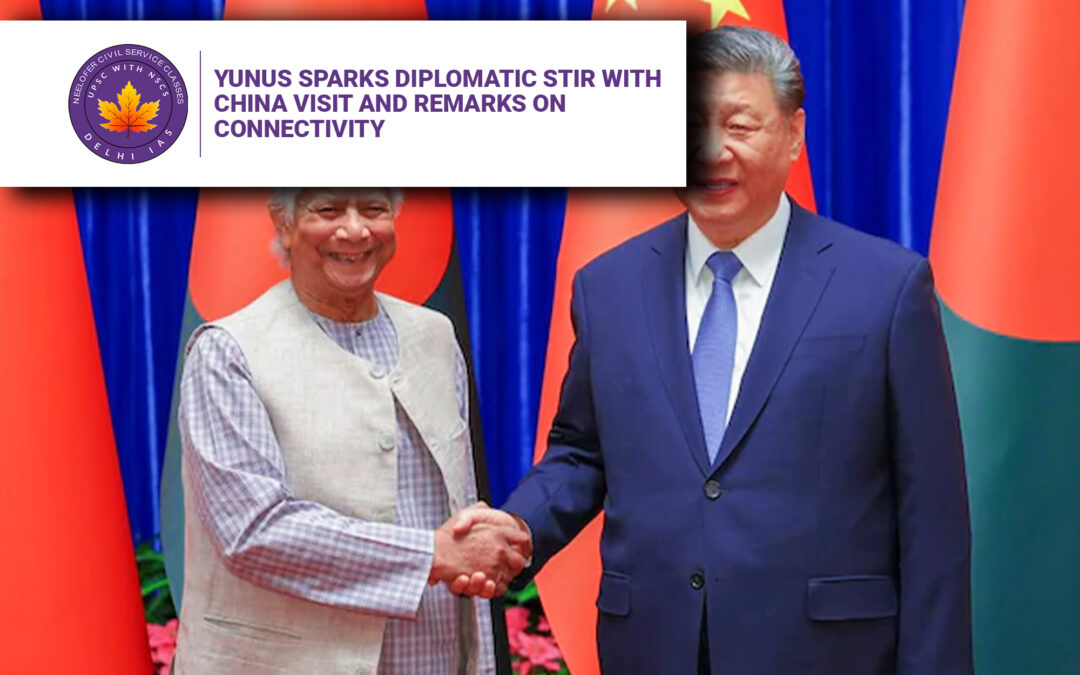
Yunus Sparks Diplomatic Stir With China Visit and Remarks on Connectivity
Why in News?
Bangladesh’s Chief Adviser Muhammad Yunus made controversial remarks during his visit to China for the Boao Forum for Asia, triggering strong reactions in India. His comments about regional connectivity, particularly regarding India’s northeast, are being seen as diplomatically insensitive and possibly signaling a shift in Bangladesh’s foreign policy orientation. 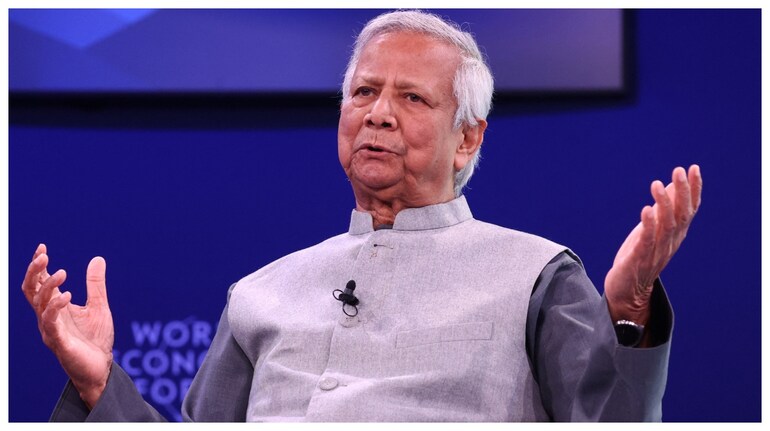
Introduction
Muhammad Yunus’s trip to China marks his first international visit since taking office following the ouster of Sheikh Hasina in August. While attending a roundtable event, Yunus highlighted the lack of connectivity in the region and referred to India’s “Seven Sisters” (northeastern states) as “landlocked.” This comment overlooked India’s coastal access and seemed to elevate Bangladesh’s position as the “guardian of ocean access.” The implications of these statements have led to serious diplomatic friction.
Key Issues
Yunus’s remarks, which he shared on social media, went further by urging China to view India, Bangladesh, Bhutan, and Nepal as extensions of the Chinese economy, portraying them as markets and production hubs. This suggestion has raised alarms in India, especially in the context of China’s expanding influence in South Asia.
Additionally, India has ongoing concerns with the Yunus government over:
-
The treatment of minorities in Bangladesh.
-
Dhaka’s repeated calls for India to repatriate Sheikh Hasina.
In this environment, Yunus’s visit to China—without an invitation from New Delhi—was seen by many in India as a diplomatic snub.
Controversy Over Timing and Platform
Political leaders in India responded strongly:
-
Assam Chief Minister Himanta Biswa Sarma labeled Yunus’s comments as “offensive and strongly condemnable.”
-
Many believe his statements were an attempt to draw attention to India’s strategic vulnerability via the “Chicken’s Neck” corridor—the narrow Siliguri stretch that connects the northeast to the rest of India.
Critics argue that Yunus’s remarks showed a lack of sensitivity, especially in a complex geopolitical region where China’s growing dominance is closely watched. His comments, though possibly aimed at promoting economic integration, came across as endorsing Chinese hegemony, raising questions about Dhaka’s foreign policy direction.
Alternative Platform: BIMSTEC
Observers note that a better platform for Yunus to discuss regional connectivity would have been the upcoming BIMSTEC Summit in Thailand, where Indian Prime Minister Narendra Modi and other South and Southeast Asian leaders will be present. Discussions there could have had greater legitimacy and balance, and might have avoided diplomatic tensions.
A Hope for Re-engagement
Despite the tensions, diplomatic backchannels remain open:
-
Yunus received two letters from India this week: one from President Droupadi Murmu extending Eid-ul-Fitr greetings, and another from PM Narendra Modi on Bangladesh’s Independence Day.
-
Though no official meeting has been announced, it’s hoped that both sides will engage informally during the BIMSTEC summit in Bangkok to ease current tensions and promote a more constructive dialogue.
Conclusion
Yunus’s comments, though possibly aimed at advocating regional economic connectivity, backfired due to poor timing, choice of forum, and perceived bias. As the region navigates sensitive diplomatic terrain, such remarks highlight the importance of context, clarity, and cooperation in international diplomacy. Moving forward, India and Bangladesh must focus on mending ties and preserving the spirit of neighborhood-first diplomacy.
5 Q&A: Decoding the Yunus Controversy
Q1. Why did Muhammad Yunus’s remarks cause controversy?
His comments described India’s northeast as “landlocked” and promoted viewing South Asian countries as part of China’s economic system, raising concerns about regional sovereignty and China’s influence.
Q2. Why was India particularly sensitive to his comments?
India saw the remarks as undermining its strategic position, especially through the mention of the “Chicken’s Neck”—a known vulnerability in India’s northeast corridor.
Q3. Was this Yunus’s first trip to China?
Yes, it was his first official visit to China since taking office in August after Sheikh Hasina’s removal.
Q4. What was India’s official reaction?
India’s Ministry of External Affairs did not comment officially, but political leaders like Assam CM Himanta Biswa Sarma called the remarks “offensive and condemnable.”
Q5. Is there hope for diplomatic recovery?
Yes, letters from India’s President and Prime Minister suggest that ties are still being maintained, and both nations may engage during the BIMSTEC summit in Bangkok.
