
Who Will Apologise to the Himalayans?
Recently, Norway’s Parliament issued a formal apology for its assimilation policies targeting the Sami, Kven, and Forest Finn peoples. These policies, known as Norwegianisation, were implemented between the 1850s and 1960s to suppress indigenous languages and cultures. Alongside the apology, the government proposed measures to address ongoing discrimination, such as protecting indigenous languages and monitoring inclusion efforts starting in 2027.
Although Norway has repealed discriminatory laws and established symbolic rights, such as a Sami Parliament, challenges persist. Sami languages remain endangered, and indigenous groups face inequities in healthcare, education, and land rights. 
Nordic and Himalayan Parallels
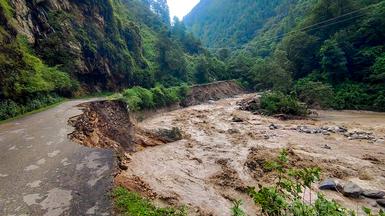
The experiences of Nordic and Himalayan communities share some parallels. The Himalayan region spans 2,500 kilometres from Afghanistan to northeast India and contains the world’s largest ice reserves after the two poles. Like the Nordics, Himalayan communities face climate-induced disasters and centuries of resource exploitation.
The region is home to 52 million people from various tribes, clans, ethnicities, and religions. These include the Gaddis and Kinnauras in Himachal Pradesh; Lepchas, Bhutiyas, and Mons in Sikkim and Ladakh; and diverse groups in Arunachal Pradesh, such as the Abor, Aka, Apatani, and Mishmi. The Khas, Kalash, and other ethnic groups span Afghanistan, Pakistan, and Nepal. These communities have faced waves of assimilation through colonialism, post-independence nation-building, and neoliberal economic policies.
During British colonial rule, trade and forest laws impacted the Himalayas. Communities were forced into accepting colonial trade terms involving goods such as tea, gold, silk, and opium. In some regions, trade blockades devastated local economies. According to A.S.R. Foreign proceedings (1881), “An interesting result of the blockade of 1874, as reported by Colonel Graham, revealed that cultural operations of the hill people were suspended because they could not procure iron from the plains to manufacture dao jhooms and marriage stops as the supply of silk cloth was blocked.”
Likewise, in Himachal Pradesh and Uttarakhand, forest laws were enacted to ensure a regular supply of timber for laying railway lines in India. An article in Prehistory of Community Forestry in India underlines that “between 1853 and 1910 more than eighty thousand kilometres of track were laid in the subcontinent. Large chunks of forest were destroyed to meet the demand for railway sleepers. The sal forests of Garhwal and Kumaun, for example, were felled in even to desolation.”
After India’s independence, Prime Minister Jawaharlal Nehru advocated for preserving tribal ways of life. Mr. Nehru pointed out: “…I am not at all sure which is the better way of living, the tribal or our own. In some respects, I am quite certain theirs is better. Therefore, it is grossly presumptuous on our part to approach them with an air of superiority, or to tell them what to do or not to do. There is no point in trying to make them a second-rate copy of ourselves.”
This humanistic approach influenced policies for about 15 years. However, by the 5th and 6th Five-Year Plans, rapid resource exploitation in tribal regions began to disrupt local ecosystems and cultures.
The 1990s marked a significant shift in Himalayan governance. Unlike other Indian states, which had some industrial base, Himalayan states emerged due to geographical and multi-ethnic factors. These states were pressured to generate their own revenue. Tourism and hydropower became dominant economic activities, leading to extensive environmental degradation and cultural erosion.
Hydropower projects, in particular, exemplify the exploitative development model. In March 2015, then-Chief Minister Nabam Tuki said: “After the commissioning of just three ongoing hydro-power projects in the State, that it would earn ₹445 crore annually as revenue from 12% power supplied by the projects free for the State to sell. At the completion of all ongoing projects Arunachal Pradesh would meet 40% of India’s power demand and graduate from severe dependence to financial self-sufficiency.” This is another feature of assimilation.
However, such projects often bypass local laws, undermining tribal land ownership governed by customary practices. Despite legal protections, a nexus of bureaucrats, politicians, and corporations has facilitated large-scale land acquisition for hydropower development. This “hydro-criminality,” as described by civil society groups, exemplifies the prioritisation of economic growth over cultural preservation and environmental sustainability. Traditional practices and ethnic diversity in the Himalayan region are increasingly marginalised in favour of profit-driven initiatives.
Lessons from Norway
Norway’s apology to the Sami people highlights the importance of acknowledging historical injustices and committing to reconciliation. For the Himalayan region, a similar acknowledgment is long overdue. The exploitation of natural resources and the erosion of cultural identities demand accountability and a shift toward sustainable, inclusive development.
While Norway’s federal government has taken a step toward justice, the question remains: who will apologise to the Himalayans?

