
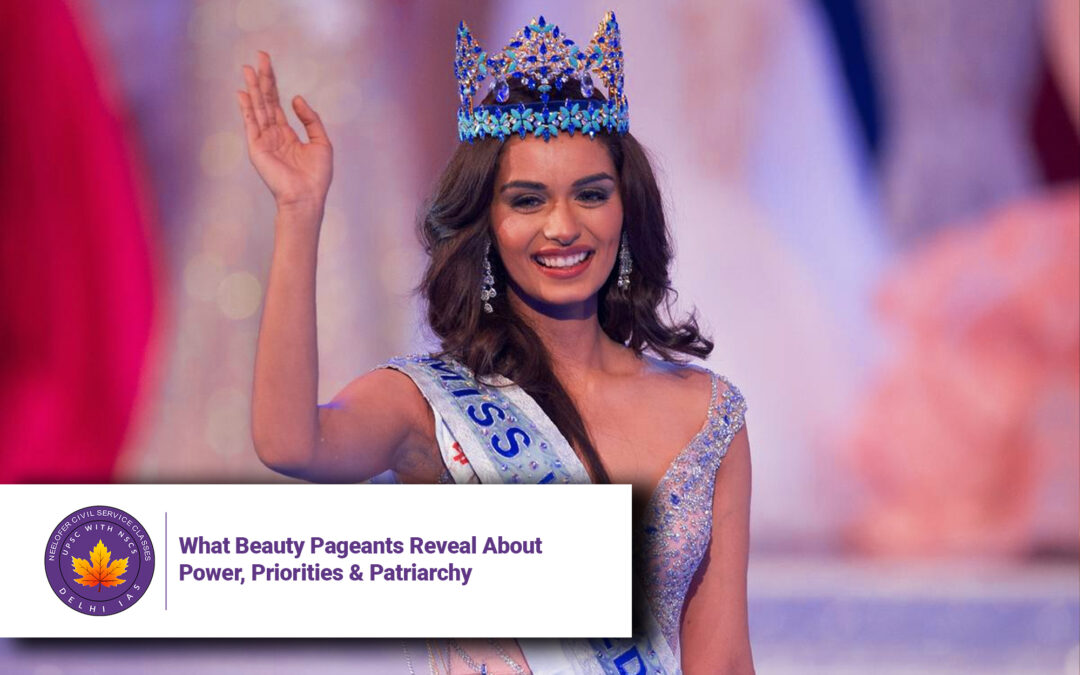
What Beauty Pageants Reveal About Power, Priorities & Patriarchy
Background
The 72nd Miss World competition is set to take place in Hyderabad from May 7 to 31, 2025, under the aegis of the Telangana government’s “Telangana Zaroor Aana” tourism campaign. Organizers tout the event as an opportunity to showcase the state on the global stage and to empower women through visibility and role-model status.

The Controversy
Almost immediately, the pageant drew sharp criticism from a broad coalition of women’s groups and activists across India:
-
Objectification Concerns: Detractors argue that the core format—judging contestants on physical appearance in swimwear and evening wear—remains steeped in outdated beauty ideals and commodifies women’s bodies for mass consumption.
-
Token “Empowerment”: Though pageant organizers have added “beauty with purpose” interviews and social-impact initiatives, critics say these elements are superficial and too tightly scripted to counterbalance the underlying emphasis on looks.
-
Exclusion & Elite Bias: The pageant’s high entry costs, stringent dress and grooming requirements, and global sponsorships tend to favor affluent, urban participants, leaving out rural, Dalit-Bahujan, and other marginalized communities.
Power & Priorities at Play
-
Tourism vs. Social Justice: The Telangana government sees the pageant as a booster for international tourism, but many locals argue that the state’s limited resources would be better spent on healthcare, education and women’s safety initiatives.
-
Global Visibility vs. Grassroots Voices: While winners like Aishwarya Rai and Priyanka Chopra have gone on to prominent public roles, the current pageant affords no real platform to India’s diverse women activists—many of whom are leading dignity, caste-equity and gender-rights campaigns at the village level.
-
Consumerism & Patriarchy: Pageants package “confidence” as a marketable asset—sold back to contestants through sponsorships and branded endorsements—yet reinforce a narrow beauty standard tied to colonial, color-skin and body-type biases.
Why It Matters
-
Cultural Narratives: In a democracy striving for equality, elite pageants can skew public perceptions of what “success” looks like for women—prioritizing physical traits over talents, intellect or community leadership.
-
Policy Implications: Government hosting of such events raises questions about state priorities. Every rupee spent on pageantry is a rupee not spent on maternal health, nutrition programs or combating gender-based violence.
-
Social Movements: The vocal opposition underscores a broader feminist push to reclaim public spaces and redefine empowerment on women’s terms, not packaged templates.
5 Q&A
Q1. What exactly do critics want changed in Miss World India?
A1. They demand a complete overhaul: elimination of swimsuit rounds, transparent judging criteria that value social impact and professional accomplishments, and significantly lower entry-fee structures to ensure inclusive participation from all socio-economic backgrounds.
Q2. How do organizers defend the pageant’s role in empowerment?
A2. Organizers point to “Beauty with Purpose” segments—where contestants champion charitable projects—and argue that global exposure catalyzes career opportunities in media, modeling, and diplomacy.
Q3. Are there precedents for reforming pageants?
A3. Yes. Some national and regional contests have dropped swimsuits entirely, introduced gender-neutral categories, or expanded scoring to 50% on talent and advocacy work. These models offer a roadmap for Miss World India to follow.
Q4. What alternatives do activists propose?
A4. Activists suggest state-supported platforms that celebrate women’s leadership in fields such as agriculture, technology, education and the arts—without tying recognition to beauty standards or consumer sponsorship.
Q5. Can pageants and social justice coexist?
A5. In theory, yes—if pageants prioritize diversity, genuine community engagement, and equitable access. In practice, however, meaningful change requires untethering empowerment from objectifying formats and investing in women’s holistic development across India.
