
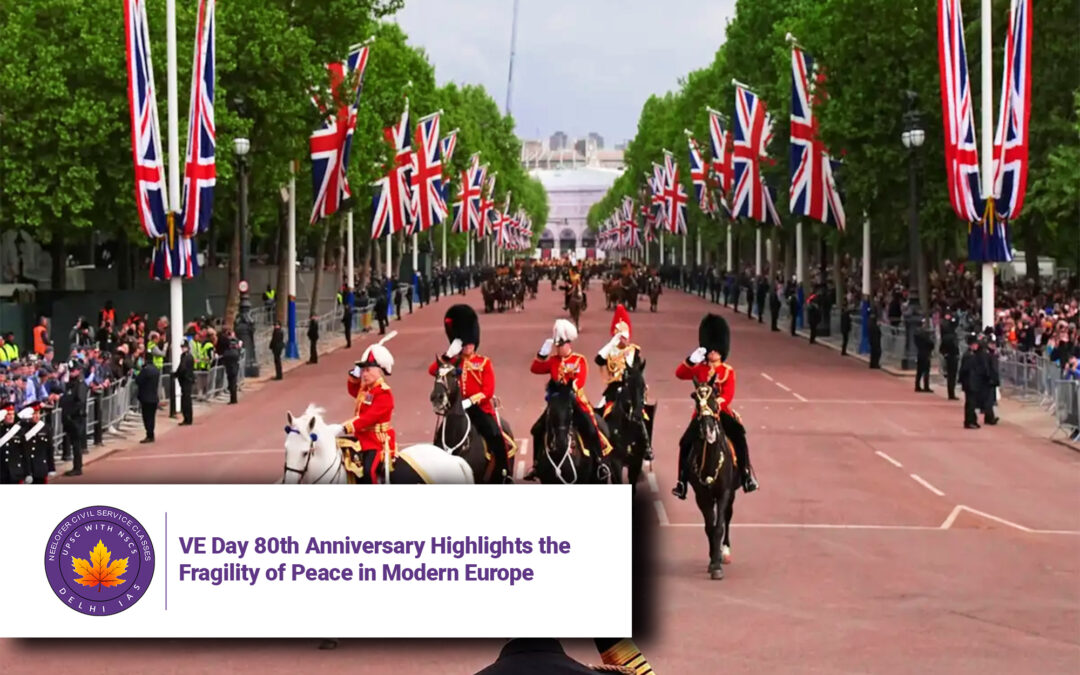
VE Day 80th Anniversary Highlights the Fragility of Peace in Modern Europe
Why in News?
Europe recently marked the 80th anniversary of Victory in Europe (VE) Day, which commemorates the end of World War II in Europe. However, the solemn promise of “Never Again” rings increasingly hollow amid renewed geopolitical tensions, war in Ukraine, and a shifting global order. 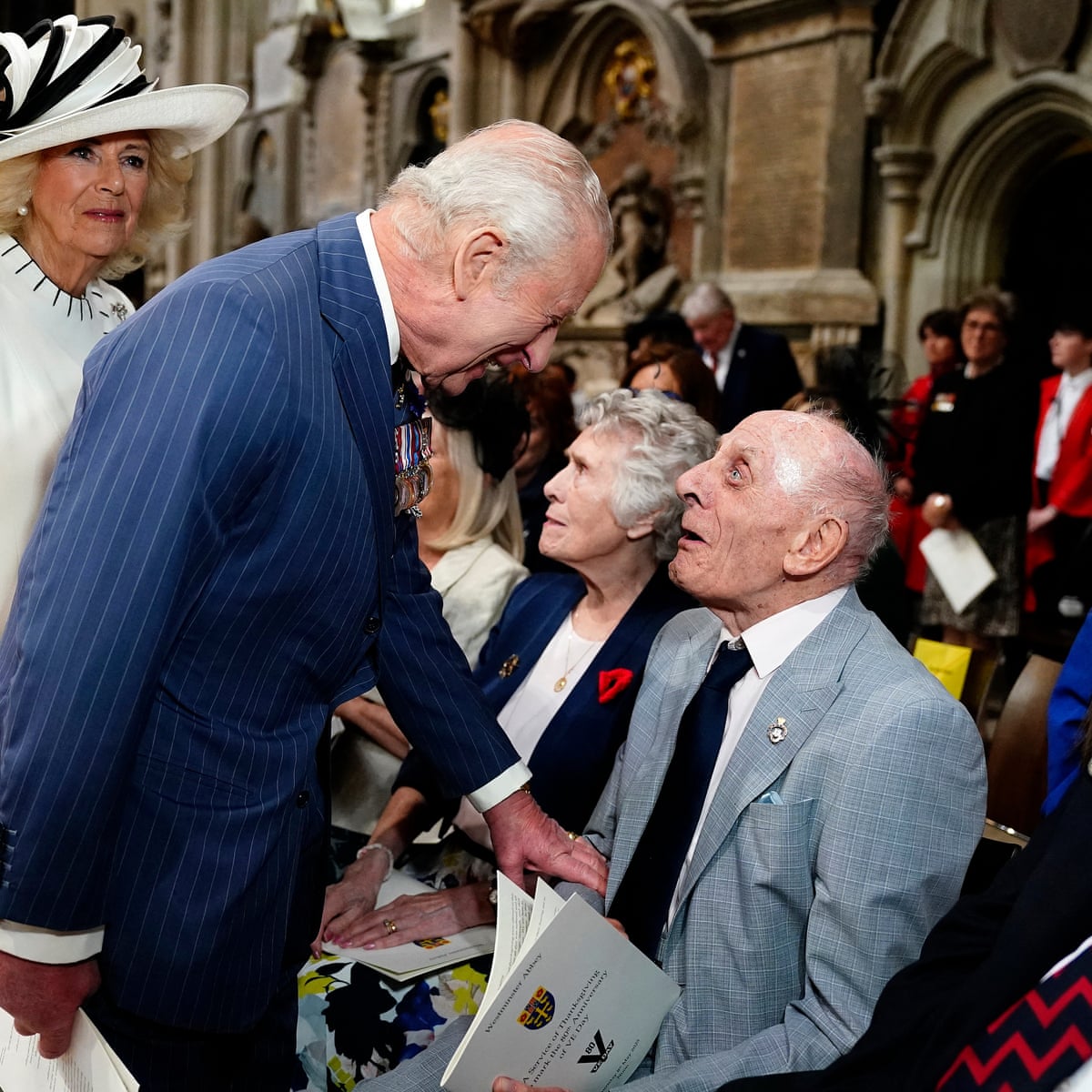
Introduction
On May 8, 1945, the Allied victory over Nazi Germany was declared, ending the deadliest war in European history. VE Day has since symbolized not only military victory but also a collective European vow to prevent such conflict again. In 2024, as wars rage once more in Europe, West Asia, and Africa, the memory of VE Day is being tested by the realities of present-day violence and division.
Key Issues and Background
From Dates to Memory
While VE Day remains a symbolic event, its relevance is diverging across Europe:
-
In Russia, May 9 remains the primary commemorative day, tied closely to Soviet victory narratives.
-
In Ukraine, May 8 has been officially recognized instead, with recent decisions to rename May 9 as Europe Day—symbolizing a shift toward Western alliances.
The Changing Narrative of WWII
-
Russia and former Soviet republics focus on the heroism and sacrifices made by the Red Army, especially noting the devastating losses: over 26 million Soviet citizens, or 10% of the USSR’s population.
-
Western European narratives often focus more on reconciliation and peacebuilding after 1945.
-
The Soviet campaign to liberate Eastern Europe was brutal and destructive, especially in Poland, with 20% of its population killed.
The Core of the Concern
Russia, Ukraine, and Historical Symbolism
-
The Putin regime continues to use VE Day as a tool of political and historical legitimacy, even as it wages war in Ukraine.
-
Ukraine’s rejection of Russian-style commemoration reflects a broader cultural and ideological separation from Moscow.
Tensions Within NATO and the EU
-
A growing divide is visible within NATO and the EU over how to respond to Russian aggression, with Eastern Europe seeking stronger deterrence while Western Europe pushes diplomacy.
-
The U.S. and UK are reinforcing NATO’s eastern flank, and the EU has initiated new plans for increased defence spending and coordination.
Key Observations
-
VE Day anniversaries are now increasingly political, reflecting deep historical wounds and modern-day security threats.
-
Russia’s portrayal of itself as a liberator stands in contrast to its actions in Ukraine.
-
Western Europe faces challenges in maintaining unity and upholding the post-WWII liberal international order.
-
The rise of far-right movements, arms races, and distrust among nations echo patterns seen in pre-WWII Europe.
Conclusion
Eighty years since the end of WWII in Europe, the world is once again facing dangerous global tensions. While VE Day remains a reminder of past sacrifices, its message of “Never Again” appears increasingly fragile. The continued conflict in Ukraine and global instability serve as grim reminders that peace is not guaranteed and must be continually protected.
5 Questions and Answers
Q1. What is VE Day and why is it significant?
Answer: VE Day, celebrated on May 8, marks the Allied victory over Nazi Germany in 1945. It symbolizes the end of WWII in Europe and the collective promise to prevent such devastation again.
Q2. Why is the VE Day narrative diverging in Russia and Ukraine?
Answer: Russia emphasizes Soviet sacrifice and victory on May 9, using it to legitimize current policies. Ukraine, distancing itself from Russian influence, now officially commemorates VE Day on May 8 and calls May 9 “Europe Day.”
Q3. What was the scale of Soviet losses during WWII?
Answer: The Soviet Union lost around 26 million people, about 10% of its population, with massive casualties suffered in battles across Eastern Europe.
Q4. How is the current geopolitical climate affecting the legacy of VE Day?
Answer: Renewed wars in Ukraine and global instability are undermining the message of peace associated with VE Day, turning commemorations into reflections of modern conflict.
Q5. What role is NATO playing in current European security concerns?
Answer: NATO is reinforcing its eastern front, increasing defence coordination, and facing internal debates over how best to address the Russian threat, especially in the context of Ukraine.

