

US-India Trade Talks Under Strain, Trump and Tantrums, and the Future of Bilateral Relations
Why in News?
Trade negotiations between India and the United States have faced multiple roadblocks under the Trump administration. President Donald Trump‘s aggressive “America First” policy, marked by unilateralism and pressure tactics, has placed strain on bilateral ties. His refusal to finalize a Bilateral Trade Agreement with India unless concessions were made—often to the detriment of India’s own interests—has disrupted the prospects for stronger economic cooperation. 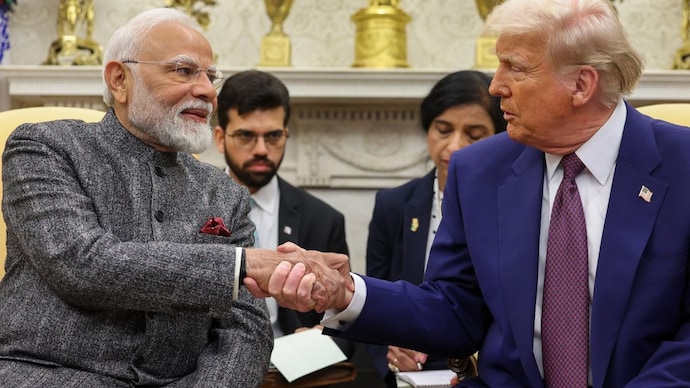
Introduction
US-India ties have long been underpinned by a common strategic vision, but trade relations between the two democracies have faced turbulence in recent years. President Trump’s preference for transactional diplomacy over mutual cooperation was evident in the breakdown of bilateral trade negotiations. This breakdown was fueled by Trump’s insistence on steep tariff reductions and market access that served American interests alone.
Key Issues
1. Trump’s Pressure Tactics
-
President Trump threatened India with tariff hikes, demanding that India reduce its simple average non-agricultural tariff from 17% to a level closer to the US average of 2.5%.
-
He refused to move forward with the trade deal until India agreed to remove or reduce tariffs on key American exports such as dairy and Harley-Davidson motorcycles.
2. India’s Balanced Approach
-
India expressed readiness to lower tariffs but sought reciprocity in return.
-
India’s position was rooted in protecting its labour-intensive sectors and resisting demands that undermined its domestic economic stability.
-
India’s Foreign Minister S. Jaishankar emphasized the need for fairness and balance in trade discussions.
3. Broader Global Trends
-
The global trade environment was already strained when Trump took office.
-
Trump’s withdrawal from multilateral trade deals (e.g., TPP), increased tariffs on China, and criticism of the WTO created global instability.
-
This forced countries like India to diversify trade partnerships, focusing on bilateral and regional deals—especially with China and Southeast Asia.
4. India’s Strategic Shift
-
India has actively disengaged from WTO-led MFN arrangements and moved toward bilateral agreements that better reflect national interests.
-
India is preparing to align trade agreements with strategic goals, aiming for a comprehensive trade architecture by 2027.
Alternative Approaches
What Could Be Done Instead?
-
While President Trump’s approach hurt negotiations, India must continue pursuing long-term trade diversification.
-
Instead of engaging in zero-sum games, both nations could benefit from working together in high-growth areas such as:
-
Technology
-
Pharmaceuticals
-
Defense manufacturing
-
-
India must also focus on increasing ease of doing business, resolving regulatory barriers, and improving infrastructure to attract global investments.
Challenges and the Way Forward
Challenges
-
The US push for one-sided gains undermines trust.
-
High American tariffs on Indian products (e.g., steel and aluminum) remain in place.
-
Visa restrictions and immigration issues also dampen bilateral enthusiasm.
Way Forward
-
The Joe Biden administration offers a fresh opportunity for India to recalibrate trade ties with the US.
-
India should:
-
Push for a balanced free trade agreement
-
Protect its domestic manufacturing
-
Leverage new global trade frameworks like the Global Capability Centres (GCCs)
-
-
India must make its market more attractive to American companies without compromising sovereignty.
Conclusion
The Trump era of US-India trade relations was marked by volatility, unilateralism, and a transactional mindset that left negotiations stalled. For India, the lesson is clear: pursue strategic autonomy, diversify partnerships, and avoid being bullied into trade deals that serve only one side. As global economic dynamics shift, India’s challenge will be to craft a policy that aligns economic growth with national interest, without sacrificing fairness or sovereignty.
5 Questions and Answers
Q1. What was the main reason for the failure of the US-India trade deal under Trump?
A: President Trump’s rigid demands for tariff concessions from India without offering reciprocal benefits.
Q2. How did India respond to Trump’s pressure?
A: India showed willingness to negotiate but insisted on balanced, fair trade terms aligned with its domestic priorities.
Q3. What broader global trends influenced the situation?
A: A weakened global trade architecture, US withdrawal from multilateral agreements, and rising trade protectionism.
Q4. What is India’s current trade strategy?
A: Moving toward bilateral and regional trade agreements focused on national interest rather than global trade norms.
Q5. What is the way forward post-Trump?
A: Rebuilding trust, pushing for fair trade agreements, and integrating India more effectively into global value chains.

