
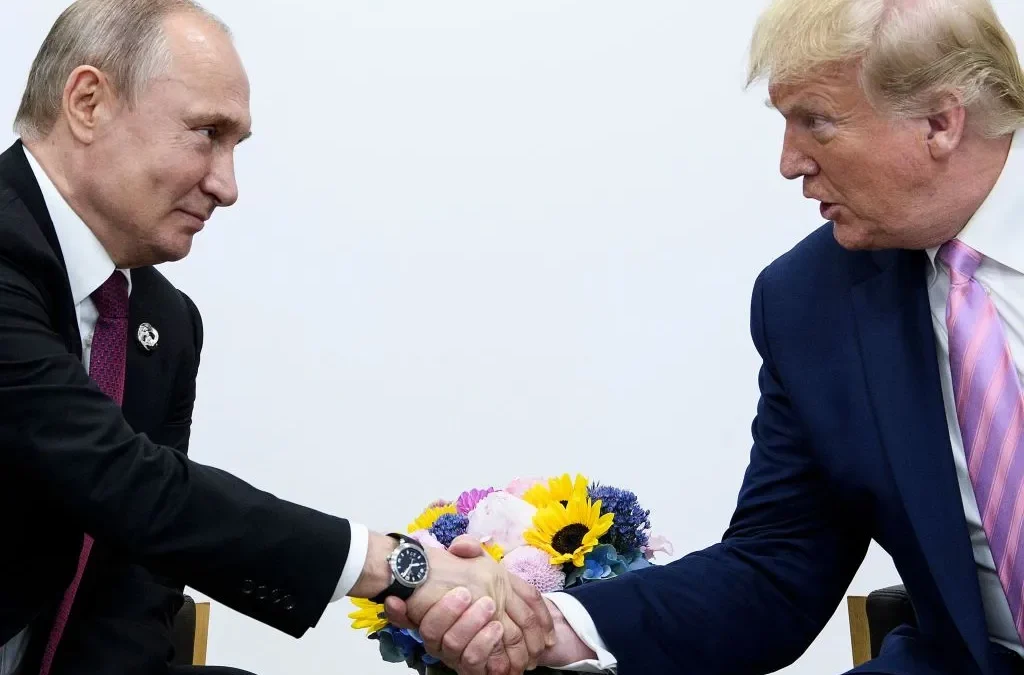
About Ukraine Should Not Be Made a Pawn in Any U.S.-Russia Deal:
The recent White House meeting between U.S. President Donald Trump and Ukrainian President Volodymyr Zelenskyy has underscored the growing tensions between Washington and Kyiv. The diplomatic fallout from this meeting could have severe consequences for Ukraine, especially as it faces increasing pressure from Russia’s military offensive. 
Ukraine’s struggle is not just about territorial integrity but also about its geopolitical positioning between two superpowers—Russia and the United States. Unfortunately, instead of being treated as an independent state with its own security needs, Ukraine is at risk of becoming a bargaining chip in the wider strategic negotiations between Washington and Moscow.
The White House Showdown: A Setback for Ukraine
The recent Oval Office confrontation between Mr. Trump and Mr. Zelenskyy was unprecedented in modern diplomacy. The event was particularly humiliating for Ukraine because:
- Trump openly criticized Ukraine’s war efforts, stating that Kyiv was not winning the war.
- He accused Zelenskyy of being ungrateful for U.S. military aid, which has been crucial in resisting Russian advances.
- Trump threatened to stop military aid altogether, unless Ukraine accepted the deal that the U.S. was negotiating with Russia.
This sharp shift in U.S. foreign policy—from Joe Biden’s “as long as it takes” approach to Trump’s push for a quick peace deal—leaves Ukraine in a vulnerable position.
The Risk of Ukraine Becoming a Bargaining Chip
For years, Ukraine has been at the center of the geopolitical battle between Russia and the U.S.-led NATO alliance. The current situation exposes several risks for Kyiv:
1. Washington’s Changing Stance on Ukraine
Under President Biden, the U.S. pledged long-term military and financial support to Ukraine. However, Trump’s administration is signaling a shift—focusing on ending the war quickly, even if it means making concessions to Russia.
2. Russia’s Strategic Gains
- Russia has been advancing in eastern Ukraine, making territorial gains.
- A potential U.S.-Russia deal might force Ukraine to accept territorial losses.
- Putin would see this as a major diplomatic victory, weakening Western influence in Eastern Europe.
3. NATO’s Role and European Responsibility
With uncertainty over U.S. commitment to Ukraine, European allies are being urged to “do the heavy lifting” in terms of financial and military support.
- UK Prime Minister Keir Starmer emphasized that European efforts would still require strong U.S. backing.
- If America withdraws its support, NATO’s credibility as a security guarantor will be at stake.
4. Ukraine’s Security Guarantees: A Sticking Point
Ukraine wants strong, binding security guarantees in any peace agreement. However, Washington’s reluctance to provide such guarantees increases Ukraine’s vulnerability.
Why the U.S. Should Not Abandon Ukraine
Impact on Global Power Balance
- A U.S. retreat would weaken its global influence, emboldening adversaries like Russia and China.
- Allies in Taiwan, South Korea, and the Middle East would question Washington’s reliability.
Encouraging Future Russian Aggression
- If Russia secures a favorable deal, it might pursue similar expansionist policies elsewhere, threatening countries like Moldova or the Baltics.
- A weak response from the U.S. would set a dangerous precedent for future conflicts.
Long-Term Security of Europe
- Europe remains highly dependent on S. military support.
- Without firm U.S. backing, European security mechanisms may struggle to deter Russian threats.
The Humanitarian Cost
- Millions of Ukrainians have been displaced.
- A rushed settlement without Ukraine’s interests at the forefront could leave entire regions vulnerable to continued instability.
What Should Be Done?
To ensure lasting peace and stability, the U.S. must adopt a balanced approach:
- Include Ukraine in all negotiations—Kyiv should not be sidelined in any U.S.-Russia deal.
- Ensure Russia is held accountable—Putin should not be rewarded for aggression.
- Provide Ukraine with strong security guarantees—NATO or U.S.-led security arrangements should be clearly defined.
- Maintain global credibility—The U.S. must show that it stands by its allies and does not abandon commitments under changing administrations.
Conclusion
Ukraine’s fate should not be decided solely by Washington and Moscow. While the U.S. has every right to pursue diplomatic engagements with Russia, it must ensure that Ukraine is not treated as a pawn. The war should not end at Ukraine’s expense, and a sustainable peace must be one that respects Ukraine’s sovereignty, security, and territorial integrity.
Ignoring Ukraine’s legitimate concerns would not only be a moral failure but also a strategic mistake that could weaken global stability.

