
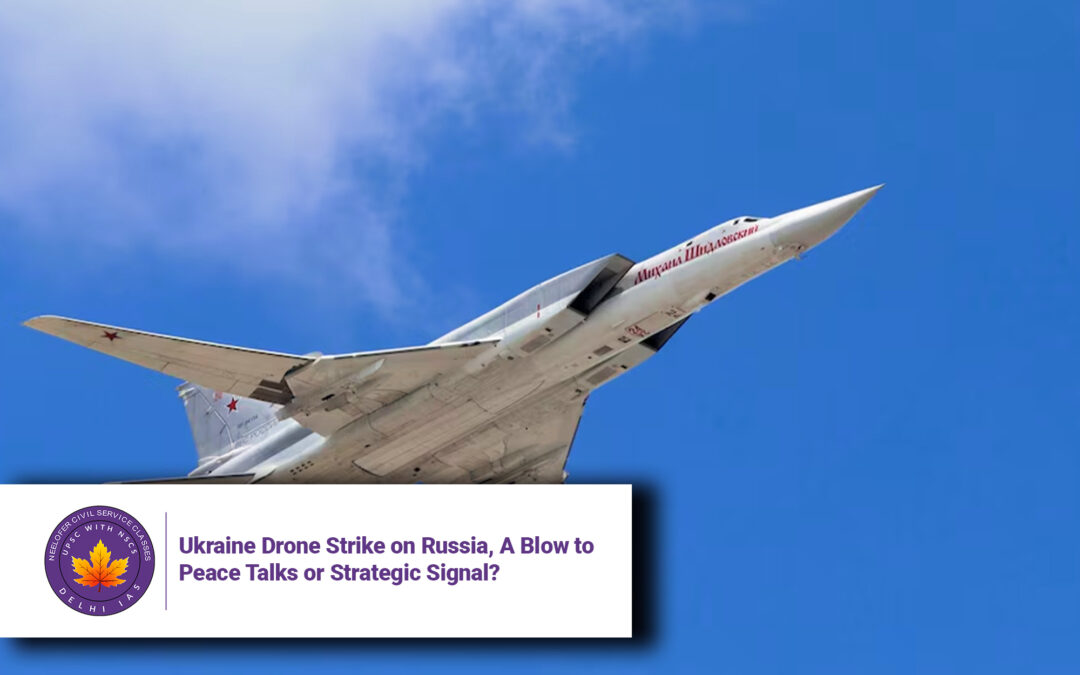
Ukraine Drone Strike on Russia, A Blow to Peace Talks or Strategic Signal?
Why in News?
A recent drone attack by Ukraine on Russian assets has reignited debate on the prospects for peace between the two nations. With peace delegations from both sides already involved in talks, the drone strikes—especially the one on Sunday which damaged a key Russian radar system—have raised questions about whether war or diplomacy will take precedence. 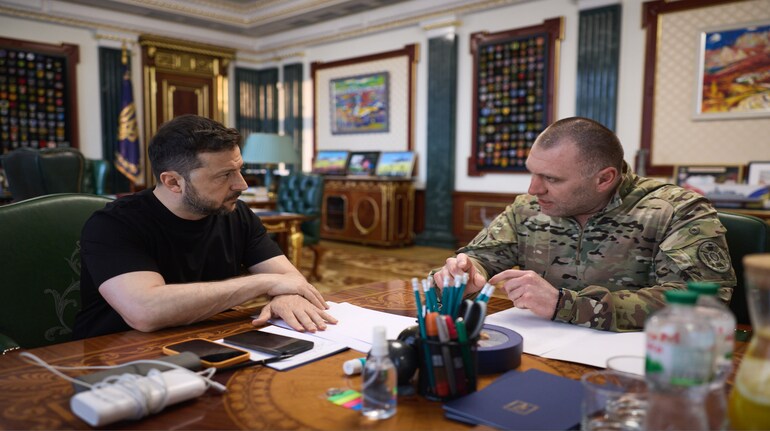
Introduction
The ongoing Russia-Ukraine conflict saw a significant escalation when Ukraine launched drone attacks deep inside Russian territory, including a major strike on a radar system used for detecting nuclear and aerial threats. This move, while militarily bold, has stirred geopolitical consequences, especially concerning the future of peace talks and the positions of NATO, the US, and other global powers.
Key Developments
1. Strategic Damage to Russian Radar
-
The Ukrainian drone strike targeted a high-value radar installation in Armavir, used for detecting missiles and aircraft.
-
This radar was part of Russia’s nuclear deterrence infrastructure, located far from the frontlines, making the attack highly symbolic.
2. Impact on Peace Prospects
-
The timing of the attack—just a week before peace delegations are expected to meet in Switzerland on June 15—has led to mixed interpretations.
-
While some see it as Ukraine showing strength before negotiations, others worry it could harden Russia’s stance or derail talks.
3. What Ukraine Aims to Achieve
-
Ukraine believes striking valuable targets can compel Russia to rethink its military advantage and force diplomatic concessions.
-
However, Kyiv remains cautious about completely burning bridges for peace, given NATO’s conditional support.
4. Russia’s Diplomatic and Political Dilemma
-
Russia has publicly downplayed the strike but may feel cornered politically.
-
President Putin’s image and internal political power could weaken if Russia is seen as unable to secure even its core regions.
5. Western and NATO Reactions
-
The West is divided: While the US and NATO want Ukraine to negotiate eventually, they continue to provide military support for the time being.
-
There is also a concern over escalation if Russia decides to retaliate more harshly in response to these deep strikes.
Five Key Observations
-
Ukraine’s drone strike was both militarily effective and symbolically provocative, targeting key Russian defense infrastructure.
-
The timing ahead of peace talks appears deliberate and could shift the power balance at the negotiation table.
-
Russia has not responded strongly yet but might do so if future strikes continue, endangering chances for peace.
-
NATO’s support for Ukraine is strategic but not unconditional, keeping diplomatic outcomes on the table.
-
Peace prospects are still fragile, with both sides needing to tread carefully to avoid a full diplomatic collapse.
Q&A Section
1. What did the Ukrainian drone attack target in Russia?
It targeted a key radar system in Armavir, crucial for Russia’s nuclear threat detection—a highly strategic and symbolic move.
2. How could this strike affect peace negotiations?
The attack could complicate negotiations by hardening Russia’s position or, conversely, pressure it into serious talks due to perceived vulnerabilities.
3. What is the US and NATO’s stance?
While they support Ukraine militarily, they prefer eventual negotiations and are concerned about unchecked escalation.
4. Why is the attack politically risky for Russia?
It exposes internal defense weaknesses and could harm President Putin’s political image, especially domestically.
5. Are peace talks still expected to happen?
Yes, delegations from both sides are expected to meet on June 15 in Switzerland, but the tone and success of talks now seem uncertain.

