
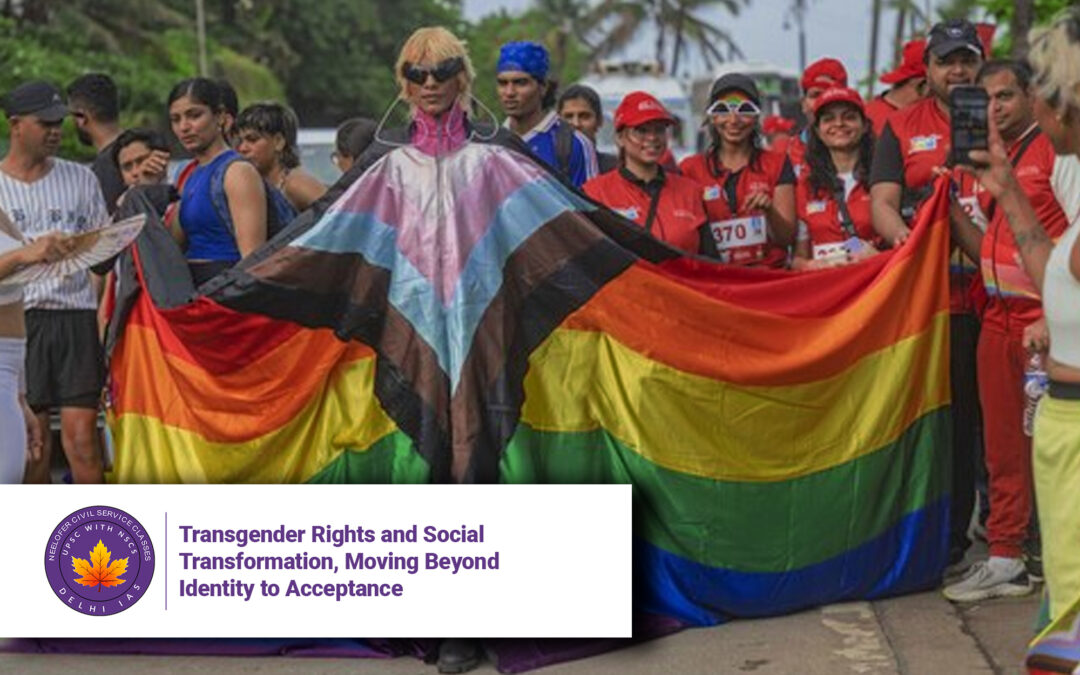
Transgender Rights and Social Transformation, Moving Beyond Identity to Acceptance
Why in News?
The rights and recognition of transgender individuals remain a pressing issue in India, as highlighted through the lived experiences of activist Kalki Subramaniam. This piece revisits her life, advocacy, and how legal reforms like the NALSA judgment have influenced the larger social and political discourse on gender identity and inclusion. 
Introduction
Kalki Subramaniam’s story is not just one of personal resilience, but of a larger struggle shared by thousands of transgender individuals across India. Labeled a boy at birth, Kalki faced bullying, social exclusion, and gender dysphoria through her formative years. Despite this, she emerged as one of India’s most prominent transgender voices, pushing for both legal reform and social acceptance.
Key Issues
-
Personal Journey and Visibility
-
Kalki’s gender identity led to immense trauma in childhood and adolescence, intensified by a lack of awareness and sensitivity.
-
Her activism, writings, and art have become powerful platforms to humanize transgender experiences.
-
-
Legal Milestones
-
The landmark 2014 NALSA judgment by the Supreme Court legally recognized the “third gender,” affirming the right to self-identify.
-
This ruling emphasized equality, dignity, and access to affirmative action for transgender individuals.
-
-
Social Challenges
-
While legal reforms exist, transgender persons still face widespread stigma, discrimination, and violence.
-
Health access, particularly for issues like HIV/AIDS, and legal gender recognition continue to be struggles.
-
-
The Role of Activism and Media
-
Memoirs like We Are Not the Others and We Will Not Be Erased by Kalki highlight both the pain and power in transgender lives.
-
Films, books, and public art projects like the “Red Wall” installation in Coimbatore foster visibility and empathy.
-
-
Ongoing Needs
-
True inclusion goes beyond laws—it requires a shift in social attitudes, institutional reforms, and sustained representation.
-
Challenges and the Way Forward
Challenges:
-
Discrimination in employment, healthcare, education.
-
Bureaucratic and social hurdles in accessing documents and entitlements.
-
Violence and invisibility within family and community spaces.
Way Forward:
-
Strengthen legal protections through updated anti-discrimination laws.
-
Sensitize society through education, inclusive media representation, and gender awareness.
-
Ensure transgender voices are included in policy-making and governance structures.
5 Q&A Section
Q1. What is the significance of the 2014 NALSA judgment?
It recognized the third gender and affirmed the right of transgender persons to self-identify their gender, ensuring dignity and legal rights.
Q2. Who is Kalki Subramaniam and why is she important?
She is a transgender activist, author, artist, and changemaker who has been instrumental in advocating for transgender rights and visibility in India.
Q3. What are the major struggles faced by transgender people in India today?
Despite legal recognition, they face discrimination in healthcare, education, employment, and social life, often lacking support from their own families.
Q4. How can society better support transgender individuals?
By promoting gender sensitivity through education, implementing inclusive policies, providing access to healthcare and housing, and amplifying transgender voices.
Q5. What role does media and art play in this movement?
Media and art humanize the struggles and identities of transgender people, build empathy, and spark essential conversations on inclusion and justice.
Conclusion
Transgender rights are human rights, and stories like Kalki Subramaniam’s shine a light on the courage and creativity of those challenging rigid gender norms. While India has made important legal strides, a more compassionate and inclusive society remains the true goal. Real change will come only when every individual, regardless of gender identity, is treated with equal respect, opportunity, and love.

