
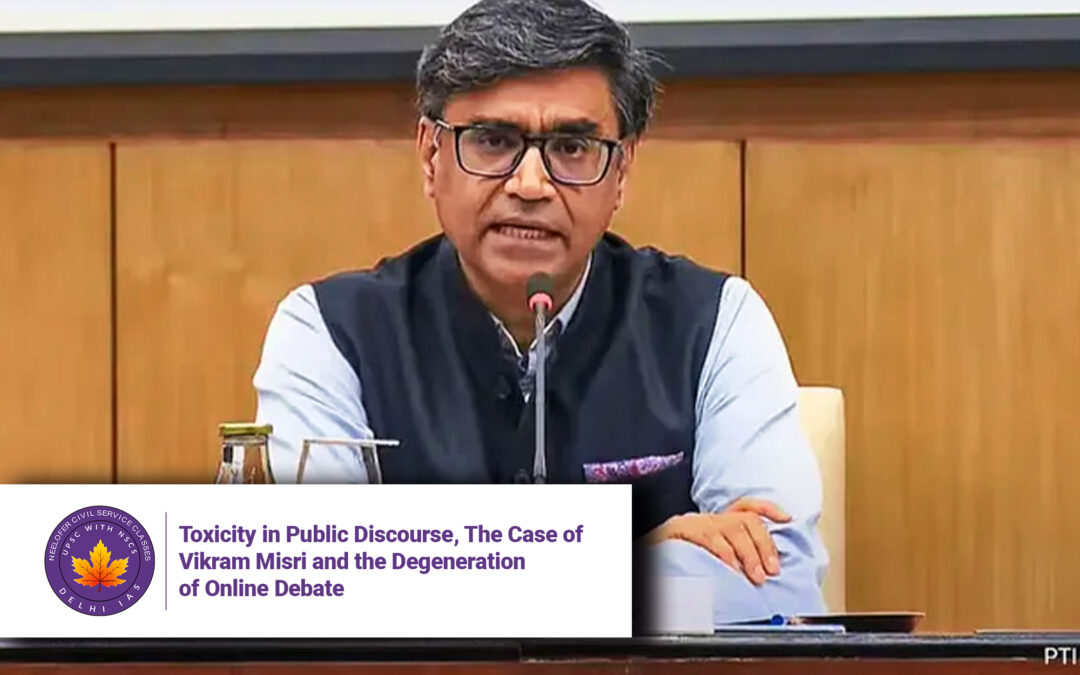
Toxicity in Public Discourse, The Case of Vikram Misri and the Degeneration of Online Debate
Why in News?
Following the announcement of a ceasefire between India and Pakistan after Operation Sindoora, India’s Deputy National Security Advisor Vikram Misri faced severe personal attacks online. This sparked widespread concern over the toxic nature of online political discourse and the erosion of civil debate. 
Introduction
In democratic societies, disagreement and debate are essential for progress. However, recent events surrounding the online abuse of Vikram Misri and his family following India’s ceasefire decision reflect a troubling shift. Public reaction, far from civil dissent, morphed into personal vilification marked by misogyny, intolerance, and dehumanization.
Key Issues and Institutional Concerns
1. Misri’s Targeting: A Symbol of Escalating Online Hatred
-
Vikram Misri, who briefed the nation on Operation Sindoora, became the target of vitriolic trolling.
-
His family was not spared either—highlighting how disagreement has transformed into personal assault in digital spaces.
2. Decline of Constructive Disagreement
-
Criticism is essential in a liberal democracy, but this event reflects how public discourse has deteriorated.
-
Instead of engaging with the decision to pause the offensive, trolls attacked the person delivering the news.
3. Misogyny and Depravity
-
The online abuse wasn’t limited to policy criticism but included misogynistic and vulgar attacks.
-
Such behavior reveals a mindset where venom replaces reasoning, and hate replaces debate.
4. The Role of Social Media
-
Platforms have amplified hatred due to anonymity and lack of accountability.
-
What should have been a nuanced national security conversation turned into a mob-like outrage.
5. The Need for Civility in Freedom
-
Freedom of expression includes the right to disagree—but not to dehumanize.
-
There’s a fine line between criticism and toxicity; when crossed, it threatens the democratic fabric.
Conclusion
The episode surrounding Vikram Misri is a disturbing reminder of how far digital discourse has fallen. As a society, we must distinguish between criticism and character assassination. Protecting free speech includes defending the dignity of individuals from toxic abuse, especially those in public service. Troll culture must not be normalized—it’s not bravery, it’s intellectual cowardice hiding behind a screen.
Q&A Section
Q1. Who is Vikram Misri and why was he targeted online?
Vikram Misri is India’s Deputy NSA. He was targeted after announcing a ceasefire in Operation Sindoora, despite only relaying official government policy.
Q2. What type of abuse did he and his family face?
They faced deeply personal, misogynistic, and hateful online attacks that went beyond political disagreement.
Q3. What does the article suggest about online discourse in India?
It highlights the degeneration of public debate, where trolling, threats, and abuse are replacing civil disagreement.
Q4. Why is this trend dangerous in a democracy?
It discourages honest debate, muzzles free speech through fear, and promotes mob behavior over rational discourse.
Q5. What is the way forward?
Society must reclaim respectful disagreement, reject toxic trolling, and rebuild norms of dignity in public discussion—especially online.
