
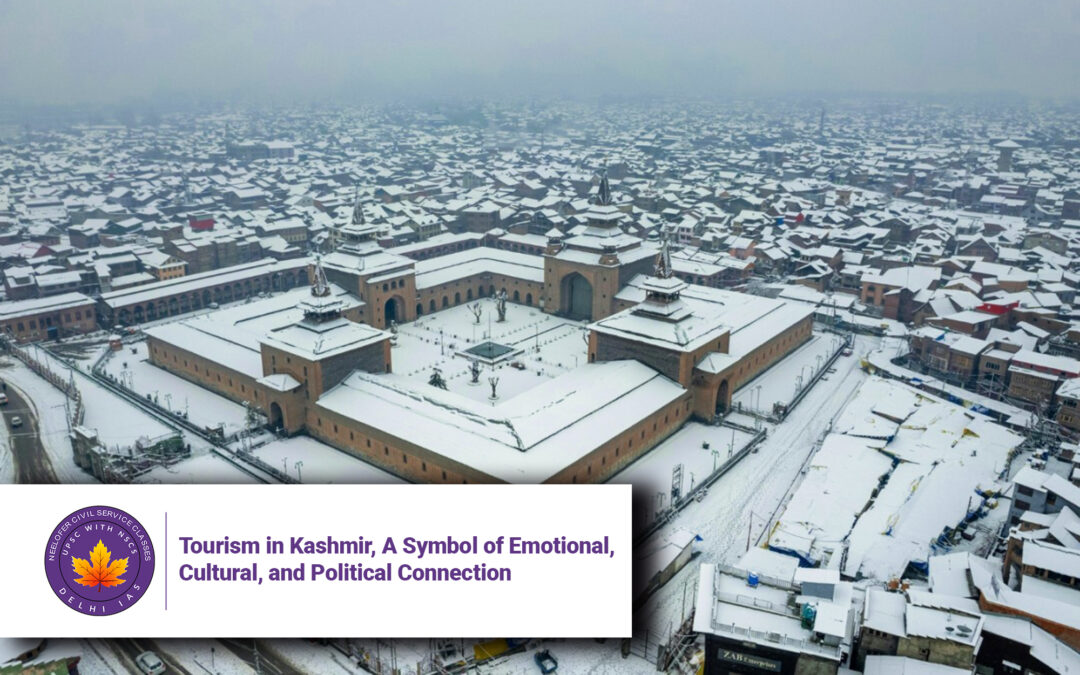
Tourism in Kashmir, A Symbol of Emotional, Cultural, and Political Connection
Why in News?
Post the abrogation of Article 370, Kashmir has seen a boom in tourism, sparking a renewed debate on the emotional, cultural, and political significance of tourism in the Valley, and how it shapes national identity and perception. 
Introduction
Kashmir is not just a scenic destination—it is an emotional, cultural, and historical symbol deeply ingrained in the Indian psyche. While tourism to Kashmir is flourishing again, it continues to carry complex undertones of identity, politics, and nostalgia. The Valley remains “heaven on earth” and continues to evoke strong emotions for visitors, locals, and the larger Indian audience.
Key Issues and Background
1. The Cultural Bond Between Tourists and Locals
Visiting Kashmir is a deeply emotional experience. Tourists often form strong bonds with their hosts, and Kashmiris reciprocate with warmth and hospitality. While locals want their voice, identity, and narrative to be respected, they also recognize tourism’s role in economic upliftment.
2. Political and Emotional Layers of Tourism
Tourism in Kashmir isn’t just about travel. It touches on themes of national unity, belonging, and identity. Bollywood has long romanticized Kashmir as paradise on earth—evident in famous lyrics like “Agar firdaus bar roo-e zameen ast…” and “zindagi mein ik baar to Kashmir jana hai.”
3. Impact of the Pahalgam Incident and Article 370
The 2023 Pahalgam terror attack changed the mood briefly, but didn’t dampen the overall enthusiasm. Before the 2019 abrogation of Article 370, incidents like the 1980s attacks on tourists created fear. Now, post-370, the narrative has shifted. Tourists feel safer, and over 1.88 crore visited Jammu & Kashmir in 2022 alone.
4. Religious Tourism and Economic Boost
The growing popularity of Amarnath Yatra and other spiritual sites like Vaishno Devi has made Kashmir a hub for religious tourism. Over 1 million people work in the tourism sector. Better infrastructure and easier access have contributed to this boom.
5. Kashmir’s Enduring Allure in the Indian Imagination
Despite past tensions, Kashmir remains a destination of emotional significance. Even popular culture continues to frame Kashmir as India’s crown jewel—both spiritually and visually.
The Core of the Concern
Tourism in Kashmir is more than just an economic activity. It is symbolic of national integration, cultural connection, and emotional ownership. However, it also brings to light the need to understand and respect local voices, which often get muted in the broader national discourse.
Key Observations
-
Bollywood and historical references shape how India views Kashmir.
-
Post-370 developments and better security have revitalized tourism.
-
Tourism creates jobs and contributes to peace-building, but also fuels political narratives.
-
Locals desire respect and agency while benefiting from tourism-led prosperity.
Conclusion
Kashmir continues to captivate hearts across India. From honeymooners to filmmakers, and pilgrims to solo travelers, the Valley attracts everyone. But beyond beauty, tourism in Kashmir is also a national dialogue about identity, healing, and harmony. As India moves forward, tourism can be a unifying force—if it listens, respects, and evolves with the people it touches.
5 Questions and Answers
Q1. Why is Kashmir considered more than just a tourist destination?
Answer: Kashmir holds emotional, spiritual, and political significance in the Indian imagination, often symbolizing national unity and beauty.
Q2. What was the impact of the Pahalgam attack and Article 370 abrogation on tourism?
Answer: While the 2023 Pahalgam attack caused temporary concern, the removal of Article 370 in 2019 led to a tourism boom with better infrastructure and perceived safety.
Q3. How does Bollywood contribute to Kashmir’s image?
Answer: Films and songs have long portrayed Kashmir as paradise, reinforcing its romantic and nationalistic appeal across generations.
Q4. What role does religious tourism play in Kashmir?
Answer: Religious sites like Amarnath and Vaishno Devi attract millions, boosting the local economy and contributing to employment and regional connectivity.
Q5. What challenges remain despite growing tourism?
Answer: Local voices often feel unheard, and there are concerns about over-commercialization, cultural insensitivity, and the risk of ignoring underlying political tensions.

