
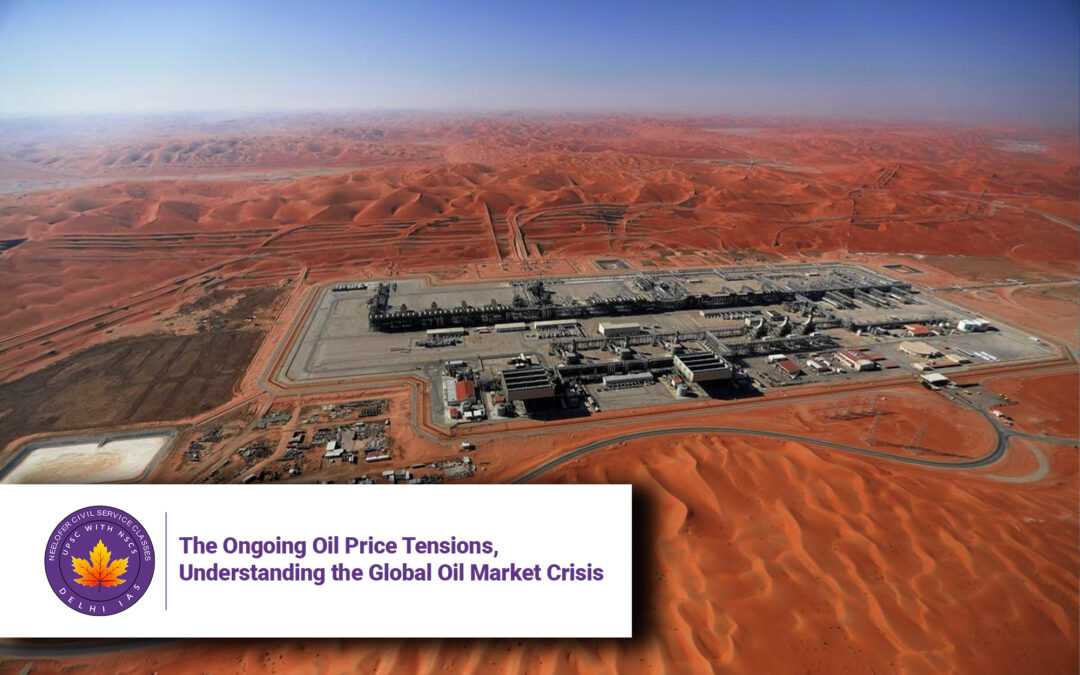
The Ongoing Oil Price Tensions, Understanding the Global Oil Market Crisis
Why in News?
On May 3, the Organization of the Petroleum Exporting Countries Plus (OPEC+) decided to cut global crude oil output by about 4,10,000 barrels per day from the next month (June). This comes amid a steady decline in oil prices and concerns over slowing global demand and rising geopolitical and economic uncertainties. 
Introduction
The global oil market is witnessing a new phase of volatility. Despite earlier fears of skyrocketing oil prices due to conflicts and geopolitical risks, oil prices have instead slumped below $80 per barrel for the Indian basket, their lowest in four years. This is reshaping not only economic forecasts but also global diplomatic alignments, particularly between major producers and consumers.
Key Issues and Background
1. The Price Fall and OPEC+ Cuts
-
Crude oil prices have dropped to $71.4 in December 2023 and $63.9 in April 2024, down from the peak of $116 in 2022.
-
In response, OPEC+ cut oil production to stabilize prices, fearing oversupply.
-
The group’s output fell to 41 million barrels/day, the lowest in 2 years.
2. Demand Plateau Predicted by IEA
-
The International Energy Agency (IEA) forecasts global oil demand to grow by only 0.73% in 2025, signaling a long-term slowdown.
-
The concept of “peak oil demand,” once doubted, now seems more plausible, with consumption expected to plateau before 2030.
3. Global Geopolitical Impact
-
Major oil exporters like Russia, Iran, and Venezuela are under Western sanctions, limiting their export capacities.
-
India and China continue to import large volumes, often negotiating discounts to secure energy needs.
-
The U.S. government has strategically used its Strategic Petroleum Reserve (SPR) to manage prices.
4. India’s Position in the Crisis
-
India is one of the top global importers of crude oil and benefits from lower prices, though it must navigate supply cuts and global pressure.
-
India imported 4.6 million barrels per day in March 2024, paying $17.6 billion in oil bills.
Specific Impacts or Effects
-
Lower Prices, Higher Relief: Countries like India benefit from reduced import bills.
-
Producer Dilemma: Oil-exporting nations, especially in West Asia, are cutting production to increase prices and maintain revenue.
-
Shift in Global Energy Trends: Cleaner energy, electric vehicles, and improved efficiency are reducing long-term oil dependence.
-
Strategic Adjustments: Countries are adjusting reserves and forming new trade partnerships.
Challenges and the Way Forward
Challenges
-
Managing the balance between supply cuts and consumer affordability.
-
Ensuring energy security amidst fluctuating prices and geopolitical uncertainty.
-
Pressure on oil-exporting nations to diversify economies.
Steps Forward
-
India should strengthen strategic oil reserves and negotiate long-term import deals.
-
Accelerate investment in renewable energy and energy efficiency programs.
-
Engage in multilateral energy cooperation for stable pricing and reliable supply chains.
Conclusion
The global oil market is facing a delicate and evolving situation. As prices dip despite ongoing conflicts and sanctions, major producers are trimming output in an attempt to reverse the trend. Meanwhile, nations like India are enjoying temporary relief in import bills but must prepare for a less oil-dependent future. The next few years may define the direction of the world’s energy economy, with cleaner alternatives gradually gaining ground over fossil fuels.
5 Questions and Answers
Q1: What triggered the current tension in the oil market?
A: The fall in crude oil prices despite conflicts and reduced output from OPEC+ triggered the crisis. OPEC+ responded by cutting production, but demand remains sluggish.
Q2: How much has the crude oil price dropped recently?
A: The price of the Indian basket of crude oil dropped from $116 in 2022 to $63.9 in April 2024.
Q3: What is the IEA’s forecast for global oil demand?
A: The International Energy Agency expects oil demand to grow by only 0.73% in 2025 and believes consumption may plateau before 2030.
Q4: How is India affected by the falling oil prices?
A: India benefits from lower import costs, reducing its import bill and inflationary pressure. However, it remains vulnerable to supply cuts and external shocks.
Q5: Why are oil-producing countries like Saudi Arabia and Russia cutting output?
A: To prevent further price declines and maintain revenue, especially since demand is not growing fast enough to absorb excess supply.

