
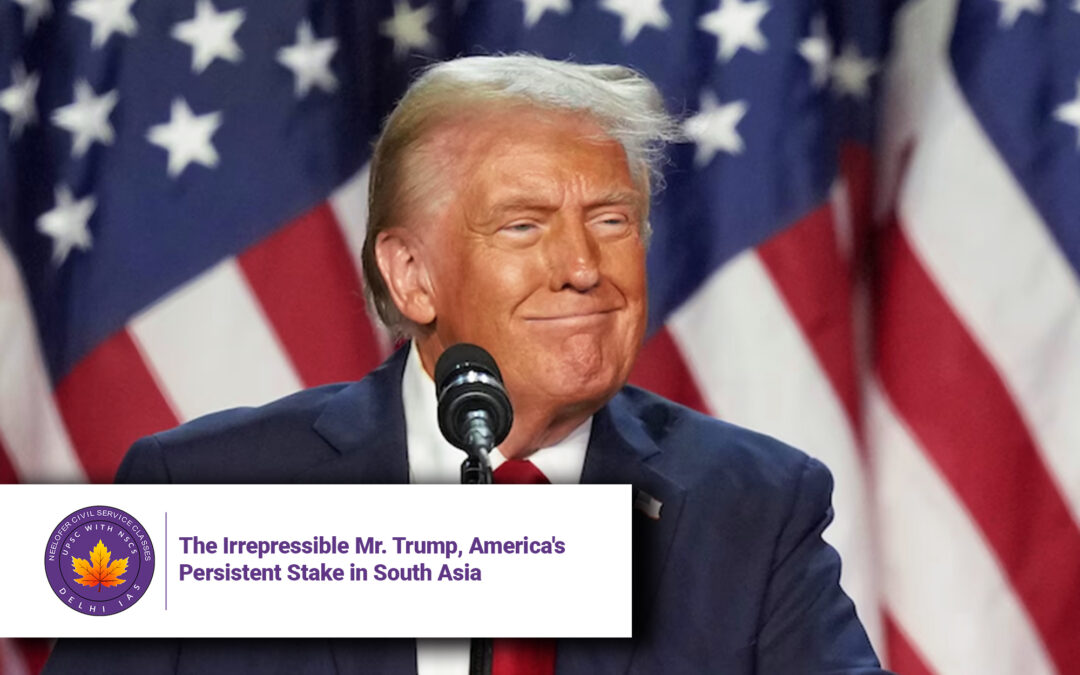
The Irrepressible Mr. Trump, America’s Persistent Stake in South Asia
Why in News?
Former U.S. President Donald Trump has again taken center stage in the geopolitical narrative between India and Pakistan, claiming he helped defuse a nuclear conflict between the two countries during his presidency. His controversial statements have sparked debate about the truth, timing, and implications of American intervention in South Asian conflicts. 
Introduction
Donald Trump is known for his dramatic public statements, but his recent claims about stopping a nuclear conflict between India and Pakistan in 2019 have drawn renewed attention. His comments have surfaced again in the backdrop of the Pulwama-Balakot conflict and India’s strong military and political response.
Key Highlights from the Editorial
1. Trump’s Bold (and Dubious) Claim
-
Trump claimed he intervened to stop a “nuclear conflict” between India and Pakistan following the Pulwama terror attack on February 14, 2019.
-
He said he “called and spoke to both countries,” and told them: “Let’s stop it. If you don’t stop it, we’re not going to get involved.”
2. Timeline Cross-Checked
-
Trump claimed his call happened at 3:00 PM on May 5, 2019, and that peace was restored at 5:25 PM—suggesting a miraculous two-hour diplomatic solution.
-
However, by May 2019, the immediate tensions post-Balakot airstrikes had already de-escalated.
-
PM Modi had already made strong political and military decisions, including retaliatory strikes in Balakot, without Trump’s known involvement at the time.
3. India’s Own Strategic Autonomy
-
India’s military operation post-Pulwama was largely autonomous and calculated.
-
PM Modi reiterated his zero-tolerance stance against cross-border terrorism and emphasized Indian sovereignty in conflict resolution.
4. Trump’s Public Pattern
-
Trump is known for claiming credit for international peace deals and trade-offs without providing clear timelines or evidence.
-
His remarks, although entertaining and headline-grabbing, often contradict official diplomatic records.
5. Lingering Questions
-
What intelligence did Trump have in real time?
-
Was there any official request from India for U.S. mediation?
-
How did these statements affect regional diplomacy, especially in India’s 2019 general elections?
Conclusion
Donald Trump continues to be a disruptive force in international narratives, often inserting himself into diplomatic flashpoints with dramatic retellings. While his claims about defusing nuclear tensions may not align with recorded events, they highlight the importance of verifying information, especially when tied to serious geopolitical issues like nuclear conflict.
Q&A Section
Q1. What did Donald Trump claim about India and Pakistan?
He claimed that he personally stopped a nuclear conflict between India and Pakistan after the Pulwama terror attack by calling both nations and urging them to back down.
Q2. When did Trump say this call happened?
Trump stated that he made the call at 3:00 PM on May 5, 2019, and that peace was restored by 5:25 PM the same day.
Q3. Were tensions still high between India and Pakistan in May 2019?
No. By that time, the major escalation had already de-escalated following India’s airstrike in Balakot and Pakistan’s retaliatory actions in February 2019.
Q4. Did India acknowledge Trump’s involvement in conflict resolution?
No official Indian statement supports Trump’s claim. PM Modi and his government emphasized independent strategic and military decisions.
Q5. What’s the concern with Trump’s remarks?
His statements risk distorting historical facts, overstate U.S. involvement, and can be misleading during politically sensitive times, such as Indian elections.
