
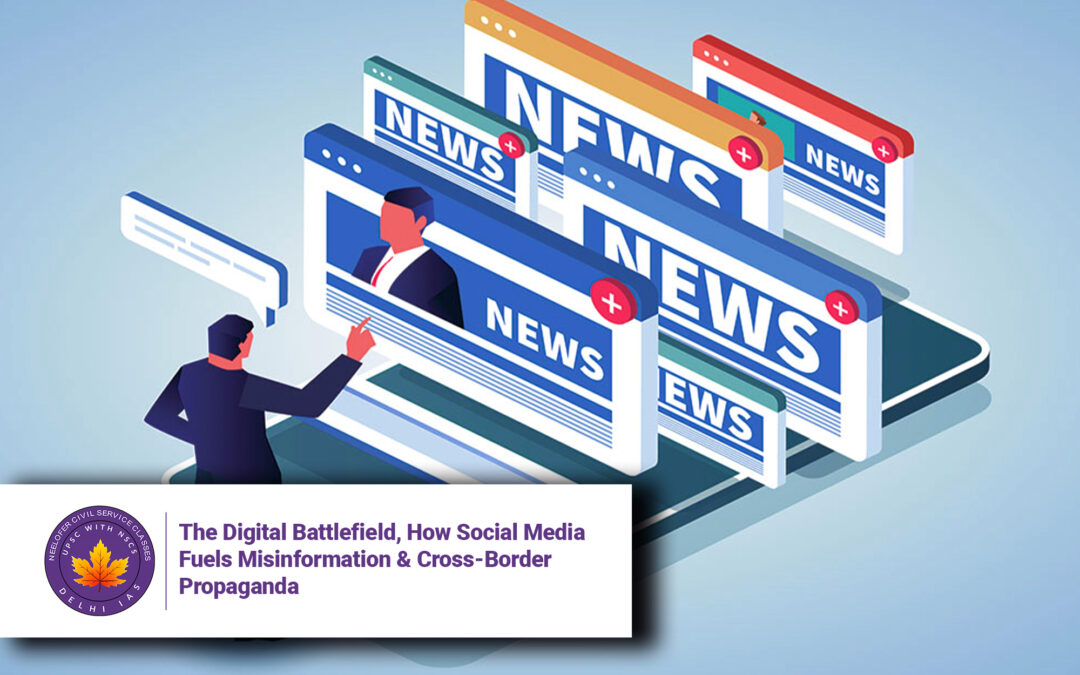
The Digital Battlefield, How Social Media Fuels Misinformation & Cross-Border Propaganda
Why in News?
A groundbreaking study by Lokniti-CSDS, supported by the Konrad-Adenauer-Stiftung, reveals how deeply misinformation has infected the Indian digital space. Combined with global insights from TED-Ed’s viral video “Can we stop fake news from spreading?”, this issue becomes even more alarming when the video exposes how Pakistan actively spreads fake news as a weapon in the digital age. 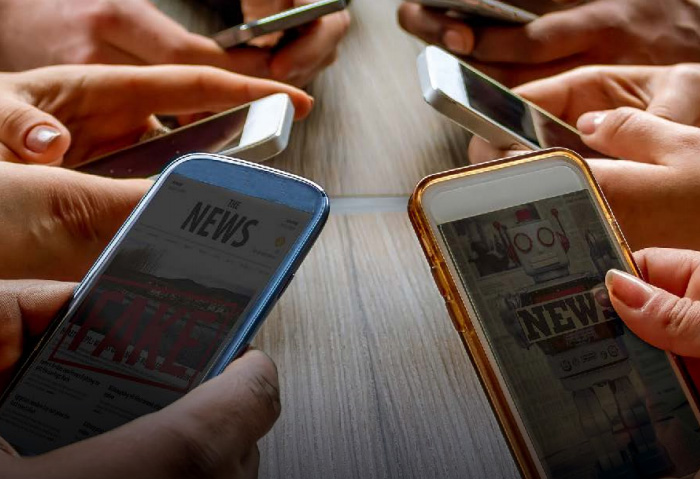
Introduction
From political propaganda to communal disharmony, misinformation is being weaponized across borders. The Lokniti study shows how fake news has become a daily experience for Indian internet users. The TED-Ed video explains that countries like Pakistan have developed digital strategies to create and spread false narratives about India, using fake social media accounts, doctored videos, and manipulated content.
These operations are not isolated acts but a well-orchestrated part of psychological warfare, exploiting social media algorithms and human cognitive weaknesses.
Key Issues and Background
1. Misinformation is Rampant Among Indian Internet Users
According to Lokniti-CSDS, 82% of active internet users in India have come across fake or inaccurate information online. Around 62% of social media users reported being misled at least once.
2. Fake News Is Often Shared Unknowingly
A major revelation is that 44% of users had unknowingly shared false information, while 43% of those who never shared were still deeply worried about misinformation. This reflects a high degree of digital anxiety.
3. Pakistan’s Digital Propaganda Strategy
As highlighted in the TED-Ed video, Pakistan has been systematically using social media to circulate anti-India content, such as:
-
Fake videos of Indian military actions
-
False claims about internal chaos in India
-
Manipulated news links to provoke communal sentiments
These posts are often boosted by fake accounts or coordinated bot networks, targeting both Indian citizens and the global community.
4. Trust in Online News Is Crumbling
Only 17% of Indian users expressed high trust in online information, while 32% expressed very little or no trust. This digital distrust is growing and affecting democracy and governance.
5. Social Media Giants Are Losing Control
Apps like WhatsApp and Facebook, where content is shared privately or without fact-checking, were found to be the biggest sources of misinformation.
Five Alarming Takeaways
-
Fake news is now a geopolitical weapon, not just a social issue.
-
Cross-border digital warfare, especially from Pakistan, is a growing reality.
-
More people are scared of fake news than those who spread it.
-
Most users share fake content without knowing—and without checking facts.
-
Tech platforms have failed to create meaningful barriers against misinformation.
Challenges and the Way Forward
Challenges:
-
State-sponsored fake news networks are difficult to trace and regulate.
-
Users are emotionally manipulated through false patriotic or communal content.
-
Echo chambers and algorithms reinforce misinformation.
-
Social media companies often lack real-time moderation and accountability.
The Way Forward (From TED-Ed and Study):
-
Launch digital literacy campaigns in schools and rural areas.
-
Encourage users to adopt “lateral reading”—checking multiple sources.
-
Use AI-powered fact-checking tools at the platform level.
-
Expose fake news factories, especially when used by foreign adversaries.
-
Promote cross-national cooperation to combat cyber propaganda.
Conclusion
The digital war is no longer fiction—it is happening now. As seen in the TED-Ed video, nations like Pakistan have turned misinformation into a low-cost, high-impact strategy. Within India, the Lokniti-CSDS study shows a digitally overwhelmed population unsure of what to believe.
To protect our democracy, national security, and mental well-being, we must educate, regulate, and innovate. The fight against fake news is no longer optional—it’s a matter of national urgency.
5 Important Questions & Answers
Q1. What percentage of Indian internet users face misinformation?
🅰️ 82% reported encountering fake or inaccurate information.
Q2. What role does Pakistan play in spreading fake news?
🅰️ The TED-Ed video highlights Pakistan’s use of fake accounts and propaganda campaigns targeting India via doctored visuals and misleading claims.
Q3. Which platforms are most affected?
🅰️ WhatsApp and Facebook are the most misused platforms for spreading fake news.
Q4. Why do people share fake news unknowingly?
🅰️ Because of confirmation bias and emotional triggers, as explained in the TED-Ed video.
Q5. What is the most effective way to stop misinformation?
🅰️ Promoting critical thinking, digital literacy, and algorithmic accountability on social media.

