
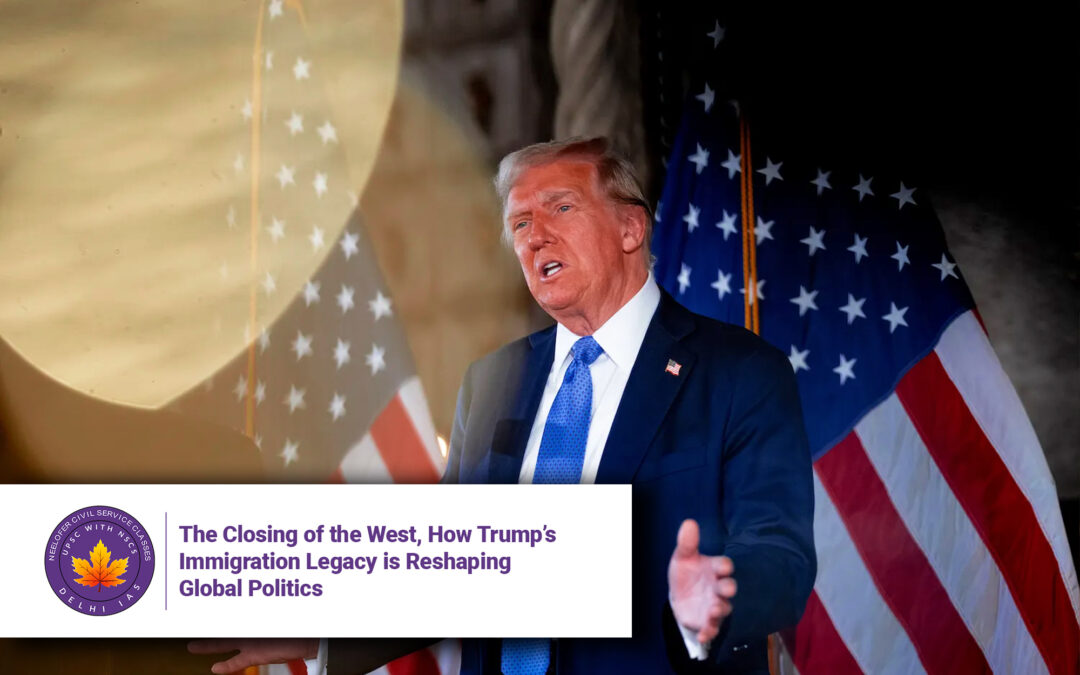
The Closing of the West, How Trump’s Immigration Legacy is Reshaping Global Politics
Introduction
A decade after Donald Trump launched his presidential campaign with a fiery anti-immigration speech, the Western world is undergoing a profound transformation. What began as a controversial political stance in the United States has evolved into a broader retreat from openness, with Europe, North America, and even Japan adopting stricter policies toward migrants, refugees, and foreign workers. This shift raises critical questions: Has Trump won his long-standing argument about immigration? Is the West’s experiment with multiculturalism and global mobility coming to an end?
This article examines the roots of this trend, its global implications, and the potential consequences for economies, societies, and international relations. From Trump’s hardline policies to Europe’s tightening borders, we explore how immigration has become the defining issue of our time—and what it means for the future of the West.
1. The Trump Effect: How One Man Changed the Immigration Debate
The Escalator Speech That Shook the World
-
June 2015: Trump announced his presidential bid by calling Mexican immigrants “criminals and rapists,” a rhetoric previously unseen in mainstream U.S. politics.
-
Why It Worked: The message resonated with a base frustrated by economic inequality and cultural change, propelling Trump to victory in 2016.
From Rhetoric to Policy: Trump’s Hardline Measures
-
Family Separations: The “zero tolerance” policy led to thousands of children being detained at the U.S.-Mexico border.
-
Muslim Ban: Executive orders barred entry from several Muslim-majority countries.
-
Birthright Citizenship Threat: Trump’s push to end automatic citizenship for U.S.-born children of migrants.
-
Denaturalization Campaigns: Targeting naturalized citizens, including political opponents like NYC mayoral candidate Zohran Mamdani.
The 2024 Campaign: Escalating the Stakes
-
Trump’s claim that refugees “eat cats and dogs” and “poison the blood of America” dominated headlines, reinforcing his nativist appeal.
-
Impact: Polls show his base remains loyal, while moderate Republicans increasingly adopt his rhetoric.
2. Europe’s Rightward Shift: From Merkel’s Open Door to Fortress Europe
The Merkel Experiment and Its Backlash
-
2015-2016: German Chancellor Angela Merkel welcomed over a million Syrian refugees, calling it a humanitarian duty.
-
Political Fallout: The far-right AfD party surged, and Merkel’s CDU faced historic losses.
Brexit and the Illusion of Border Control
-
2016 Referendum: “Take back control” became the rallying cry for Brexit, promising reduced immigration.
-
Reality Check: Post-Brexit, migration from non-EU countries (especially India) has surged, fueling accusations of policy failure.
The Rise of Anti-Immigrant Leaders
-
France: Marine Le Pen’s National Rally gains ground by vilifying Muslim immigrants.
-
Italy: Giorgia Meloni’s government cracks down on Mediterranean rescues.
-
Sweden: Once a haven for refugees, now tightening asylum rules amid gang violence fears.
3. The Global Domino Effect: Beyond the West
Japan’s Reluctant Opening—and Closing
-
Facing a demographic crisis, Japan cautiously admitted more foreign workers—but now tightens rules amid public backlash.
Australia’s “Stop the Boats” Legacy
-
Harsh offshore detention policies remain, despite condemnation from human rights groups.
Canada: The Last Holdout?
-
While maintaining liberal immigration policies, Prime Minister Justin Trudeau faces growing pressure to limit arrivals.
4. The Consequences of a Closed West
Economic Risks
-
Labor Shortages: Aging populations in Europe and Japan rely on migrant workers.
-
Brain Drain: Restricting foreign students and researchers harms innovation (e.g., U.S. universities losing talent to Canada).
Social Fractures
-
Xenophobia: Trump-style rhetoric normalizes discrimination.
-
Ghettoization: Migrants pushed to the margins, fueling extremism on both sides.
Geopolitical Fallout
-
Declining Soft Power: The U.S. and Europe lose moral authority on human rights.
-
China’s Opportunity: Beijing positions itself as the new champion of globalization.
5. Is There a Way Back?
Policy Solutions
-
Balanced Reforms: Stricter border controls paired with pathways to citizenship.
-
Global Talent Partnerships: Visa programs targeting high-skilled workers.
-
Refugee Responsibility-Sharing: EU-wide quotas to ease pressure on frontline states.
The Role of Leadership
-
Pro-Immigrant Narratives: Leaders like Trudeau and Macron must counter populism with data (e.g., migrants’ economic contributions).
-
Corporate Advocacy: Tech giants like Google and Amazon depend on global talent—will they push back?
A Warning from History
-
The 1924 U.S. Immigration Act (which slashed quotas) preceded the Great Depression and weakened America’s global standing.
Conclusion: The West at a Crossroads
Trump’s decade-long crusade against immigration has not only reshaped America but also inspired a global retreat from openness. The question is no longer whether the West will close itself off, but how deeply—and at what cost.
The stakes are high: economies could stagnate, societies could fracture, and the ideals of liberal democracy could further erode. Yet, history shows that nations thrive when they embrace diversity and dynamism. The challenge for the next generation of leaders is to forge a middle path—one that secures borders without sacrificing the values that made the West great.
Key Questions & Answers
-
What was Trump’s most controversial immigration policy?
The family separation policy, which detained over 5,000 children at the border. -
How has Europe’s stance on immigration changed since 2015?
From Merkel’s open-door policy to rising far-right governments demanding stricter controls. -
What are the economic risks of reducing immigration?
Labor shortages, slower growth, and loss of skilled workers to competitors like Canada. -
Could Trump’s policies become permanent?
Yes—even if he loses in 2024, the GOP has embraced his nativist playbook. -
Is there a model for balanced immigration reform?
Canada’s points-based system, which prioritizes skills while accepting refugees.

