
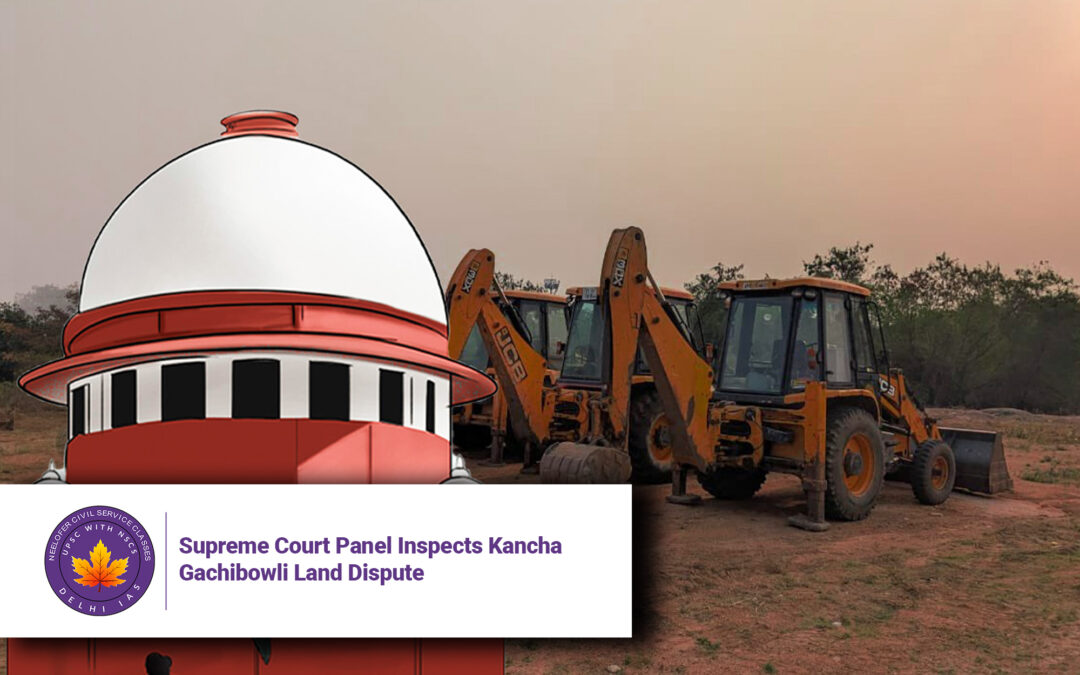
Supreme Court Panel Inspects Kancha Gachibowli Land Dispute
Why in News?
The Supreme Court-appointed Central Empowered Committee (CEC) visited the 400-acre land in Kancha Gachibowli near the University of Hyderabad (UoH) to assess environmental and developmental concerns. The visit marks a crucial step in resolving disputes over the ecologically sensitive area.
Introduction
The land at Kancha Gachibowli, adjacent to the University of Hyderabad campus, has been the center of a contentious issue involving ecological preservation and land use. The Supreme Court has tasked the Central Empowered Committee (CEC) with evaluating the situation on-ground to provide expert recommendations. 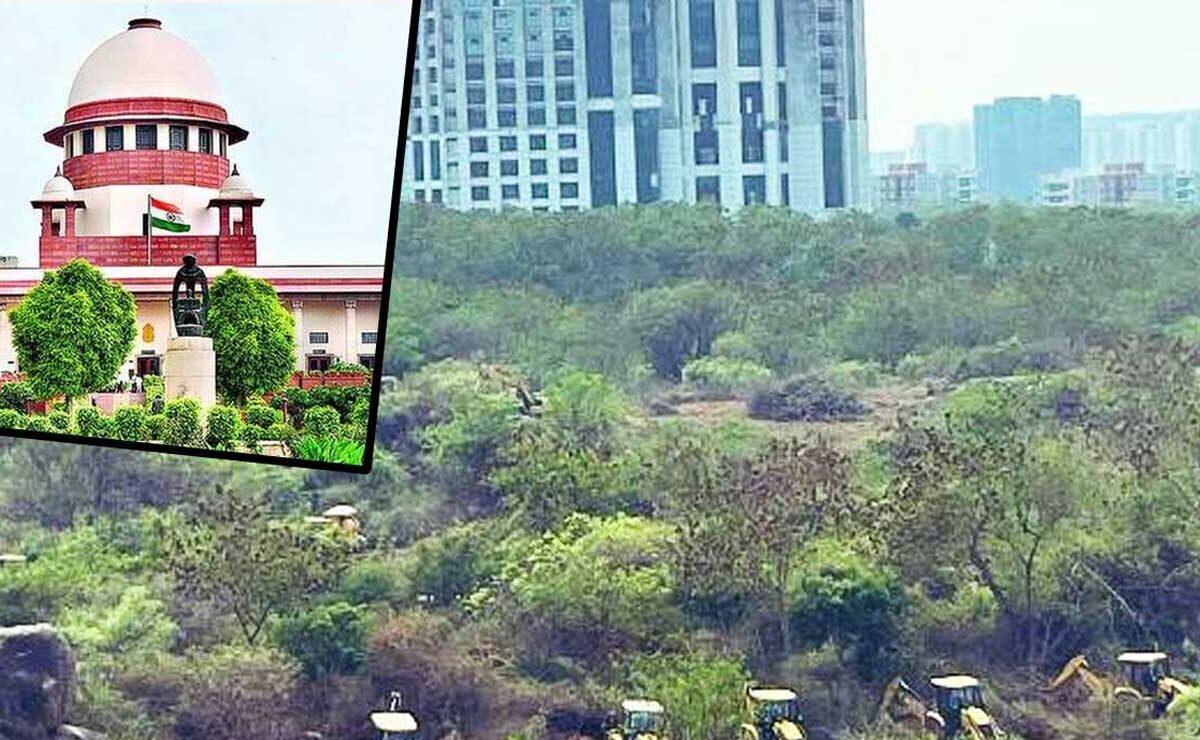
Key Issues/Background
-
Purpose of the Visit
The CEC began its inspection on Thursday to evaluate the 400-acre land and its ecological status. The panel aims to report its findings to the apex court for further legal consideration. -
Composition of the Committee
The committee is headed by Siddhant Das and includes members C.P. Goyal and Sunil Limaye. These officials bring expertise in forest management and ecological conservation. -
Stakeholder Engagement
During the visit, the committee met a variety of stakeholders, including Telangana’s Chief Secretary Santhi Kumari, DGP Jitender, forest officials, political party representatives, and student union leaders from the University of Hyderabad. -
Biodiversity Survey
A comprehensive 49-page survey was submitted to the committee, detailing the rich biodiversity of the university campus. This document is likely to play a key role in guiding judicial decisions regarding land use. -
Environmental Concerns
The inspection is expected to weigh environmental priorities against developmental ambitions. Biodiversity conservation remains a central concern for students and environmental groups advocating against urban encroachment.
Key Takeaways
-
Supreme Court is actively monitoring the ecological impact of land use in Kancha Gachibowli.
-
A high-level expert committee was sent for on-ground assessment.
-
The University of Hyderabad campus is noted for its ecological richness.
-
A detailed biodiversity survey has been submitted to aid judicial review.
-
Local stakeholders, including students, are playing an active role in the process.
Challenges and the Way Forward
Balancing urban development with ecological preservation remains the biggest challenge. While the land is strategically located for infrastructure expansion, environmental advocates insist that the rich biodiversity documented in the area must not be compromised. The Supreme Court’s final decision, guided by the CEC’s report, will set a precedent for future land use disputes involving eco-sensitive zones.
Conclusion
The inspection of Kancha Gachibowli land is a vital development in ensuring that environmental concerns are not overlooked in urban planning. The involvement of multiple stakeholders reflects a democratic approach to ecological justice, as the nation awaits the Supreme Court’s final verdict.
Q&A Section
Q1. Who appointed the Central Empowered Committee (CEC) for this inspection?
The Supreme Court of India appointed the CEC to inspect the land and report back.
Q2. Where is the disputed land located?
The 400-acre land is located in Kancha Gachibowli near the University of Hyderabad.
Q3. What was the purpose of the CEC’s visit?
The CEC was tasked with assessing the land and its biodiversity to assist the Supreme Court in resolving land use concerns.
Q4. What kind of report did the committee receive from the stakeholders?
A 49-page survey highlighting the rich biodiversity of the University of Hyderabad campus.
Q5. Which key officials met the committee during the inspection?
Chief Secretary Santhi Kumari, DGP Jitender, forest officials, political representatives, and UoH student union members.
