
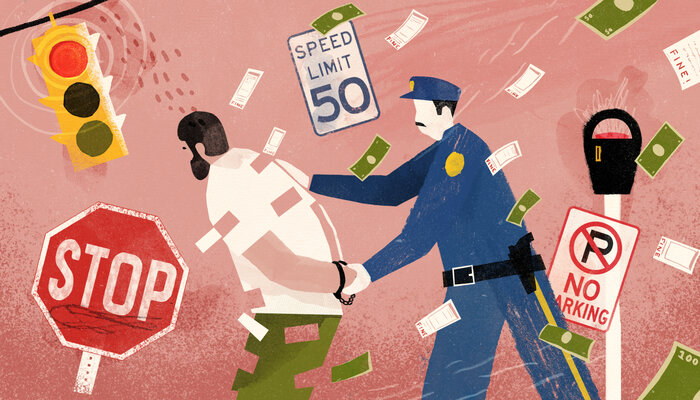
Stop Creating Outlaws by Oversight
Why in News?
India’s over-criminalisation of everyday actions has led to a vast population being classified as offenders due to minor infractions or technical non-compliances. This excessive use of criminal laws calls for urgent reforms to ensure justice, ease of doing business, and trust-based governance.
Introduction
Criminalisation in India extends beyond intentional crimes to encompass minor actions and omissions by ordinary citizens and businesses. The state’s punitive approach has resulted in excessive reliance on criminal punishment for non-compliance, stifling economic activity and overburdening citizens. A structured, principled approach to decriminalisation is essential.
Key Features
- Third Category of Criminals: Besides traditional criminals, there exists a category of individuals criminalised by state laws for routine actions.
- Vidhi Centre for Legal Policy Report: Of 882 Union laws, 370 have criminal provisions, criminalising 7,305 acts, many of which ordinary people have committed unknowingly.
- Over-criminalisation:
- 5,333 offences attract imprisonment.
- 2,036 involve sentences of five years or more.
- 980+ offences carry mandatory minimum prison terms.
- Examples of Overreach:
- Jail time for giving alms to beggars in Indore.
- Film editors penalised for altering certified cinematographs without permission.
- Factory managers imprisoned for failing to maintain account books.
- State Distrust: Assumption that all non-compliance is deliberate and malicious, damaging social and economic fabric.
- GoI’s Challenge: Inability to devise effective and proportionate compliance solutions, defaulting to criminal punishment.
Specific Impacts or Effects
- Social Impact: Criminalising minor actions leads to fear, distrust, and undermines citizen-state relations.
- Economic Impact: Creates barriers to ease of doing business, deterring private investment and innovation.
- Legal Complexity: Inconsistent decriminalisation efforts result in parallel legal systems where only some offences are addressed.
Challenges and the Way Forward
Challenges
- Overlapping and outdated laws.
- Inconsistent decriminalisation reforms.
- Lack of structured, holistic policy on criminalisation.
Steps Forward
- Comprehensive Review: GoI must audit all criminal provisions across central and state laws.
- Clear Rationale: Criminal punishment should only apply to actions threatening life, liberty, national security, or public safety.
- Non-Criminal Alternatives: Use civil penalties, fines, and regulatory interventions for technical and minor non-compliances.
- Holistic Reform Approach: A structured, inclusive process is necessary for genuine decriminalisation.
Conclusion
India stands at a crucial juncture to reshape its regulatory landscape. Reducing over-criminalisation through structured reforms will foster trust-based governance, promote ease of living and doing business, and protect citizens from undue criminal liability.
Q&A Section
1. What is the main issue discussed in the article?
India’s overuse of criminal laws to regulate minor and technical non-compliances.
2. How many Union laws have criminal provisions, according to the Vidhi Centre for Legal Policy?
Out of 882 Union laws, 370 contain criminal provisions.
3. What are some examples of minor acts that attract criminal punishment?
- Giving alms to beggars in Indore.
- Altering a certified cinematograph without permission.
- Failing to maintain proper company account books.
4. What is the consequence of this over-criminalisation?
It undermines citizen trust, hampers business, and clogs the judicial system with cases that don’t require criminal prosecution.
5. What reforms does the article suggest?
- Comprehensive review of laws.
- Limiting criminal punishment to serious crimes.
- Implementing non-criminal compliance mechanisms.
- Structured and holistic decriminalisation efforts.
6. What is the significance of the Jan Vishwas Act, 2023?
It marked a significant step by decriminalising offences under 42 laws.
7. What does the upcoming Jan Vishwas 2.0 aim to achieve?
Decriminalise over 100 more offences to further ease business regulations.
8. Why does the article criticise the government’s current approach?
The reforms have been sporadic, inconsistent, and lack a clear rationale.
9. What role does governance play in decriminalisation?
Trust-based governance can only succeed if citizens are not unduly criminalised for minor non-compliances.
10. How can India benefit from decriminalisation?
It can unlock private investment, boost innovation, and enable businesses to thrive in a less punitive environment.

