
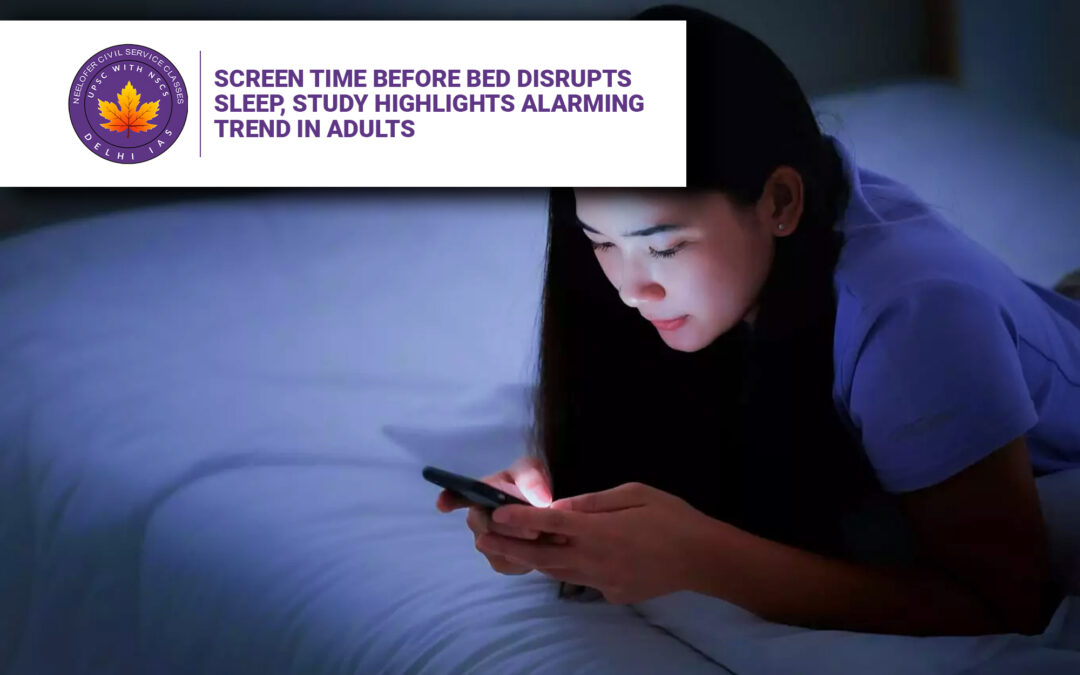
Screen Time Before Bed Disrupts Sleep, Study Highlights Alarming Trend in Adults
Why in News?
A new study has revealed that regular screen use before bedtime is significantly linked to poor sleep quality in adults. With the average adult now spending increasing hours on screens before sleep—mostly for social media or streaming—this finding has crucial health implications, especially as poor sleep is a growing concern in modern lifestyles. 
Introduction
Modern digital habits have crept into every corner of daily life—including bedtime. The latest findings confirm that using electronic screens before sleep leads to delayed bedtimes and reduced sleep duration. In particular, adults who use screens daily before going to bed sleep nearly 50 minutes less per week and experience a 33% higher likelihood of poor sleep quality. This insight is particularly relevant amid growing concerns about screen overuse and sleep disorders.
Key Issues
-
Reduced Sleep Duration
Individuals using screens before bed go to sleep later and get around 50 minutes less sleep per week compared to non-screen users. -
Higher Risk of Poor Sleep Quality
The research revealed a 33% increase in the prevalence of poor sleep among regular screen users. -
Impact on Evening Chronotypes
People with evening chronotypes (natural preference for staying up late) are more affected due to social jetlag—a misalignment between biological clocks and societal demands. -
Circadian Rhythm Disruption
Exposure to blue light from screens interferes with the body’s melatonin production, which is critical for falling asleep. -
Confirmation in Adults
While much research previously focused on teens and children, this study affirms that adults are equally affected by bedtime screen exposure.
Five Key Observations from the Study
-
Later Bedtimes: Screen users tend to delay sleep onset, affecting their overall rest.
-
Weekly Sleep Loss: Around 50 minutes of total sleep time is lost per week due to screen exposure.
-
33% Higher Risk: Daily screen users face a significant rise in sleep-related issues.
-
Chronotype Sensitivity: Evening-type individuals are especially vulnerable to poor sleep from screen use.
-
Adults Affected: Disruptions due to electronic screens aren’t limited to youth but extend to adults as well.
Challenges and the Way Forward
Digital over-dependence is becoming a public health concern, especially as remote work and online lifestyles rise. Sleep deprivation affects productivity, emotional health, and long-term physical wellbeing. Public health campaigns, digital wellness initiatives, and device features like “bedtime modes” can help reduce screen exposure before sleep. It is essential to promote screen hygiene practices such as avoiding screens at least one hour before bed and using blue light filters.
Conclusion
In a world that never logs off, the battle for good sleep starts with better screen habits. The study highlights the importance of mindful digital use, particularly in the hours before bed. Prioritizing sleep hygiene may be a simple yet powerful step toward healthier living in a hyper-connected era.
Q&A Section
Q1. How much sleep is lost weekly due to screen use before bed?
Individuals using screens before bedtime lose approximately 50 minutes of sleep per week.
Q2. What is the increased risk of poor sleep quality linked with screen use?
There is a 33% higher prevalence of poor sleep quality among those who use screens daily before sleeping.
Q3. What is social jetlag and who is affected most by it?
Social jetlag is the misalignment between internal body clocks and societal schedules. It most affects people with evening chronotypes who stay up late but must wake early.
Q4. Does the study apply only to children and teenagers?
No, the study confirms that adults are also significantly affected by screen use before bedtime.
Q5. What are some suggested solutions to reduce screen-induced sleep issues?
Avoid screens at least an hour before bed, use blue light filters, and establish a consistent bedtime routine without digital interruptions.

