
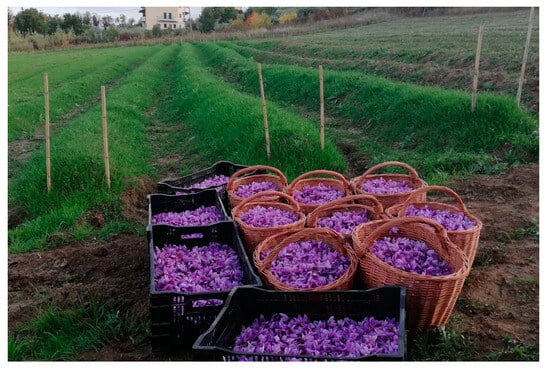
Saffron Sizzles, Broccoli Beckons: The Promise of New-Age Farming
Why in News?
Innovative agricultural practices are reshaping farming in India, with aeroponics, hydroponics, and other modern techniques enabling farmers to grow high-value crops such as saffron and exotic vegetables. This new wave of agriculture is seen as a beacon of hope for reversing long-standing agrarian distress. 
Introduction
Two decades ago, a casual conversation about the “knowledge economy” sparked an insightful observation: why isn’t agriculture considered part of this economy? Today, that vision is taking shape. Farmers are increasingly adopting cutting-edge technologies, entrepreneurial innovation, and data-driven strategies to revolutionize their practices.
The transformation is best illustrated by a Nagpur couple’s success in cultivating saffron using aeroponics, earning ₹50 lakh or more per year. Such examples offer a stark contrast to the stories of despair caused by crop failures and price crashes in India’s troubled agricultural sector.
Key Features of New-Age Farming
-
Technological Innovations
- New techniques include aeroponics, hydroponics, aquaponics, vertical farming, precision agriculture, and solar-powered water pumps.
- Artificial fertilizer-free organic farming and greenhouse cultivation are gaining traction.
-
Entrepreneurial Agri-Startups
- Startups like DeHaan, AgroStar, and NinjaCart treat farmers as entrepreneurs, offering services such as soil testing, distribution, consulting, and marketing.
- These platforms help farmers adopt best practices, enhance productivity, and reduce risks.
-
Data-Driven Agriculture
- Internet apps and data analysis platforms now allow farmers to monitor crop health, guide precision farming, and access accurate weather forecasts.
-
Diversification into High-Value Crops
- Farmers are venturing into saffron cultivation, quinoa, broccoli, and other exotic produce.
- For example, Tamil Nadu farmers are growing watermelons and releasing them in ponds to breed fish—a unique blend of agriculture and aquaculture.
Specific Impacts or Effects
-
Boost to Farmer Incomes
- High-value crops and new farming methods are improving profitability for many farmers.
- A claim mentioned in Tamil Nadu highlights that an investment of ₹7,000 in quinoa cultivation yielded ₹75,000 in returns.
-
Changing Market Dynamics
- Exotic vegetables like broccoli, quinoa, and saffron are in high demand, both locally and internationally.
- Online retailers offer products such as quinoa at ₹245 per kg, signaling growing market acceptance.
-
Reduced Dependency on Traditional Practices
- Shashi Kumar’s journey from a Wipro career to leading high-profile farming ventures underscores the potential for corporate knowledge to enhance agriculture.
- Government efforts, such as promoting neem-coated urea and direct farmer subsidies, are also contributing to the modernization of the sector.
Challenges and the Way Forward
-
Scalability and Accessibility
- While new-age farming holds promise, it remains limited to pockets and has not yet reached the majority of India’s farmers.
- High initial investment costs and the need for technical knowledge can act as barriers.
-
Sustainable Incentives
- For technology to truly reverse the cycle of crisis in agriculture, scalable incentives and support systems must be implemented.
- Without such efforts, farmers may struggle to adopt new practices on a broad scale.
Conclusion
New-age agriculture is proving that farming can indeed be part of the knowledge economy. With innovations like aeroponics, precision agriculture, and entrepreneurial startups, farmers are finding new ways to thrive. However, the road ahead requires scalable models, government support, and investment in knowledge dissemination.
Ultimately, it’s not just about technology—it’s about enabling farmers to reverse their downward spiral and reclaim prosperity. But without systemic changes, even the promise of broccoli and saffron may not be enough to replace the ubiquitous grain.
Questions and Answers
-
What is new-age farming?
New-age farming refers to the use of modern techniques like aeroponics, hydroponics, precision farming, and data-driven agriculture to increase productivity and profitability. -
What example illustrates the success of new-age farming in India?
A couple from Nagpur successfully cultivated saffron using aeroponics, earning ₹50 lakh a year. -
Which startups are helping farmers with modern agriculture techniques?
DeHaan, AgroStar, and NinjaCart are key startups offering services like soil testing, consulting, and distribution. -
How is data analysis helping farmers?
Data analysis platforms assist farmers in monitoring crop health, precision farming, and accessing accurate weather forecasts. -
What exotic crops are farmers growing under new-age practices?
Farmers are growing saffron, quinoa, broccoli, and other high-value crops. -
What challenges does new-age farming face?
Scalability, high initial investment, and limited accessibility for traditional farmers are key challenges. -
How are government initiatives supporting new-age agriculture?
Policies promoting neem-coated urea, direct benefit transfers, and potential inclusion of hydroponics and aquaponics under horticulture missions support modern farming. -
What are the risks of relying solely on startups for agricultural transformation?
Some fear these startups might act as middlemen, boosting farm incomes in the short term without addressing systemic issues. -
What is the significance of Shashi Kumar’s story?
Shashi Kumar left a Wipro career to enter farming, symbolizing the potential for corporate expertise to enhance agricultural success. -
What is the key takeaway from new-age farming practices?
New-age farming offers great promise but requires scalable incentives and systemic support to benefit all farmers and not just a few.

