

Rethinking Urban Planning, The De-Congestion Myth and India’s Infrastructure Dilemma
Why in News?
A recent opinion piece by Sanjeev Sanyal and Aakanksha Arora in The Times of India critiques India’s long-standing urban planning philosophy centered on “de-congestion.” They argue that the obsession with spreading people out to reduce crowding has backfired—leading to inefficient infrastructure, wasted space, and poor urban outcomes. 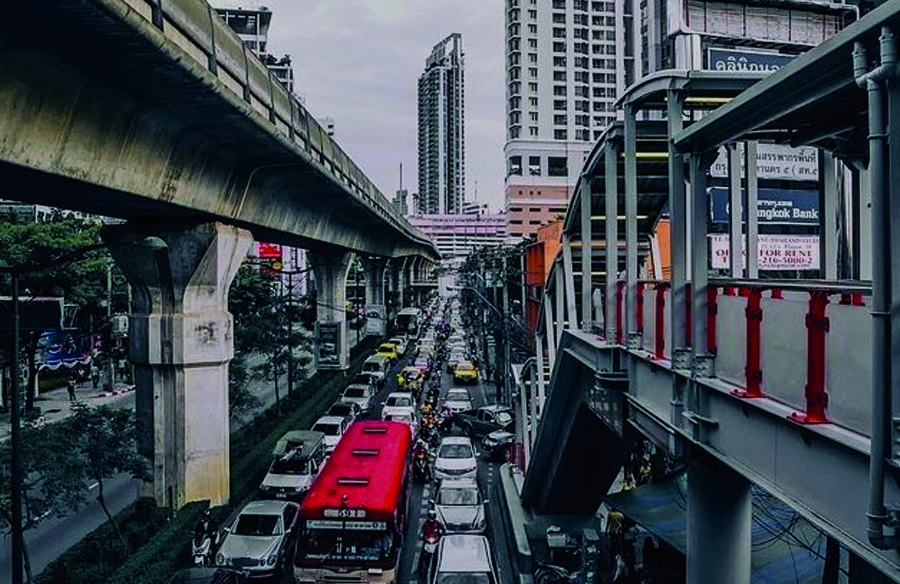
Introduction
India’s urban challenges are often attributed to “overcrowding” and “congestion.” Consequently, the primary planning approach has focused on pushing populations outward—called “de-congestion.” While this may sound logical, experts now question whether this core philosophy is outdated and even counterproductive. By spreading cities horizontally instead of vertically, urban India has created inefficient, expensive, and socially disconnected urban spaces.
Key Issues and Background
1. The Real Problem Isn’t Density — It’s Infrastructure
-
Cities like Tokyo, New York, and Singapore are densely populated but function efficiently because they have built the necessary infrastructure.
-
In India, the focus has been on reducing concentration by expanding outward, creating sprawl without supporting infrastructure.
2. Waste of Land and Economic Potential
-
Restrictions like setbacks, ground coverage limits, and FAR (Floor Area Ratio) caps lead to wastage of usable land.
-
Industrial areas, for example, face severe restrictions, making it difficult to use land productively.
3. Pushing People to the Outskirts Is Not the Solution
-
Instead of building infrastructure in concentrated areas, policies have pushed people to cheaper land far from city centers.
-
These areas lack water supply, sewage systems, public transport, and basic amenities.
4. Flawed Zoning Laws and Overregulation
-
Zoning laws separate land uses rigidly, forcing people to live far from workplaces, increasing traffic.
-
Construction is difficult due to a confusing maze of regulations, encouraging violations, corruption, and rent-seeking behavior.
5. Lost Potential of Agglomeration
-
Urban agglomeration boosts social and economic activity.
-
Spreading people thin removes the benefits of scale, such as shared infrastructure and vibrant job markets.
Specific Impacts or Effects
-
India’s cities are sprawling without a functional backbone.
-
Affordability is compromised because people must live in remote areas with fewer services.
-
Regulations limit compact growth, reducing walkability, reducing business productivity, and increasing traffic.
-
Urban land is underutilized, making housing more expensive and infrastructure more costly to maintain.
Challenges and the Way Forward
Challenges
-
Misplaced focus on “decongestion” instead of efficient density.
-
Excessive regulations making construction and land-use inefficient.
-
Poor infrastructure in outlying areas where people are being pushed.
-
Weak integration of housing, transport, and job centers.
Steps Forward
-
Recognize that density is not a problem if properly managed.
-
Update outdated regulations to encourage compact, mixed-use development.
-
Allow higher FAR (e.g., increased from 1.5 to 5.5 for industrial zones in UP).
-
Implement reforms like the UP Model Zoning Regulations and Urban Development Byelaws to encourage efficient land usage.
-
Promote vertical, infrastructure-backed urban growth in existing city centers.
-
Reduce unnecessary zoning restrictions and enable residential-commercial mixes.
Conclusion
India’s urban crisis is not a crisis of population, but a crisis of planning. The obsession with spreading people out in the name of “de-congestion” has produced cities with broken infrastructure and disconnected communities. Instead, embracing density—backed by robust planning, updated building codes, and compact development—could unlock more livable, inclusive, and economically vibrant cities.
5 Questions and Answers
Q1: What is the main critique of India’s urban planning model?
A: It focuses too much on “de-congestion” and spreading people out, rather than building infrastructure to support high-density, efficient living.
Q2: Why does pushing people to city outskirts not work?
A: These areas lack basic amenities, infrastructure, and connectivity, resulting in poor quality of life and economic inefficiency.
Q3: What are FAR and setbacks, and how do they affect cities?
A: FAR (Floor Area Ratio) and setback rules limit how much of a plot can be built up. Strict rules lead to underutilized land and discourage compact growth.
Q4: What changes have been made to improve the situation?
A: States like Uttar Pradesh have revised zoning laws, raised FAR limits, and relaxed land-use norms to promote compact, efficient development.
Q5: What is the ideal approach to urban planning according to the authors?
A: Support density with strong infrastructure, remove excessive regulations, and encourage agglomeration to boost livability and economic value.

