
Rethinking Politeness in Global Politics
Why in News
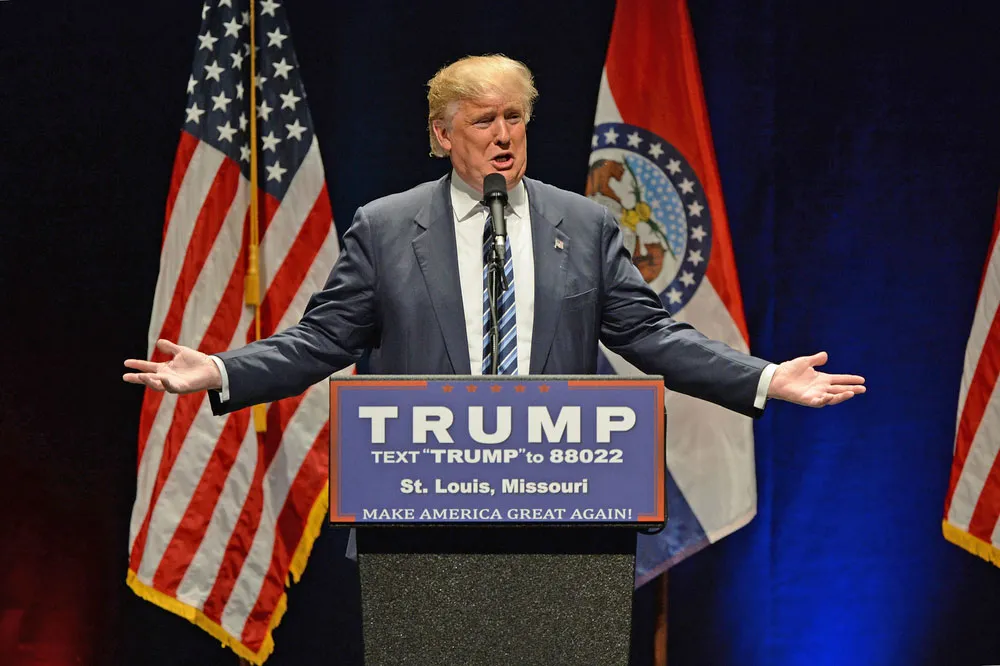
The ongoing discussions about the “rudeness” and “bullying” behavior of political figures like Donald Trump and JD Vance towards Ukraine’s leadership have sparked a deeper debate about diplomatic conduct. This controversy invites us to re-examine the misleading belief that polite and civilized world leaders always act in the best interests of global citizens. 
Key Features
- Historical Context: The article highlights how world powers like the USA have historically undermined global democracies while maintaining a polite façade.
- American Imperialism: It criticizes the hypocrisy of American diplomacy, pointing out the contrast between polite manners and brutal foreign policies.
- Trump Presidency: Trump’s lack of diplomatic etiquette is not an aberration but part of a long tradition of self-interest-driven foreign policy.
- European Colonial Hypocrisy: The article draws parallels between past European colonial brutality and modern Western diplomatic narratives.
- Ukraine and NATO: It examines the West’s approach to Ukraine and the contradictions in its dealings with Russia.
- Civilized vs Uncivilized Leaders: It questions the superficial distinction between polite and impolite leaders, arguing both can act ruthlessly.
- Role of Media: Media portrayal of leaders like Trump and Putin often simplifies complex geopolitical realities.
- Geopolitical Self-Interest: Both American and European actions are guided more by self-interest than altruism.
- Critique of “Madman” Theory: The view of Russia as irrational or “mad” is seen as deflecting attention from Western provocations.
- Call for Critical Thinking: The piece encourages readers to rethink assumptions about international diplomacy and leadership conduct.
Full Article
In global politics, the focus often lies on leaders’ manners and conduct, rather than the consequences of their policies. The debate surrounding the “impoliteness” of Donald Trump and JD Vance, especially towards Ukraine’s President Volodymyr Zelenskyy, reflects a larger misunderstanding. We are led to believe that polite and civil world leaders, who uphold diplomatic etiquette, have our best interests at heart. But history tells a different story.
Between the end of World War II and the early 21st century, the United States orchestrated operations to destabilize and overthrow foreign governments in over 70 countries. In the late 1940s, the US under Harry Truman intervened in Greece on behalf of monarchist forces fighting communists. Under Eisenhower in 1953, it backed the coup that overthrew Iran’s Prime Minister Mohammad Mosaddegh, reinstalling the Shah. The US also supported the assassination of Congo’s leader Patrice Lumumba in 1960. These events weren’t acts of politeness; they were ruthless interventions disguised as diplomacy.
Yet, the diplomatic schedules of leaders like Barack Obama, who ordered drone strikes that killed thousands, remained polished and civil. During his administration, as noted by The Guardian, Obama expanded America’s wars, killing thousands of civilians. In 2016 alone, the US dropped 26,000 bombs, many on civilian areas. His administration supported Saudi Arabia’s devastating war in Yemen, all while maintaining a clean, polite image.
Trump’s presidency, by contrast, was marked by crass language, sexism, and open misogyny. His dealings lacked the table manners expected in international relations, and this is where much criticism arises. Yet, his presidency was not a break from America’s long history of imperialism—it simply stripped away the polite mask.
The West’s reaction to Russia’s invasion of Ukraine and the elevation of Zelenskyy to heroic status are also part of this narrative. It simplifies the situation as a battle between good (civilized West) and evil (uncivilized Putin). However, European and American actions were also driven by geopolitical self-interest. King Leopold II of Belgium built beautiful cities in Brussels using wealth extracted from brutal colonial exploitation in Congo—civilization and brutality have always coexisted.
NATO’s expansion toward Russia’s borders and Ukraine’s aspiration to join NATO are portrayed as supporting democratic ideals. But the West’s refusal to offer security guarantees to Ukraine before Russia’s invasion contributed to the crisis. The simplified portrayal of Putin as a madman and Trump as uncivilized obscures the role of Western policies in fueling conflicts.
The analysis that “Trump is rude” or “Putin is mad” ignores that both polite and impolite leaders often pursue self-interest with little concern for global well-being. The devastation of Ukraine might have been avoided if geopolitical self-interest was recognized, rather than hidden behind claims of promoting freedom and democracy.
The article argues that “politeness” in diplomacy should not distract from the realities of global politics. Both Trump’s rudeness and Obama’s civility mask policies that prioritize national interest over genuine concern for others. We must rethink our belief in polite leaders as moral actors on the world stage.
Questions and Answers
-
What is the main argument of the article “Diplomacy & Table Manners”?
It argues that politeness and civilized behavior in diplomacy are often used to mask brutal and self-interested policies by world leaders. -
Why is Donald Trump’s behavior being criticized in the context of diplomacy?
Trump’s presidency was marked by crass language, sexism, and overt bullying, which contrasted with the diplomatic etiquette traditionally expected of leaders. -
What historical examples does the article give of US intervention in foreign countries?
US interventions include the 1953 Iranian coup, the 1960 assassination of Patrice Lumumba in Congo, and military involvement in Vietnam and Chile. -
How does the article compare Trump’s actions to previous US presidents?
It argues that Trump’s rudeness is not a departure from US foreign policy traditions but rather a stripping away of the polite mask used by his predecessors. -
What does the article suggest about NATO’s expansion and Ukraine’s crisis?
It suggests that NATO’s expansion and the West’s refusal to provide security guarantees to Ukraine contributed to the Russia-Ukraine conflict. -
What example does the article use to highlight European colonial brutality masked by civilization?
It mentions King Leopold II of Belgium, who built beautiful European cities with wealth extracted through brutal exploitation in Congo. -
What is the significance of the phrase “Trump is a very rude man” and “Putin is a madman” in the article?
The article critiques this oversimplification, arguing it distracts from the deeper geopolitical factors and self-interest driving their actions. -
How does the article portray the Western media’s role in global politics?
It suggests that media narratives often simplify complex situations into good vs evil stories, promoting the image of a civilized West and an uncivilized adversary. -
What critique does the article offer about Euro-American foreign policy?
It accuses Euro-American powers of acting in self-interest while presenting their actions as noble and democratic. -
What is the overall message the author wants to convey?
The author encourages readers to move beyond superficial judgments of politeness or rudeness and to critically examine the real motives and impacts of global leaders’ actions.

