
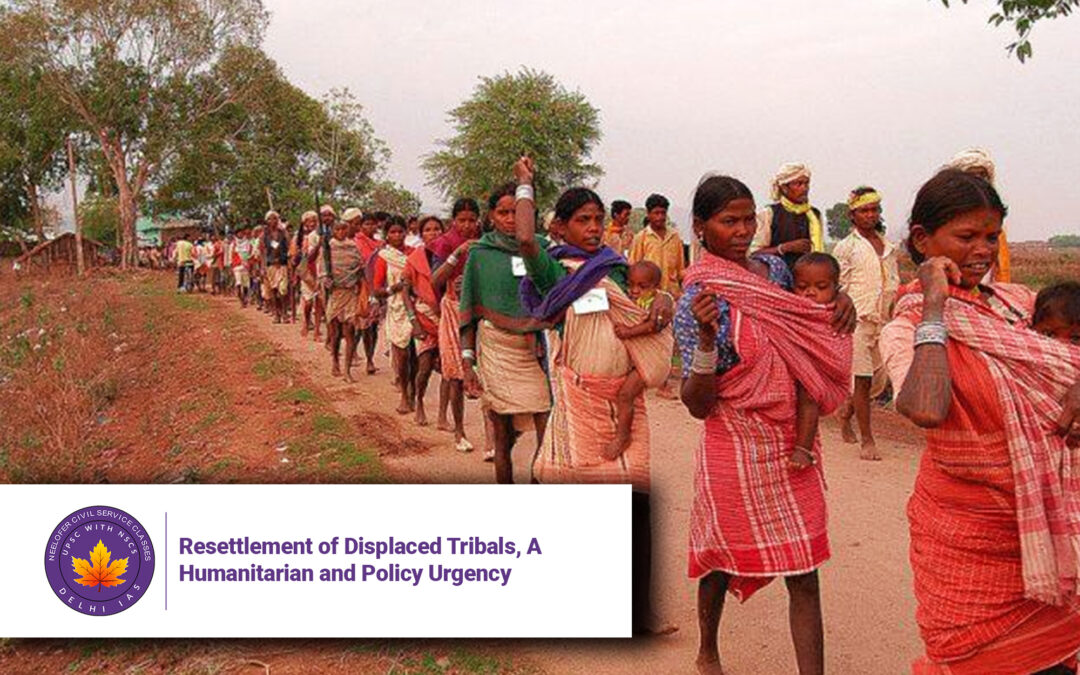
Resettlement of Displaced Tribals, A Humanitarian and Policy Urgency
Why in News?
There is a growing call for the permanent rehabilitation of displaced tribal communities in India, especially the Gutti Koya tribals in Telangana and Andhra Pradesh. These communities have been waiting for proper settlement and land rights for nearly two decades, raising serious human rights and policy concerns. 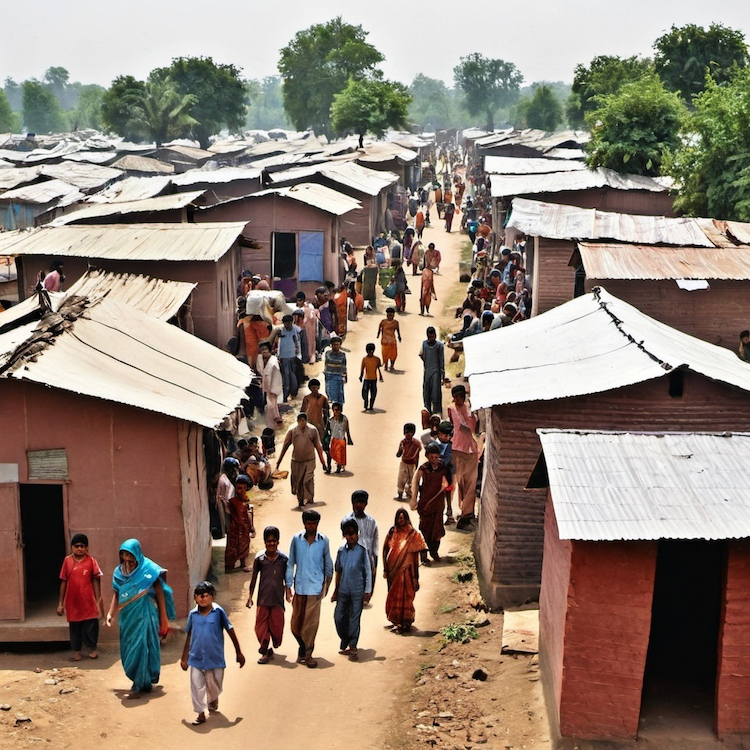
Introduction
In 2005, around 50,000 Gond tribals were relocated from Chhattisgarh to undivided Andhra Pradesh (now Andhra Pradesh and Telangana) as part of the government’s failed “Strategic Hamlet Programme” to fight Maoists. Many of these tribals were pushed to roadside camps and deep forests, some of them even joined security forces against Maoists, while others resumed life in forests.
Today, their lack of permanent settlement continues to affect their dignity, safety, and access to resources.
Key Issues and Institutional Concerns
1. No Land, No Rights
-
The Forest Rights Act (FRA), 2006 states that tribals forced to vacate land before December 13, 2005, are entitled to alternative land.
-
Despite repeated applications, Chhattisgarh has not processed claims of displaced tribals for over five years, even though Telangana and Andhra Pradesh have pushed for their recognition.
2. Delay in Surveys and Rehabilitation
-
A 2021 survey of around 24,000 displaced tribals was proposed but not conducted in Chhattisgarh due to the COVID-19 pandemic.
-
The National Commission for Scheduled Tribes (NCST) has repeatedly called on States to take action, but progress remains slow.
3. Lack of Policy for Internally Displaced Persons (IDPs)
-
India has no formal legal framework for IDPs.
-
Tribals displaced by violence, conflict, and state action are often labelled encroachers, even though they are victims.
Challenges and the Way Forward
-
Legal Recognition: Tribals need clear land titles and forest access for livelihood.
-
Humanitarian Support: Young tribals are now drawn to economic opportunities in Andhra Pradesh and Telangana but face legal uncertainty.
-
Central Intervention Needed: The Home Ministry should act, as it has in other IDP cases.
-
State Cooperation: Chhattisgarh and Telangana must jointly resolve tribal status and rights, especially in light of the March 2026 deadline to end Maoist conflict announced by Home Minister Amit Shah.
Conclusion
The Gutti Koya and other displaced tribal communities have waited too long for dignity, land, and basic rights. With thousands living in legal and humanitarian limbo, it is time for policy action, not promises. A permanent settlement policy can help a new generation of tribals live a dignified life, with access to education, healthcare, and livelihoods—values enshrined in the Constitution.
Q&A Section
Q1. Who are the Gutti Koya tribals and why are they in the news?
They are displaced tribals living in Telangana and Andhra Pradesh without proper land rights, seeking permanent settlement for nearly 20 years.
Q2. What is the Strategic Hamlet Programme?
It was a government initiative (inspired by South Vietnam) to move tribals out of Maoist areas in Chhattisgarh, but it failed.
Q3. What does the Forest Rights Act, 2006 say about displaced tribals?
It allows those displaced before December 13, 2005, to claim alternative land if their original land was lost.
Q4. Why has there been a delay in rehabilitating these tribals?
Lack of coordination between States, COVID-related delays in surveys, and no national IDP law have slowed down progress.
Q5. What is the current demand of the tribal community?
They want permanent settlement, land rights, and recognition so the younger generation can live with dignity and opportunity.
