
Rephasing Global Development Finance, India’s Renewed Push for South South Cooperation
Why in News?
India’s development cooperation with the Global South has witnessed remarkable growth over the last two decades. From expanding financial support to advocating for a balanced global development model, India is now leading efforts to rethink and rephase global development finance. With shrinking Official Development Assistance (ODA) and rising geopolitical complexities, India’s role has become crucial in shaping future partnerships and inclusive global governance frameworks. 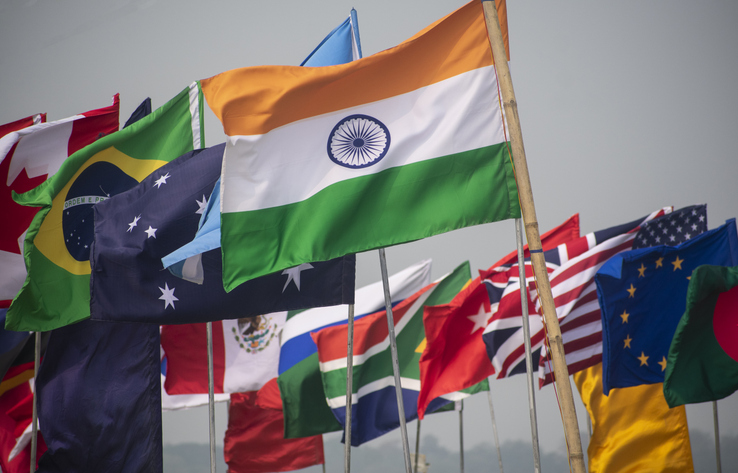
Introduction
India has steadily increased its development assistance—doubling from $3 billion in 2014 to around $7 billion in 2022–23. This growth is not just in quantity but also in strategic intent, marked by investments in capacity building, technology transfer, and concessional finance. A major modality of this support has been the extension of Lines of Credit (LOCs) under the Indian Development and Economic Assistance Scheme (IDEAS), now facing scrutiny under changing geopolitical and financial contexts.
Key Issues and Institutional Concerns
-
Shift Toward Balanced Engagement
Prime Minister Modi, during the 3rd Voice of Global South Summit (VoGS) in 2024, highlighted the need for a Global Development Compact (GDC). The idea emphasizes a balanced mix of support instruments—grants, technology, market access, and capacity building—rather than over-reliance on loans or aid with hidden conditions. This is a marked shift from traditional aid narratives driven by Northern donors. -
Shrinking Global ODA Flows
The OECD countries, especially post-COVID, have reduced their assistance dramatically. For instance, UK’s aid dropped from £15 billion in 2020 to £11 billion in 2021, and US funding saw a similar dip. This affects development programmes in fragile economies that now depend more on bilateral and innovative South-South arrangements. -
India’s Strategic Role and TTC Framework
India is pioneering the Triangular Training Cooperation (TTC) model by collaborating with nations like Germany, Japan, and Brazil to co-fund development projects. This model creates synergy between developed nations’ capital and India’s South-South connect. The TTC also supports training, research, and joint project implementation. -
Aligning with SDG 2030 Goals
The global development finance gap for achieving SDGs by 2030 is over $4 trillion. India’s rephasing efforts, including initiatives like the Global South Facility, are designed to fill this void, with increased South-South investments in digital connectivity, health, and sustainability. -
Partnerships With Results
India has implemented result-focused projects, such as infrastructure work in Africa and digital health missions in Asia. These partnerships emphasize self-reliance, skill-building, and reduced aid dependency—qualities now seen as critical in a fragmented and competitive world order.
Conclusion
India’s renewed push to rephase global development finance is a response to shrinking Western ODA, growing geopolitical uncertainty, and a shifting donor-recipient landscape. By championing the Global South’s needs through inclusive frameworks, India is not only filling financial gaps but also shaping a new narrative in global development cooperation.
Q&A Section
1. Q: What is the Global Development Compact (GDC) proposed by India?
A: The GDC, proposed by Prime Minister Modi, seeks a balanced framework for development finance by integrating grants, technology transfer, market access, and concessional finance, especially for the Global South.
2. Q: What challenges have emerged in global development finance recently?
A: Shrinking ODA flows, geopolitical tensions, reduced multilateral aid, and declining donor commitments have all contributed to a more fragile global aid environment.
3. Q: What is India’s TTC model and why is it important?
A: The Triangular Training Cooperation (TTC) model allows India to partner with countries like Germany, Brazil, and Japan to co-fund and co-implement development projects in third countries, blending North-South and South-South cooperation.
4. Q: How much global finance is needed to meet SDG 2030 targets?
A: Approximately $4 trillion annually is needed globally to meet SDG targets. India’s approach aims to help close this gap by scaling its development cooperation footprint.
5. Q: How is India reshaping development priorities in the Global South?
A: By focusing on result-driven projects, localized implementation, technology transfer, and inclusive finance mechanisms, India is shifting development finance away from traditional donor-driven models toward self-reliant, sustainable growth in the South.
