

Reforms in Focus, Fixing the Process to Power India’s Economic Transformation
Why in News?
In the wake of renewed global trade talks and India’s evolving economic aspirations, discussions have intensified around the need for second-generation economic reforms. Recent emphasis has been placed not only on what reforms are needed but on how to implement them — bringing the process itself into the spotlight.
Introduction
India’s economic reform journey, sparked by the 1991 liberalization, has once again entered the spotlight, largely triggered by global shifts and former US President Donald Trump’s aggressive tariff policies. As policymakers and economists revisit India’s reform trajectory, it is becoming evident that structural and institutional reforms are now more crucial than ever. But this time, it’s not just about what needs to change — it’s about how to change it effectively.
Key Issues / Background
1. Global Trade Context and India’s Position 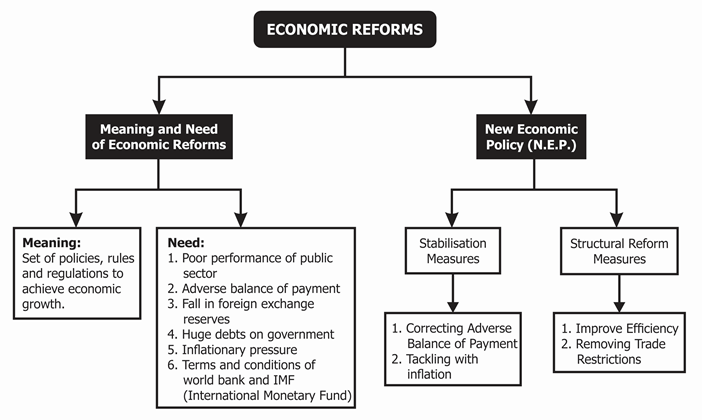
There is renewed urgency for India to explore free trade agreements, including potential alignments with the US and EU. This includes possible consideration of frameworks like the Trans-Pacific Partnership (TPP) or the CPTPP.
2. Need for Institutional Mechanisms
Experts argue that successful reform now depends on three crucial institutional fixes:
-
A permanent expert committee to oversee reforms.
-
A revitalized civil services apparatus committed to implementation.
-
A robust inter-governmental body like the Inter-State Council to manage federal coordination.
3. Budgetary Signals for Reform
Union Budget 2025, presented by Finance Minister Nirmala Sitharaman, reflected the urgency for deeper reforms, including:
-
Relaxation of land and labor laws.
-
Reassessment of agricultural policy.
-
Greater investment in education and R&D.
-
Taxation and judicial reforms.
4. Need to Reinvigorate the Reform Process
Despite repeated attempts, many reforms have failed due to lack of follow-through. While Prime Minister Modi’s government initiated major changes during its first term, bureaucratic resistance and lack of institutional continuity slowed progress.
5. State-Level Coordination and Federalism
With increasing economic decentralization, successful reform also depends on cooperation between the Centre and states. The role of the GST Council is an example of how such collaboration can function, but broader structures like the Inter-State Council need revitalization.
The Core of the Challenge: Process Over Policy
The most important realization is that India no longer lacks policy blueprints — it lacks process integrity. Over the past 30 years, experts have recommended nearly every reform under the sun, from tax simplification to judicial streamlining. But implementation often stalls due to poor planning, turf battles among ministries, and lack of accountability. The key takeaway: Without fixing how reforms are done, what reforms are done won’t matter.
Missed Perspectives
-
Execution over Design: Policy plans exist, but poor implementation mechanisms lead to half-hearted reforms.
-
Bureaucratic Resistance: Lack of domain expertise and fear of political backlash hamper genuine reform.
-
Consultative Deficit: Too many reforms have bypassed public and expert consultation, reducing their legitimacy.
-
Lack of Accountability: Committees formed to study reforms often dissolve after reporting, with little follow-up.
-
Institutional Gaps: Absence of a dedicated reform secretariat weakens coordination across central and state governments.
Conclusion
India stands at a critical juncture. To transform into a high-growth economy, it must move beyond announcements and headlines to build enduring institutions that can carry out reform sustainably. The focus must shift from simply proposing policy to creating systems that ensure policies are carried through. Rebuilding trust in governance, revamping administrative structures, and empowering reform-minded bodies will be key to this next phase of India’s economic evolution.
Q&A Section
Q1. What triggered the renewed focus on India’s economic reforms?
Former US President Donald Trump’s tariff initiatives, combined with a need to sustain economic momentum, prompted Indian policymakers and experts to re-evaluate the country’s reform agenda.
Q2. What kind of reforms are being prioritized?
Reforms in taxation, land, labor, agriculture, judicial systems, and urban policy are seen as essential, alongside changes in how these reforms are implemented.
Q3. Why has reform implementation been ineffective so far?
Lack of institutional continuity, bureaucratic resistance, and poor coordination between ministries and states have hindered reform efforts despite good intentions.
Q4. What are the three institutional fixes proposed to improve reform execution?
Experts recommend creating a permanent expert reform committee, reforming civil services for domain expertise, and empowering inter-governmental bodies like the Inter-State Council.
Q5. How can states play a greater role in reform?
With many economic areas under state jurisdiction, reforms can only succeed through strong Centre-state collaboration. Institutional frameworks like the GST Council show how coordinated efforts can lead to smoother implementation.
