
Recalling India Most Proactive Defence Acquisition Era 1985–1989
Why in News?
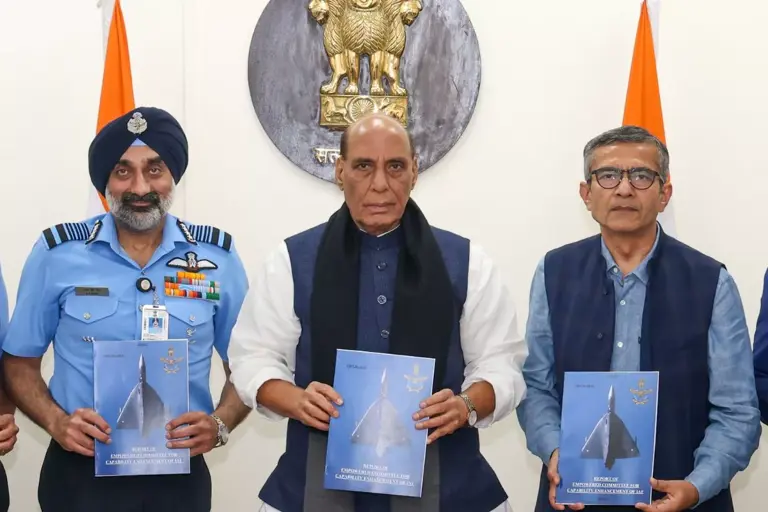
In a time when India faces recurring debates over defence procurement inefficiencies, Air Chief Marshal A.P. Singh recently turned national attention to the Indian Air Force’s alarming numbers and outdated technology. His statement reignites discussions about India’s defence preparedness, procurement practices, and the need to learn from the proactive and futuristic defence acquisitions under Prime Minister Rajiv Gandhi’s tenure (1985–1989).
Introduction
It’s common to criticize Rajiv Gandhi over the Bofors scandal, but few acknowledge that 1985–1989 marked the only period in Indian history when weapon acquisitions were proactive, futuristic, and revolutionary. During this time, India invested heavily in its defence forces, adopting cutting-edge technology to modernize its arsenal. The acquisitions focused on securing India’s borders through a robust and future-ready strategy.
Highlights of the 1985–1989 Defence Acquisition Era
- Procurement of cutting-edge platforms that continue to form the backbone of India’s military power today.
- Emphasis on long-term strategic planning, a stark contrast to India’s otherwise reactive, ad-hoc defence procurement methods.
- Bold leadership under Rajiv Gandhi and key defence ministers, which overcame traditional bureaucratic inertia and delays.
Key Features of the Rajiv Gandhi-Era Defence Acquisitions
| Feature | Details |
|---|---|
| Time Period | 1985–1989 |
| Leadership | PM Rajiv Gandhi, Defence Minister Arun Singh, Chiefs like Gen. K. Sundarji |
| Major Weapons Procured | Mirage-2000 fighters, MiG-29s, Sukhoi-30MKI contracts, Bofors artillery, T-72 tanks |
| New Capabilities | Advanced fighter jets, cutting-edge tanks, radar systems, modernized artillery |
| Focus | Proactive strategy; technology acquisition aligned with India’s long-term needs |
| Strategic Approach | Move from buyer’s dilemma to pre-emptive acquisitions to counter threats |
Defence Planning: Then vs. Now
The Rajiv Gandhi Era (1985–1989)
- The Indian military had a clear, cohesive plan for acquisition, guided by the Indo-centric strategic doctrine.
- Visionary leaders like General K. Sundarji drove systemic planning.
- India procured:
- Mirage-2000s, credited with frontline roles even decades later (Balakot air strikes).
- MiG-29s and Sukhoi-30MKI deals, bolstering aerial superiority.
- T-72 tanks, enhancing India’s mechanized infantry.
- Bofors artillery, which decisively impacted the Kargil War.
- This period stood out for bravery in decision-making, with leadership akin to a senior doctor making risky decisions to save a patient.
Current Scenario
- India’s defence purchases today are often episodic, tactical, and driven by emergencies, lacking long-term strategic vision.
- Post-1991 liberalization made cost concerns and self-reliance (Atmanirbhar Bharat) the priority, leading to piecemeal acquisitions.
- Examples include:
- The Rafale deal, driven more by urgency than a comprehensive long-term plan.
- Slow, uncertain progress in acquiring unmanned vehicles, advanced helicopters, and submarines.
The Culture of Risk Aversion in Indian Defence Procurement
- Post-Bofors, defence procurement became risk-averse and phobic, leading to long delays and emergency buys (termed “chalta hai” syndrome).
- Defence acquisitions turned into a tightrope walk, more about negotiating prices and commissions rather than strategic necessities.
- Defence planning became reactive, often driven by crises rather than strategic foresight.
The Self-Defeating Phobia Post-Bofors Scandal
- The Bofors scandal caused an entire generation of defence leadership and bureaucracy to avoid decisive procurement out of fear.
- Despite India’s massive defence needs, post-1991 procurement largely focused on cost, optics, and political hesitations, leaving capability gaps.
Lessons for Today’s Defence Planning
- Revisit Strategic Doctrines:
- Defence acquisitions should align with a clear national strategy.
- Long-term military modernization should take precedence over short-term fixes.
- Encourage Bold Leadership:
- Leadership must take risks to ensure timely and strategic acquisitions.
- Balance Self-Reliance with Urgency:
- India must balance Atmanirbhar Bharat with timely foreign acquisitions to meet pressing defence needs.
Conclusion
Between 1985 and 1989, India’s defence procurement was proactive, visionary, and futuristic, largely thanks to Rajiv Gandhi’s leadership. The systems acquired during this time have served India’s defence needs for decades. However, fear of corruption scandals and risk aversion have since paralyzed India’s defence acquisitions, resulting in urgent, last-minute purchases.
India must shed its defensive phobia and rebuild a culture of strategic, long-term planning to secure its national interests. The era under Rajiv Gandhi offers a blueprint for bold, courageous defence modernization.
Postscript: The Trick Played on the Reader
The author, Shekhar Gupta, shares an anecdote about an editorial he wrote on April 27, 2005, predicting the National Interest would die due to self-inflicted cowardice in defence procurement. Yet, even today, the IAF flies aircraft procured in the late 1980s, proving the enduring strength of decisions made in that period.

