
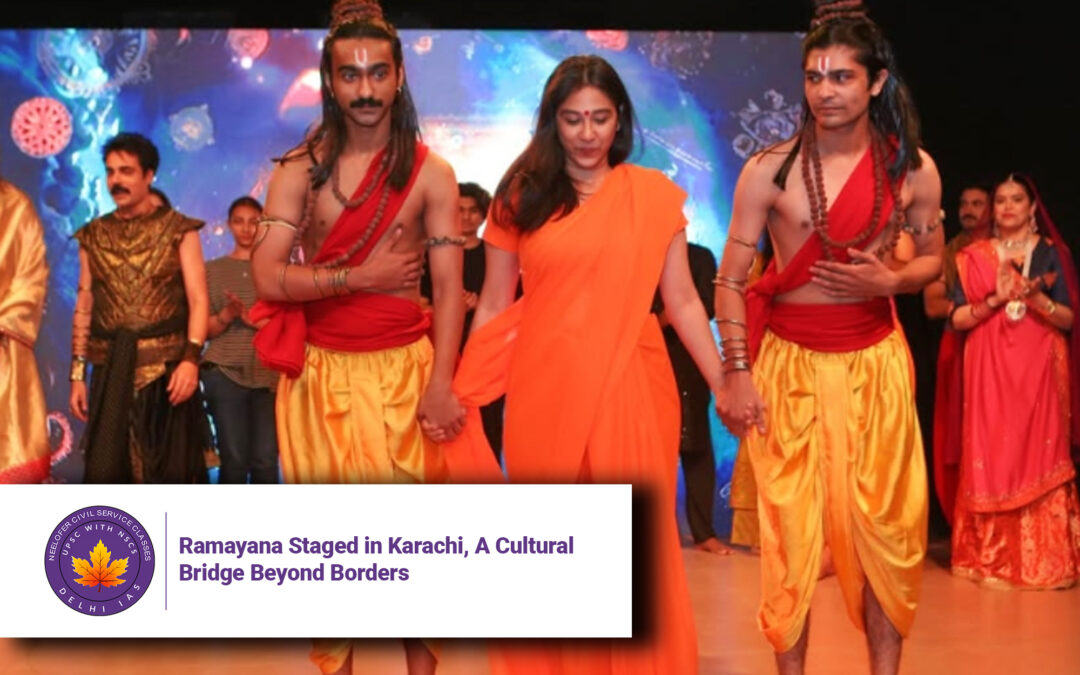
Ramayana Staged in Karachi, A Cultural Bridge Beyond Borders
Why in News
In a remarkable act of cultural harmony, a Pakistani theatre group named Mauj staged the Hindu epic Ramayana at the Arts Council of Pakistan in Karachi. This event stood out not only as a rare cross-border artistic expression but also for its timing—amid high political and military tensions between India and Pakistan, including the recent killing of 26 Hindus in a terror attack in Jammu & Kashmir. 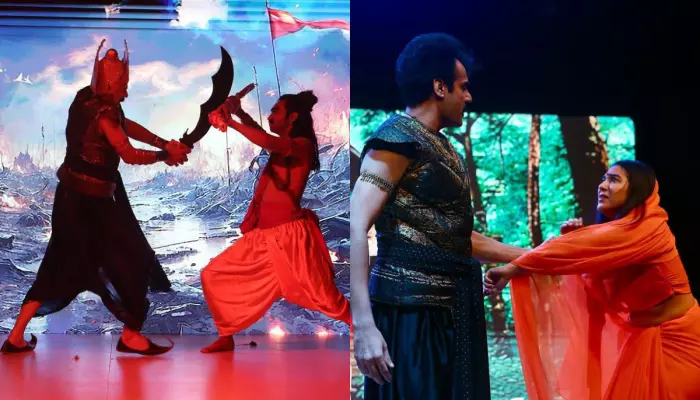
Introduction
The Ramayana, an ancient Hindu epic that narrates the journey of Lord Rama to rescue Sita from the demon king Ravana, has long been an emblem of Indian spiritual and cultural ethos. Its performance in Karachi by a group of Pakistani actors—all of them Muslims except one Hindu—demonstrates a symbolic yet significant step towards interfaith understanding and regional peace.
What made this performance even more special was that it was staged and enjoyed by a Pakistani audience, many of whom were unfamiliar with Ramayana but knew characters like Hanuman through other plays such as ‘Mundraki’. The staging was not just a theatrical event—it was a brave cultural statement.
Key Issues and Background
-
Cross-Cultural Theatre Amid Conflict: The performance came during heightened Indo-Pak tensions, especially following a devastating attack on Hindu pilgrims and recent military escalations.
-
Unique Cast Composition: Directed by Yogeshwar Karera (the only Hindu in the group), with production led by Rana Kazmi, the cast featured all local Muslims, including Sana Toaha as Kaikeyi and Samhan Ghazi as Ravana.
-
Revival of Cultural Epics: While Ramayana hasn’t been staged frequently in Pakistan, its televised screening on Doordarshan in 1987–88 had once captured the hearts of viewers across the subcontinent—including in Pakistan.
Specific Impacts or Effects
-
Cultural Resonance Across Borders: The performance rekindled a shared South Asian legacy. It reminded audiences that Ramayana and Mahabharata, though religious in origin, are cultural assets of the broader subcontinent.
-
Audience Reception: The theatre was packed, and the show received warm appreciation. It suggested a latent curiosity and appreciation among Pakistani audiences for Indian epics.
-
Memory and Unity: The event offered a poignant recall of the days before Partition, when stories from Hindu mythology were commonly consumed by Muslim audiences too.
Challenges and the Way Forward
-
Religious Polarisation: The ongoing climate of religious extremism in both countries makes such cultural exchanges difficult to sustain and replicate.
-
State Narratives vs People’s Interest: Political hostility between India and Pakistan often drowns voices that advocate for shared heritage and peace.
-
Need for Soft Diplomacy: Events like this could be supported more actively by civil society organizations, art councils, and peace foundations to counter radical narratives.
Conclusion
The staging of Ramayana in Karachi was more than just a play—it was a defiant embrace of shared culture over divided politics. It showed that despite the decades of animosity, there is still room for common ground in stories, art, and collective memory. It also showed that theatre can act as a platform for deeper unity and dialogue—sometimes even more powerfully than diplomacy.
This act by Mauj was a gentle yet firm reminder: borders may divide land, but stories still connect hearts.
5 Questions and Answers
1. What is the significance of staging Ramayana in Pakistan?
It represents a bold cultural gesture promoting harmony amidst strained India-Pakistan relations.
2. Who directed and produced the Ramayana play in Karachi?
The play was directed by Yogeshwar Karera and produced by Rana Kazmi.
3. Were the performers all Indian or Pakistani?
All performers were local Pakistanis; all Muslims except for the director, who is Hindu.
4. Has Ramayana been performed in Pakistan before?
Theatre performances of Ramayana are rare, but the epic has been popular through television screenings in the 1980s.
5. What does this event reflect about public sentiment in Pakistan?
It reveals a curiosity and openness among many Pakistani citizens toward Indian cultural epics, despite political tensions.

