
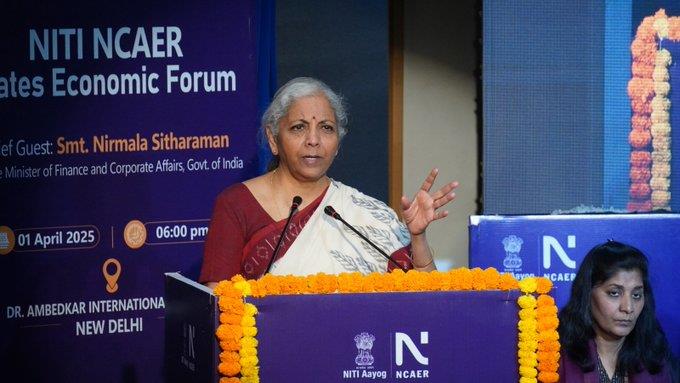
Raising Revenue as Crucial as Managing Debt, Says Finance Minister at NITI-NCAER Forum
Why in News?
At the launch of the ‘NITI-NCAER States Economic Forum’ portal in New Delhi, Union Finance Minister Nirmala Sitharaman emphasized the importance of raising revenue alongside managing debt in public finance. She also called for non-partisan handling of public finances, urging political parties and governments to approach fiscal policy with responsibility and unity, beyond political differences. 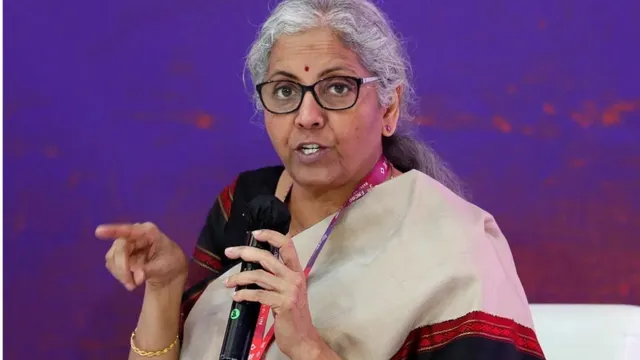
Key Issues
Managing Debt vs. Raising Resources
-
Sitharaman stated that raising financial resources for public expenditure is just as vital as controlling debt levels.
-
In a growing economy like India’s, borrowing to finance schemes is acceptable to an extent but must be managed wisely to ensure fiscal sustainability.
-
She argued that countries cannot forever depend on debt, stressing the importance of gradually building revenue capacities over time.
No Politics in Public Finances
-
The Finance Minister strongly discouraged politicizing financial matters, particularly those concerning the central government and the states.
-
She insisted that sound financial management and cooperative federalism must prevail over partisan agendas:
“There should be no politics over it [public finances].”
-
Referring to Goods and Services Tax (GST) and debt-to-GDP caps suggested by institutions like the Fiscal Responsibility and Budget Management (FRBM) Committee, she emphasized a shared responsibility between Centre and states.
States’ Fiscal Responsibilities and Transparency
-
The new portal developed by NITI Aayog and NCAER (National Council of Applied Economic Research) aims to provide a transparent and comprehensive dashboard showing state-wise economic data.
-
Sitharaman addressed questions about whether the Union Government interferes in state finances:
“We have not withheld a single rupee… Punjab doesn’t speak differently from Gujarat or Kerala.”
-
She also pointed out the need for reforms in how states approach their revenue and expenditure planning, calling for a more data-driven and realistic outlook.
Inclusivity and Welfare
-
The Minister clarified that welfare policies remain a central priority:
“There is no wrong in giving freebies… but what is welfare and what is a freebie must be debated.”
-
She noted that the government is committed to targeted and inclusive welfare, but stressed that populist policies must be balanced against long-term economic sustainability.
What Next?
-
The NITI-NCAER States Economic Forum portal is expected to empower state governments and policymakers with real-time access to key economic data, fostering better planning and accountability.
-
As India looks to further strengthen its federal fiscal framework, emphasis will likely shift to harmonizing central and state policies, increasing revenue efficiency, and depoliticizing economic decision-making.
Q&A Section
Q1. What is the main message from the Finance Minister’s address?
A: That raising resources is just as important as managing debt, and public finances should not be politicized.
Q2. What new initiative was launched at the event?
A: The ‘NITI-NCAER States Economic Forum’ portal, providing economic dashboards for state-level fiscal performance and transparency.
Q3. What concerns were raised about state finances?
A: Questions were raised about the Union Government’s role in state revenues, but Sitharaman clarified that no funds have been withheld from any state.
Q4. What is the stance on welfare and freebies?
A: The Minister supports welfare for the needy but cautioned against indiscriminate freebie politics, urging fiscal responsibility.
Q5. What long-term strategy did the FM propose?
A: Countries must eventually move away from excessive borrowing and build robust internal revenue mechanisms for sustainable growth.
