
Private Equity $24 Billion Walgreens Bid: A Bold Gamble
Why in News?
Sycamore Partners, a low-profile private equity firm, has made headlines with its $24 billion bid to acquire Walgreens Boots Alliance. This move is considered one of the most ambitious private equity deals, especially given the scale of the buyer relative to the target. 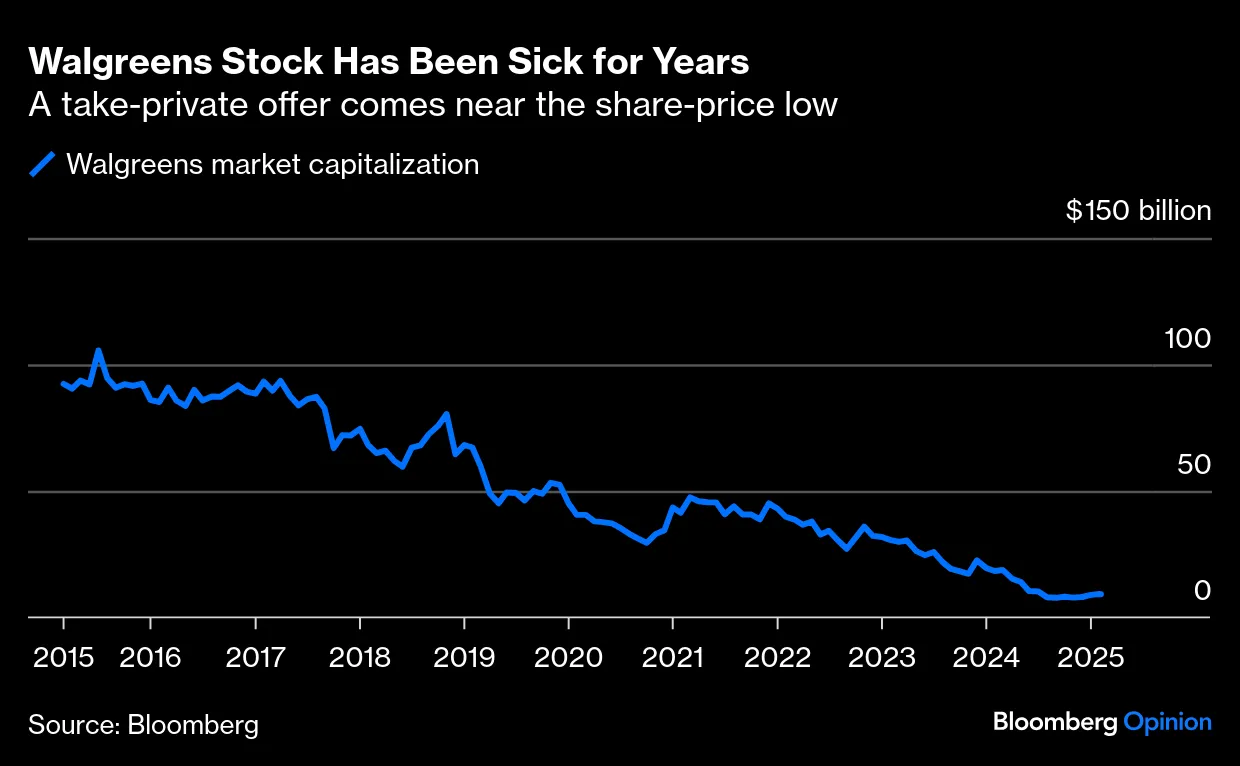
Introduction
Walgreens Boots Alliance, once a retail giant, has seen its market value shrink to under $8 billion from more than $100 billion in its heyday. Despite its struggles, Sycamore Partners has expressed interest in taking over the pharmacy chain, proposing a mammoth $24 billion buyout deal. The bid has sparked intense debate over its feasibility and the potential risks involved.
Key Features
-
Sycamore’s Bold Move
Sycamore Partners, known for investing in fashion brands like Kurt Geiger and Staples, is targeting Walgreens to unlock its untapped potential.
Sycamore sees potential that can be realized away from public market pressures, particularly by focusing on Walgreens’ retail footprint and healthcare services. -
Walgreens’ Struggles
Walgreens has been battling falling revenues, competition from Amazon and Walmart, and regulatory pressures on healthcare products.
The company’s valuation has plummeted due to ongoing operational challenges, high debt, opioid settlements, and competition. -
Deal Structure and Valuation
The bid values Walgreens at about $13 billion in equity. Adding debt and other liabilities pushes the total value to $24 billion.
Sycamore plans to finance the deal with about $12 billion in debt, as reported by Bloomberg News.
Shareholders are offered $11.45 a share, representing a 20% premium over the pre-bid stock price.
Specific Impacts or Effects
-
Impact on Walgreens Shareholders
If successful, shareholders could see an uplift of up to 63%, depending on asset sales and the final deal structure.
The offer values Walgreens below its peak valuation but above its recent trading lows. -
Sycamore’s Potential Gains and Risks
Sycamore could gain a major foothold in healthcare retail if the deal succeeds.
However, the firm faces significant risks, including integrating and turning around a complex retail business and the uncertainty of asset disposals. -
Broader Private Equity Implications
The deal highlights the private equity sector’s renewed confidence and appetite for large, complex transactions.
Rival CVS Health is also under pressure as Walgreens potentially restructures.
Challenges and the Way Forward
Challenges
- Walgreens’ core retail pharmacy business continues to face stiff competition and operational hurdles.
- Financing a massive deal amid uncertain asset sales increases Sycamore’s risk.
- Regulatory and public scrutiny could complicate the transaction.
Steps Forward
- Sycamore needs to ensure a clear turnaround strategy and execute it effectively to stabilize Walgreens’ operations.
- Careful management of debt and asset sales will be essential to avoid financial strain.
- Walgreens must regain market trust through strategic restructuring and improved services.
Conclusion
The $24 billion bid by Sycamore Partners for Walgreens Boots Alliance marks one of the boldest private equity plays in recent history. While the potential rewards are significant, so are the risks. Success will depend on Sycamore’s ability to transform Walgreens’ struggling business into a profitable venture. Investors are watching closely, and while some remain skeptical, others believe this could be a strategic masterstroke in the making.
Questions and Answers
-
Who is bidding for Walgreens Boots Alliance?
Sycamore Partners, a private equity firm. -
How much is the bid valued at?
$24 billion, including debt and other liabilities. -
What is Walgreens’ current market value?
Under $8 billion. -
Why is Walgreens struggling?
Competition from Amazon and Walmart, regulatory pressures, opioid settlements, and declining revenues. -
What assets does Sycamore currently own?
Brands like Kurt Geiger, RONA, and Staples. -
How will Sycamore finance the Walgreens deal?
Through about $12 billion in acquisition debt. -
What premium is being offered to Walgreens shareholders?
$11.45 per share, about 20% above the pre-bid stock price. -
What challenges does Sycamore face post-acquisition?
Turning around Walgreens’ core business and managing asset sales. -
What are the potential benefits for Walgreens shareholders?
A potential share price uplift of up to 63%, depending on asset sales. -
Why is this deal significant for the private equity sector?
It signals renewed appetite for large, complex deals amid evolving market conditions.

