
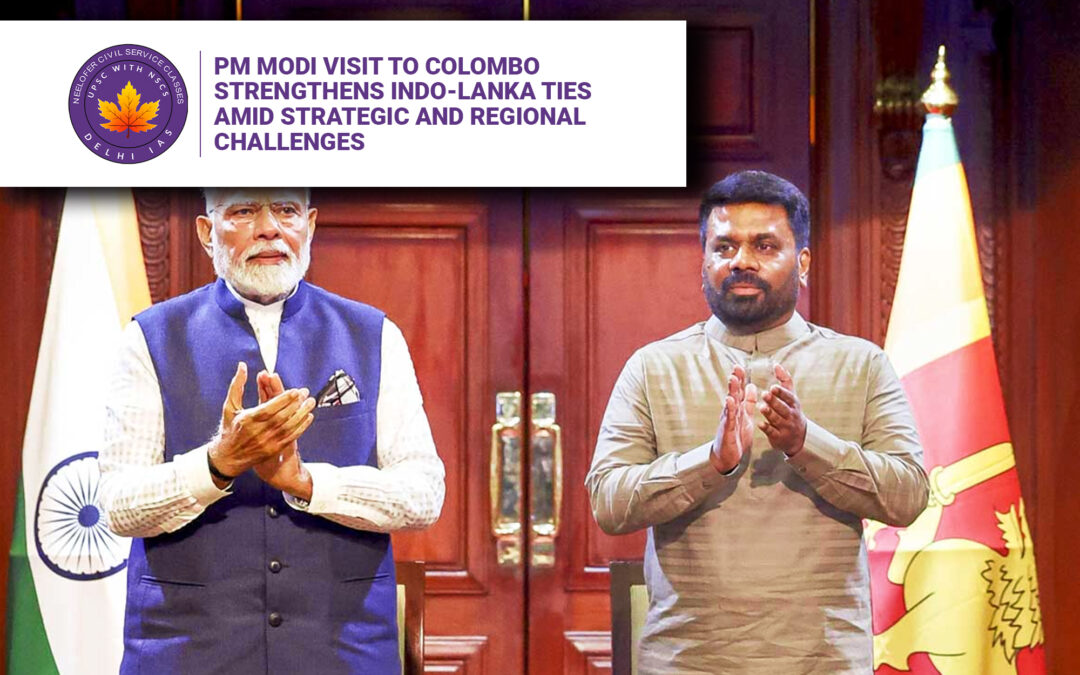
PM Modi Visit to Colombo Strengthens Indo-Lanka Ties Amid Strategic and Regional Challenges
Why in News?
Prime Minister Narendra Modi visited Sri Lanka from April 4 to 6, 2025, marking his first visit since 2019. His trip comes at a critical time following the political shift in Colombo under the National People’s Power (NPP) regime, and it aims to deepen bilateral ties and address long-pending disputes such as defence cooperation and the fishermen’s issue. 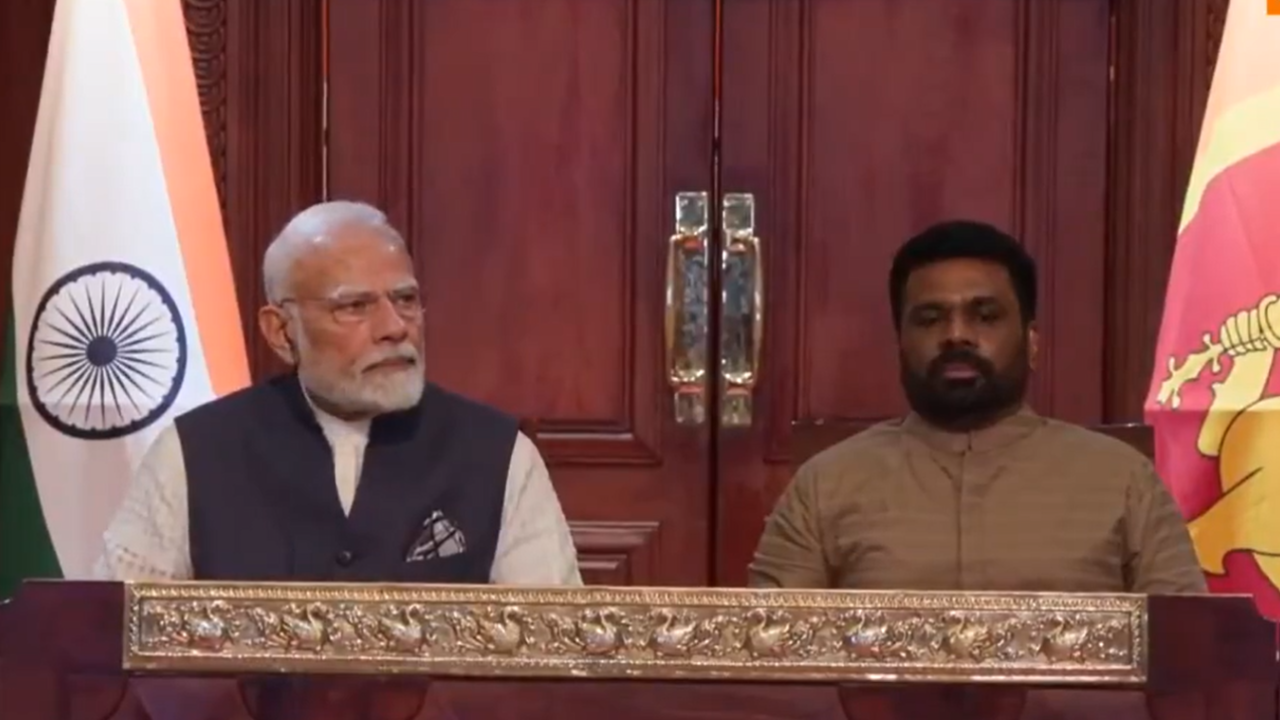
Introduction
PM Modi’s visit reflects more than diplomatic niceties; it underlines India’s intent to maintain strong ties with its southern neighbour amid changing regional dynamics. Sri Lanka, under the newly elected Anura Kumara Dissanayake-led NPP government, appears to be recalibrating its foreign policy with a focus on cooperation with India.
Key Issues and Background
1. Strategic Defence Cooperation
-
During the visit, India and Sri Lanka signed a Memorandum of Understanding (MoU) on defence cooperation, hailed as the first of its kind in their bilateral history.
-
PM Modi emphasized that “the security of both countries is interconnected and co-dependent.”
-
However, there remain lingering Indian concerns due to past incidents, like the 1987 understanding prohibiting foreign military use of Sri Lankan ports (e.g., Trincomalee) which have not been fully honoured.
2. Political Shift in Sri Lanka
-
The JVP-led NPP’s recent electoral victory was initially viewed with skepticism in India due to the party’s historical anti-India stance.
-
However, President Dissanayake reassured India that Sri Lanka will not allow its territory to be used against India’s security and regional stability.
The Core of the Concern
1. Fishermen’s Dispute
-
The fishermen’s issue, especially affecting Tamil Nadu, remains unresolved.
-
Recent meetings between fishing communities on both sides of the Palk Bay were a positive step, but there is a need for structured and sustained bilateral talks overseen by government officials.
-
A flexible and empathetic approach is required for a long-lasting solution.
2. Tamil Issue and Indo-Lanka Accord
-
Tamil political parties in Sri Lanka reiterated the importance of the 1987 Indo-Lanka Accord, calling for India’s “legitimate involvement” in resolving Tamil concerns.
-
The Accord laid the foundation for provincial councils and devolution of powers, but its full implementation remains incomplete.
-
India was urged to act as a neutral facilitator, particularly in the Northern and Eastern provinces, offering economic assistance and promoting democratic dialogue.
Key Observations
-
Sri Lanka conferred its highest honour for foreign leaders on PM Modi, signaling warmth in bilateral ties.
-
Despite past doubts, the new Sri Lankan leadership appears open to constructive engagement with New Delhi.
-
The MoU on defence signals a significant step forward, but its real impact depends on Sri Lanka’s consistent implementation and sensitivity to Indian concerns.
Conclusion
PM Modi’s Colombo visit marks a renewed phase of India-Sri Lanka ties, combining strategic depth, economic cooperation, and regional stability. The way forward demands constant diplomatic engagement, resolution of bilateral irritants, and joint efforts to build trust. India’s supportive yet non-interventionist role could be the key to lasting peace and cooperation in the region.
Q&A Section
Q1. What was the primary outcome of PM Modi’s visit to Sri Lanka in April 2025?
The signing of a Memorandum of Understanding on defence cooperation, marking a milestone in bilateral relations.
Q2. Who is the current President of Sri Lanka and which party is in power?
Anura Kumara Dissanayake, leading the Janatha Vimukthi Peramuna (JVP)-led National People’s Power (NPP) regime.
Q3. What concerns does India have regarding Sri Lankan ports?
India remains wary due to past violations of the 1987 understanding, which prohibited the use of ports like Trincomalee by third countries for military purposes against India.
Q4. What is the status of the Tamil issue discussed during the visit?
Tamil parties emphasized the Indo-Lanka Accord of 1987, seeking India’s legitimate involvement for achieving political settlement and devolution of power.
Q5. Why is the fishermen’s issue important, and what was discussed?
It affects the livelihoods of fishing communities in Tamil Nadu and Northern Sri Lanka. While recent dialogues were encouraging, a formal and government-backed negotiation process is needed for long-term resolution.
