
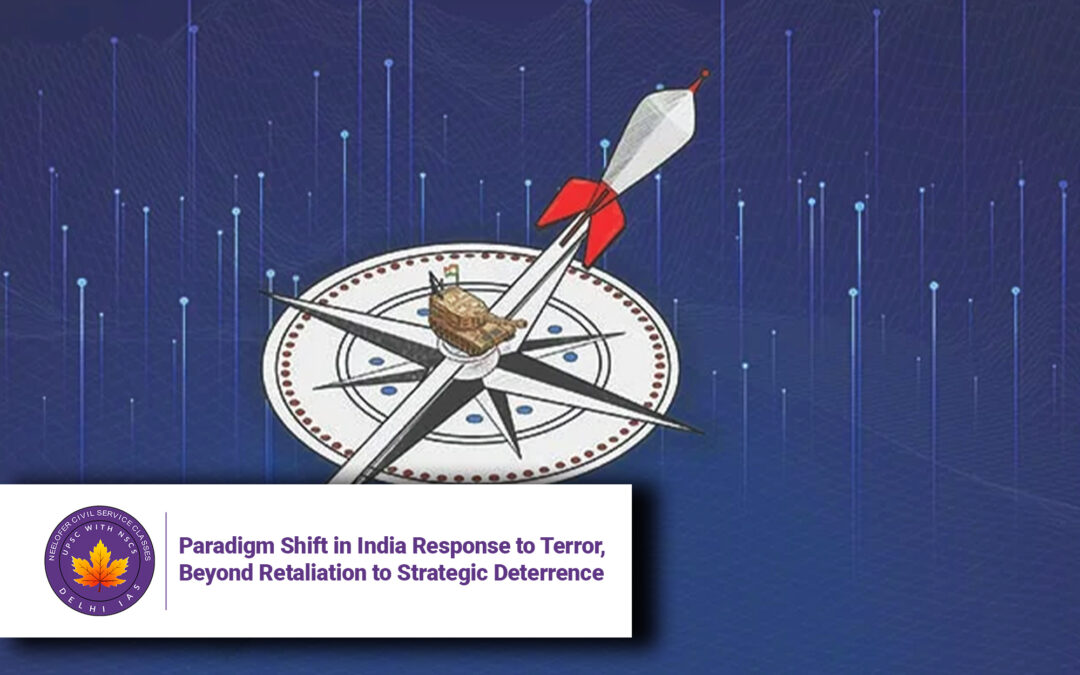
Paradigm Shift in India Response to Terror, Beyond Retaliation to Strategic Deterrence
Why in News?
The recent terrorist attack in Poonch (April 22), where soldiers were killed in a targeted ambush, marks a significant moment in India’s counter-terror policy. For the first time since the Mumbai 2008 attacks, such a terror strike has targeted civilians in a highly organized and deliberate fashion, prompting a strategic rethink from New Delhi. 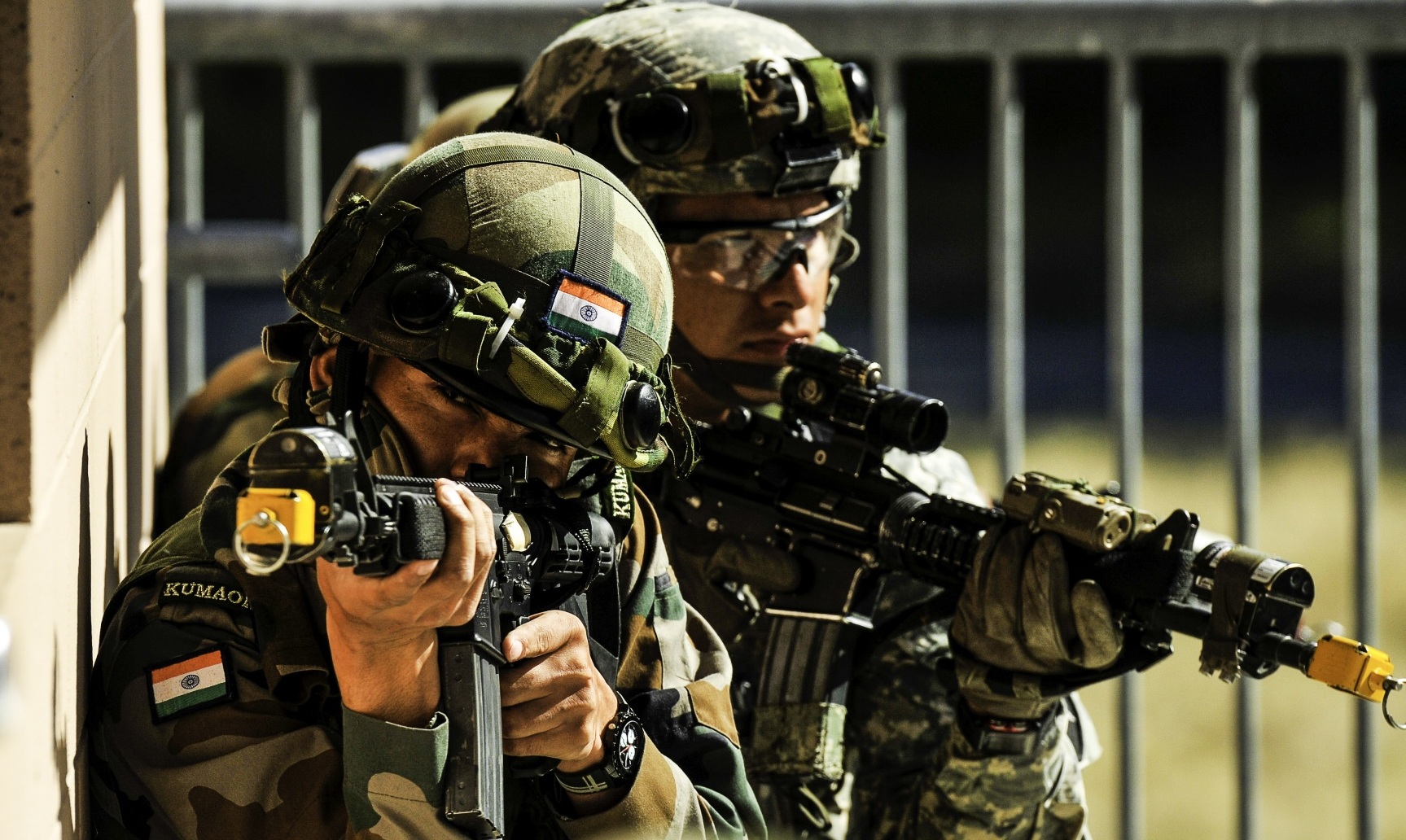
Introduction
India has traditionally responded to terror attacks with military retaliation or diplomatic pressure. However, the Poonch attack—which involved brutal execution of soldiers—has led to a paradigm shift in India’s approach. This includes not just immediate retaliation, but a broader plan to change the long-term behavior of Pakistan and other cross-border actors.
Key Highlights
-
Poonch Attack (April 22): Terrorists identified soldiers, separated them from women, and killed them with precision, highlighting high levels of planning and intent.
-
The Indian government has suspended the Indus Waters Treaty (IWT) measures, opened options for military retaliation, and sought to empower defense forces with strategic clearance.
-
This response differs from previous retaliatory strikes like Uri (2016) or Balakot (2019) and is focused more on long-term behavioral change.
-
The attack coincided with the death of 26 hostages in Pakistan, all men, under unclear circumstances, and the change of Pakistan Army’s leadership, including Gen. Munir replacing Gen. Bajwa.
-
India is now looking to redefine the Line of Control (LoC), potentially turning it into an international border, thus ending the proxy war era.
Strategic and Diplomatic Shift
-
India’s paradigm shift involves changing the rules of engagement. The new strategy includes:
-
Long-term measures like diplomatic isolation of Pakistan.
-
Strengthening border infrastructure and international coalition-building.
-
Pressuring Pakistan at global forums like the UNSC, FATF, and OIC.
-
-
The use of cross-border strikes is being recalibrated. India now seeks to respond in less predictable, more effective ways that reflect deterrence through surprise and asymmetry.
-
References to the “Two-Nation Theory” and calls for religious division by Pakistani leaders have raised the stakes for a more permanent resolution.
Conclusion
India is moving away from a pattern of reactive retaliation to a proactive, strategic approach. This includes diplomatic isolation, long-term military readiness, and a shift in national doctrine. The goal is no longer just to respond but to reshape the regional security order, end proxy warfare, and ensure lasting peace.
Q&A Section
Q1. What triggered India’s latest strategic shift in dealing with Pakistan?
The brutal Poonch terror attack (April 22), where soldiers were separated and killed by terrorists, prompted India to rethink its approach and move from retaliation to a longer-term strategy.
Q2. How is India’s current response different from previous ones like Uri or Balakot?
Unlike past short-term military responses, India is now focusing on changing Pakistan’s behavior over time through diplomatic, economic, and military deterrence strategies.
Q3. What are the new measures India has taken in response to the Poonch attack?
India has suspended key measures under the Indus Waters Treaty, hinted at military options, sought global isolation of Pakistan, and is exploring redefining the Line of Control.
Q4. Why is redefining the Line of Control being considered?
India may propose making the LoC an international border, effectively ending the proxy war logic and bringing about long-term peace and legal clarity.
Q5. How is the international community involved in India’s new approach?
India is working through platforms like the UNSC, FATF, and OIC to pressure Pakistan, while also strengthening alliances with major powers and advocating for a Comprehensive Convention on International Terrorism (CCIT).

