
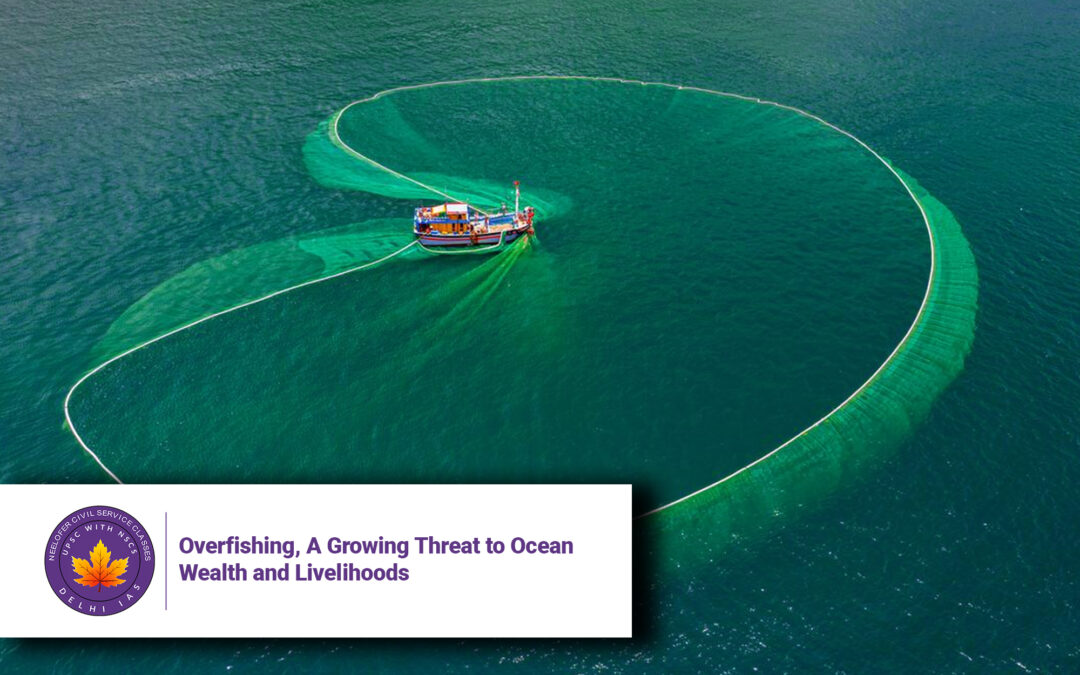
Overfishing, A Growing Threat to Ocean Wealth and Livelihoods
Why in News?
India’s marine fisheries sector, though stable in output, is facing a severe ecological and economic crisis due to overfishing, threatening biodiversity, ocean health, and the livelihoods of small-scale fishers. 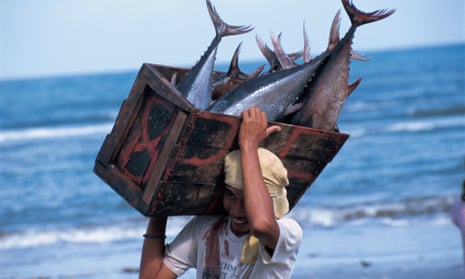
Introduction
While India’s marine fisheries yield has stabilized at around 3 to 4 million tonnes annually, experts warn that the country has reached its maximum potential yield. Despite this large catch volume, small-scale fishers—who comprise 90% of the fishing population—contribute only 10% of the catch and remain impoverished, signaling deep-rooted inequality and unsustainable practices.
Key Issues and Background
-
Bycatch and Waste: A large portion of marine catch, especially from shrimp trawlers, consists of juvenile fish and non-target species. For every kilogram of shrimp, over 10 kilograms of unwanted bycatch—mainly juvenile fish—are discarded.
-
Gear and Technology Misuse: Use of small mesh nets (<25mm), engine-powered boats, and non-selective gear accelerates depletion of juvenile fish and commercially important species.
-
Economic Impact: More than 75% of India’s marine fisher families live below the poverty line. Larger mechanized fleets reap the bulk of benefits, leaving traditional fishers behind.
The Core of the Concern
-
Regulatory Gaps: India’s Marine Fisheries Regulation Act (MFRA) has inconsistent rules across coastal states and union territories, which enables overexploitation.
-
Poor Enforcement: Key tools like minimum legal size limits, mesh size regulations, and seasonal bans are either unenforced or misunderstood.
-
Biodiversity Risk: The current system undermines efforts to conserve marine biodiversity and risks long-term damage to coastal ecosystems.
Key Observations
-
International Lessons: Countries like New Zealand have demonstrated success with rights-based, tradable quota management systems that encourage conservation and sustainable fishing.
-
Bycatch Management: Redirecting juvenile bycatch to local aquaculture instead of discarding it could reduce waste and provide alternative incomes.
-
National Harmonization: A unified national standard integrating all state-specific rules could enable fairer enforcement and conservation.
Solutions and the Way Forward
-
Integrated Regulation: Merge state-level policies into a single national system, including mesh sizes, fishing zones, and catch limits.
-
Support for Small Fishers: Strengthen cooperatives and provide infrastructure, subsidies, and training for sustainable practices.
-
Community-Managed Reserves: Empower local communities to manage marine protected areas and enforce eco-friendly fishing.
-
Market Incentives: Encourage consumers to support certified sustainable seafood and avoid high-impact species.
-
Ecosystem-Based Approach: Recognize fisheries as part of broader coastal ecosystems and manage them holistically.
Conclusion
India stands at a crossroads where marine resources can either collapse or be revived. Overfishing threatens biodiversity and coastal livelihoods. Coordinated, science-based, and community-led strategies are vital to achieving a sustainable ocean economy. On the occasion of the International Day for Biological Diversity, urgent steps must be taken to restore marine balance and protect the rights of future generations.
Q&A Section
-
What is the main concern raised about India’s fisheries?
Overfishing and bycatch are causing ecological damage and economic inequality among small fishers. -
What percentage of India’s marine fishers are small-scale?
About 90%, yet they contribute only 10% of the total catch. -
What is bycatch and why is it harmful?
Bycatch refers to the unintended catch of juvenile and non-target species, leading to high waste and biodiversity loss. -
Which country has shown a successful quota-based model?
New Zealand, with its fish quota management system introduced in 1986. -
What reforms are recommended for India?
National harmonization of laws, community-led conservation, sustainable subsidies, and market-driven incentives for sustainable seafood.

