
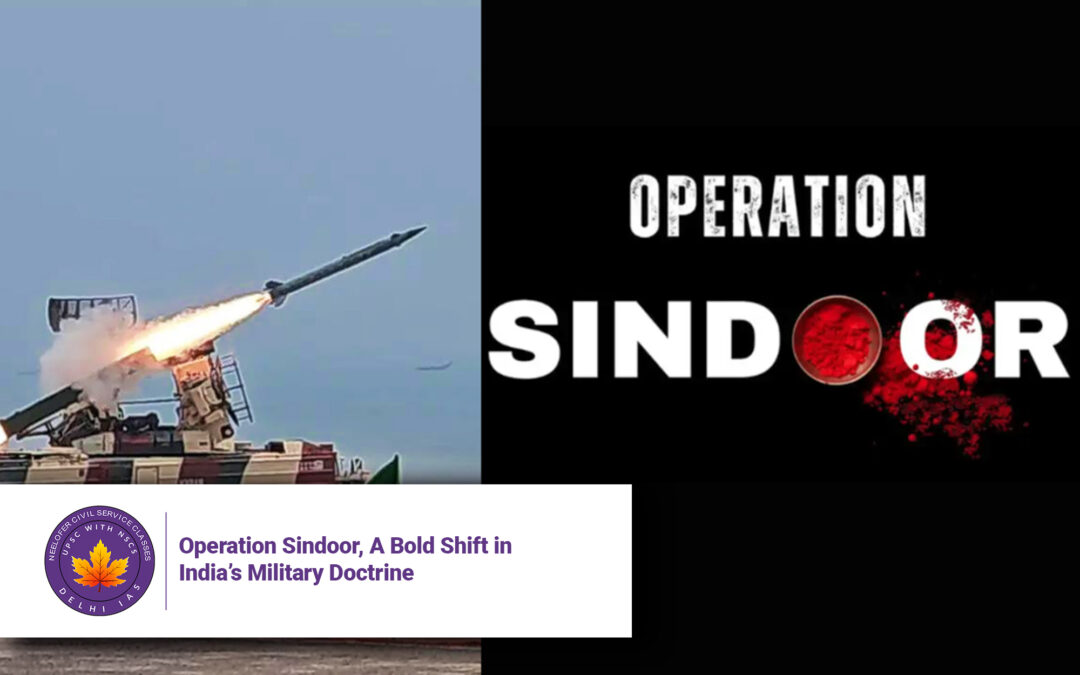
Operation Sindoor, A Bold Shift in India’s Military Doctrine
Why in News?
India’s recent military operation, Operation Sindoor, conducted in response to the Pahalgam terror attack in Jammu & Kashmir, has signaled a strategic shift in New Delhi’s approach to cross-border terrorism. This marks a new phase in India’s military policy, moving beyond symbolic retaliation to consistent, proactive, and deep strikes inside Pakistan-held territory. 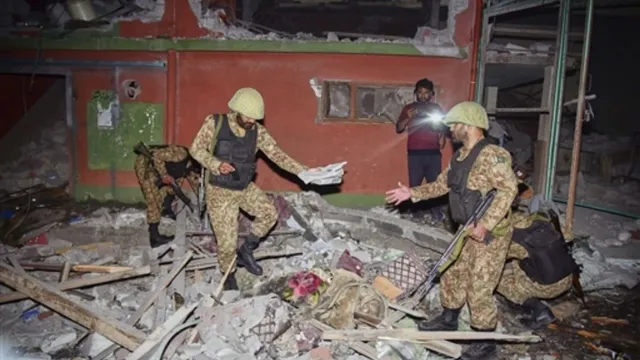
Introduction
For the first time since the 1971 war, India targeted terrorist infrastructure in Pakistan’s Punjab province, far from the usual Line of Control areas. This response marks a turning point: India has now established a new normal—any Pakistan-backed terror strike on Indian soil will provoke a military counterstrike. This doctrine of swift, precision retaliation underlines India’s unwillingness to tolerate cross-border terrorism.
Key Issues and Background
What is Operation Sindoor?
Launched in response to the deadly Pahalgam terror attack, Operation Sindoor focused on precise military strikes against Pakistan-backed terror facilities deep inside Pakistani territory. The operation was significant for two reasons:
-
It targeted Punjab in Pakistan, a previously untouched region in recent decades.
-
It established a clear shift in India’s strategic doctrine—retaliation is no longer limited to border skirmishes.
Why the Change in Strategy?
India is now signaling that terrorism from across the border will be met not just with political condemnation or short-term military actions, but with long-term strategic pressure. New Delhi has clearly stated that:
-
It will respond to terrorism militarily.
-
It will no longer hesitate to cross boundaries.
-
It intends to maintain sustained pressure on Pakistan’s terror infrastructure.
The Core of the Concern
Operation Sindoor’s impact goes beyond immediate military gains:
-
Psychological warfare: The strikes send a strong message to terrorist groups and their backers in the Pakistani establishment.
-
Diplomatic signaling: India intends to shape the international narrative and place the onus on Pakistan to de-escalate.
-
Strategic deterrence: It undermines the long-standing assumption that India would avoid deep strikes to prevent wider war.
Key Observations
-
New Delhi’s resolve: The government appears committed to long-term military, political, and economic countermeasures against terrorism.
-
A departure from past hesitation: Earlier operations were often isolated or reactive; now, India is shifting toward proactive, repeated, and wider-ranged military responses.
-
Geopolitical balance: While international pressure may limit escalation, India seems prepared for a strategic tug-of-war, especially when terror attacks cross the line of tolerance.
Conclusion
Operation Sindoor sets a precedent that India is willing to fight a multi-dimensional, long-term conflict against Pakistan-backed terrorism. By extending its reach and reinforcing its resolve, India is telling both terrorists and their sponsors: terror will no longer be a cost-free strategy. In the long run, this may push the Pakistani state to rethink its use of terrorism as a tool of statecraft—or face sustained consequences. As Nitin Pai suggests, India is finally playing the long game.
5 Questions and Answers
Q1. What is Operation Sindoor?
Answer: Operation Sindoor was a recent Indian military operation launched in response to the Pahalgam terror attack, targeting terrorist infrastructure deep inside Pakistan’s Punjab province.
Q2. Why is this operation considered a strategic shift?
Answer: Unlike past operations, it establishes a new normal: India will respond militarily to any Pakistan-sponsored terror attack, regardless of depth inside enemy territory.
Q3. How does this affect Pakistan’s strategy?
Answer: It disrupts Pakistan’s long-standing strategy of using terrorism as a low-cost tool, creating pressure on both military and political fronts within Pakistan.
Q4. What is India’s broader objective through this operation?
Answer: India aims to establish long-term deterrence by adopting a proactive stance, demonstrating that it can and will escalate when provoked.
Q5. What challenges lie ahead for India?
Answer: Sustaining this strategy requires diplomatic finesse, managing international opinion, and preparing for potential retaliation or escalation by Pakistan.

