
Ongoing Dispute Over Mahabodhi Temple Control Sparks Nationwide Protests
Why in News?
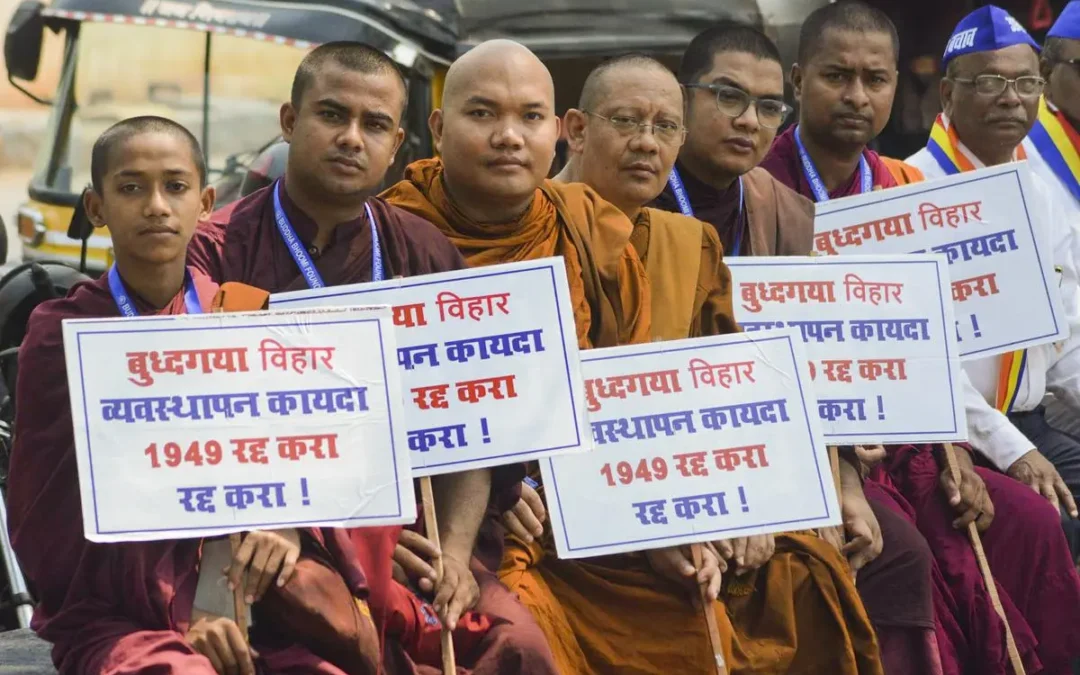
Recent nationwide protests have erupted in India as Buddhists demand control of the Mahabodhi Temple in Bodh Gaya, Bihar. This centuries-old shrine marks the site where Prince Siddhartha attained enlightenment as Buddha. The conflict stems from the Bodh Gaya Temple Act, 1949 (BGTA), which currently places the temple under a Hindu-majority management committee.
Key Issues
-
Historical Context of the Dispute
-
The Mahabodhi Temple was originally a Buddhist site, dating back to Emperor Ashoka’s reign in the 3rd century BCE.

-
Over centuries, Buddhism declined in India, and the temple was eventually taken over by Hindu monks.
-
Sri Lankan monk Anagarika Dharmapala led efforts in the late 19th century to reclaim the temple for Buddhists.
-
In 1949, the Bihar Assembly passed the BGTA, which gave Buddhists a stake but left control with Hindus.
-
-
Why is BGTA Controversial?
-
The BGTA mandates a committee of four Hindus and four Buddhists, but the District Magistrate of Gaya (a Hindu) is always the ex-officio Chairman.
-
Critics argue this effectively keeps Buddhists from having full control of their holiest shrine.
-
-
Legal Challenges
-
The Places of Worship Act, 1991, prevents changing the religious character of any place of worship as it existed on August 15, 1947.
-
This blocks legal attempts by Buddhists to gain full control.
-
A petition was filed in 2012 in the Supreme Court challenging the BGTA, but remains unheard.
-
-
Recent Protests and Trigger Events
-
In February 2024, a group of Buddhist monks fasting against ‘non-Buddhist rituals’ in the temple was forcibly removed at midnight.
-
This sparked a wave of protests led by the All India Buddhist Forum (AIBF), demanding the repeal of the BGTA.
-
What Next?
With rising tensions, Buddhist leaders are urging judicial and legislative intervention. The outcome of this dispute could reshape religious and legal frameworks governing India’s historical religious sites.
