
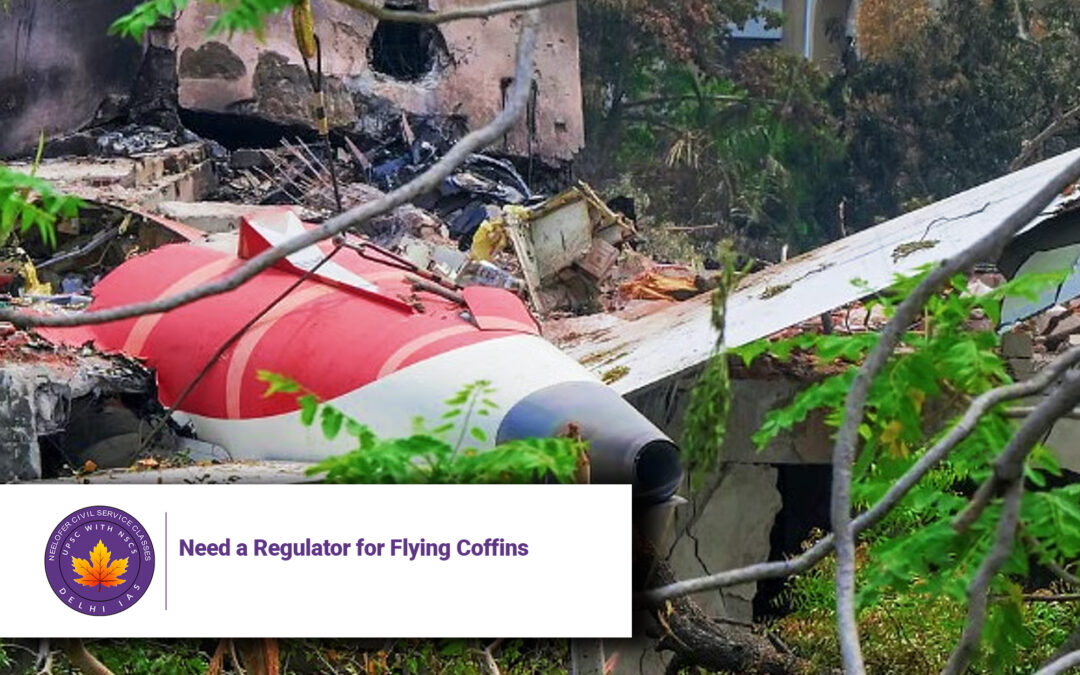
Need a Regulator for Flying Coffins
Why in News?
On June 22, 2024, tragedy struck Indian aviation again as Air India Flight 171, a Boeing-737-8, crashed shortly after take-off in Ahmedabad, killing 230 passengers. While officially described as an “accident,” the incident points to a deepening crisis in India’s aviation oversight and regulatory mechanisms. It reignites calls for a truly independent aviation watchdog. 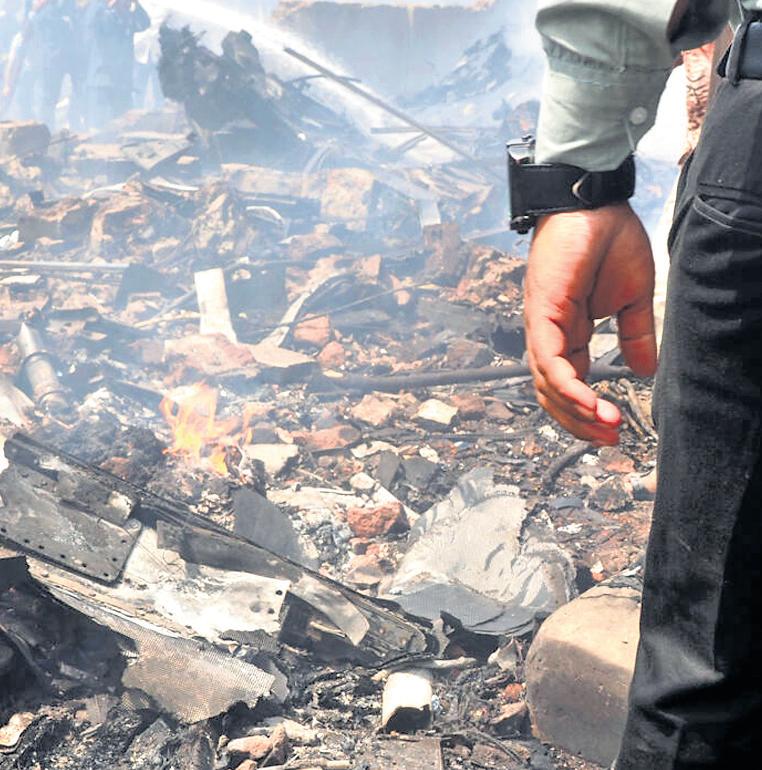
Introduction
India’s aviation sector has witnessed exponential growth, now handling over 140 million passengers a year. However, that rapid growth has not been matched with adequate regulatory reform or enforcement. Air India, the largest national carrier, has found itself in repeated trouble over negligence, poor aircraft maintenance, and insufficient pilot oversight.
Key Issues and Institutional Concerns
A Broken Regulatory Spine
The Directorate General of Civil Aviation (DGCA), responsible for ensuring flight safety, is underfunded and underpowered. Compared to the US FAA’s $20 billion budget and 45,000 employees, India’s DGCA operates with just ₹95 crore and 1,300 personnel. Despite being the world’s third-largest air passenger market, India lacks an independent, empowered aviation regulator.
Negligence Dressed as Routine
Many aviation tragedies—including the Air India Express crash in Kozhikode in 2020 and now the Ahmedabad crash—are often labelled “accidents.” However, investigations routinely highlight ignored warnings, poor aircraft design compliance, or overdue maintenance. These are not one-off lapses but symptoms of systemic failure.
Statistical Safety but Real Danger
India boasts one of the best air safety records on paper. But those figures often hide near-misses, unreported technical failures, and data that airlines self-report. The Civil Aviation Ministry appears more focused on expansion, profits, and passenger counts than genuine safety reform.
Global Comparisons
Other major aviation markets like the US, UK, South Africa, and the EU have independent regulators with authority over carriers, crew, technical checks, and crash investigations. India, however, continues to rely on a ministry-run body with no separation of powers, leaving room for corporate-politico collusion.
Challenges and the Way Forward
-
Urgent Need for Reform: India must establish a Civil Aviation Regulatory Authority (CARA) on the lines of the US FAA, with autonomy from the Civil Aviation Ministry.
-
Transparent Crash Reporting: Crash reports and aircraft defect data must be made public.
-
Rebuild Trust: Airlines must be held accountable not only for fatalities but for repeated negligence.
-
Empower the Regulator: Provide DGCA with more personnel, legal teeth, and budget.
-
End Corporate Influence: Ensure that safety decisions are made independently of airline lobbying.
Conclusion
India’s aviation sector is booming, but its foundations are dangerously hollow. The Air India Flight 171 tragedy is a wake-up call. If India’s aviation dreams are to soar safely, the country needs not just prayers, but a strong and independent aviation watchdog with real enforcement powers. Otherwise, Indians will continue to fly in what could be described as flying coffins—until the next tragedy.
Q&A Section
1. What triggered the latest call for aviation reform in India?
The tragic crash of Air India Flight 171 in Ahmedabad on June 22, killing all 230 passengers, exposed deep flaws in aviation safety and regulation.
2. Why is the DGCA considered inadequate?
It lacks sufficient autonomy, budget, manpower, and legal power to act independently, especially when compared to global regulators like the US FAA.
3. How do airlines reportedly bypass safety norms?
Through poor aircraft maintenance, under-reporting of safety issues, outdated training protocols, and leniency from the aviation ministry.
4. What is being proposed as a solution?
An independent Civil Aviation Regulatory Authority (CARA), separated from the Civil Aviation Ministry and empowered to enforce safety rules.
5. How does India compare globally in aviation safety governance?
While India boasts good safety stats on paper, it lags behind countries like the US, UK, and South Africa in establishing independent, transparent aviation regulators.
