
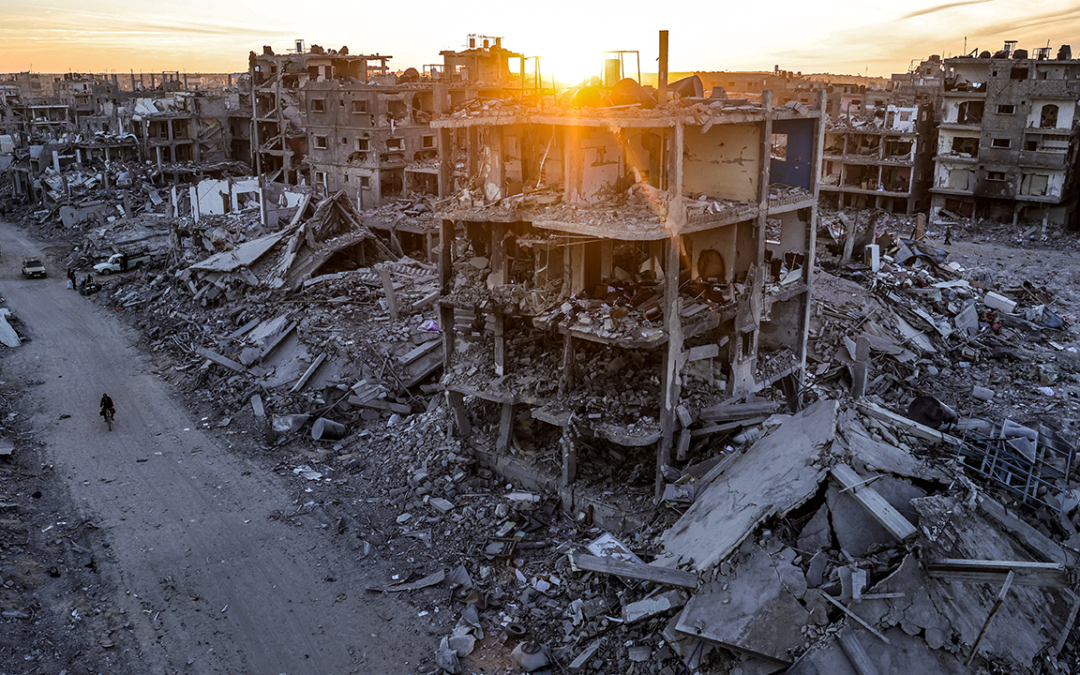
Middle East at the Centre, Gaza Reconstruction Plans and a Fragile Standstill
Why in News?
Gaza reconstruction initiatives proposed by the US and Arab states have come into the spotlight once again, highlighting the ongoing stalemate in Israeli-Palestinian relations and the complexities surrounding peace efforts in the region. 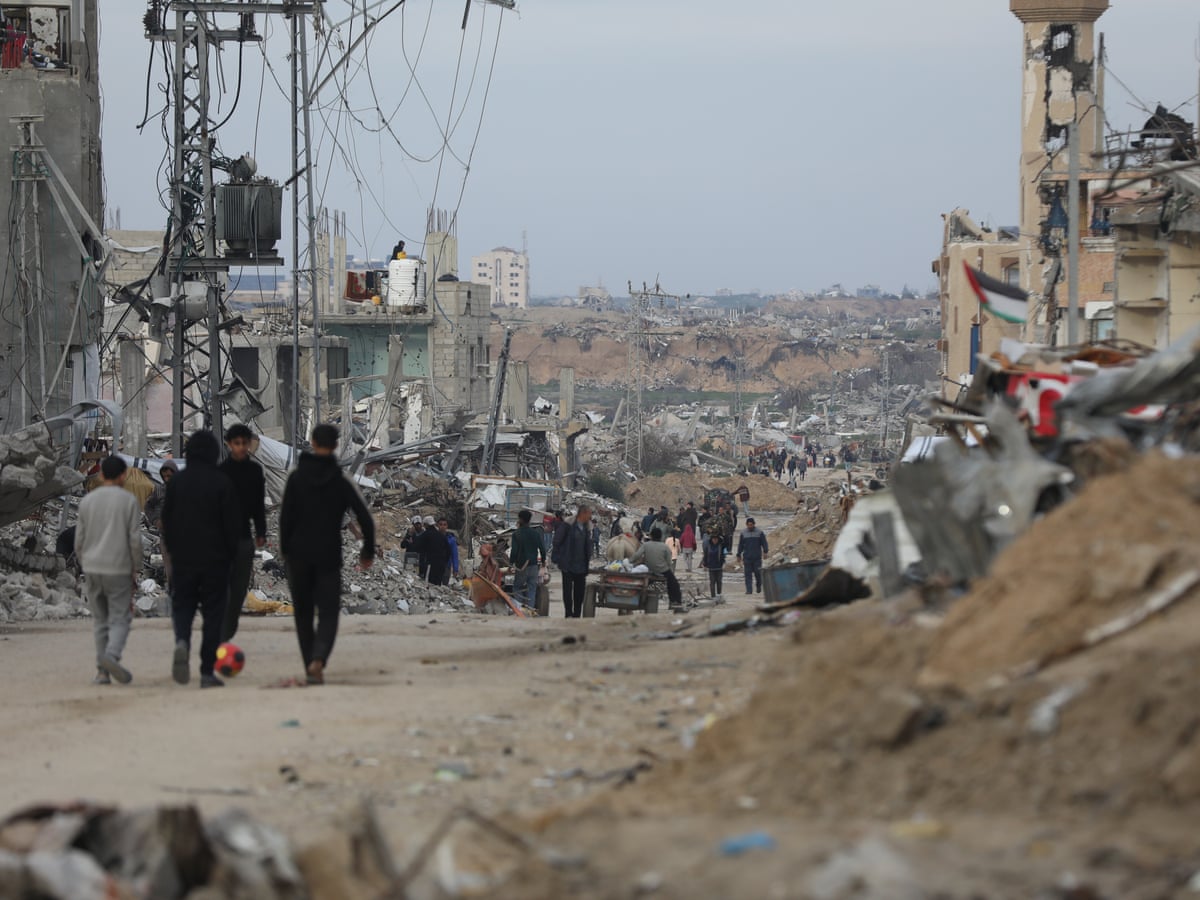
Introduction
Last month, US President Donald Trump, alongside Israeli Prime Minister Benjamin Netanyahu, announced a proposal denying Palestinians the right to live amidst Israelis and advocated relocating them from Gaza to Sinai. This plan, touted as a “riviera” project, envisioned the transformation of Gaza into an area under Israeli control. While seen by some as a potential breakthrough, the proposal was widely criticized and rejected by Palestinians and global stakeholders alike.
Key Features
Israel’s Proposal and Its Reception
- Netanyahu described the plan as an opportunity to relocate Gazans and to prepare for a “post-Hamas phase.”
- The plan aimed to consolidate Israel’s right-wing support and leverage ongoing ceasefire talks with Hamas.
- Critics, including Israeli intelligence agencies, expressed concern over potential backlash, particularly after Ramadan.
Regional and International Reactions
- The US supported Israel’s vision, urging other countries to participate in the rebuilding of Gaza in exchange for Palestinian relocation.
- Egypt and Jordan rejected Trump’s proposal, citing humanitarian concerns and the forced displacement of Palestinians.
- Saudi Arabia, under Crown Prince Mohammed bin Salman, faced criticism for warming ties with the US and Israel, despite Arab opposition to the relocation plan.
- Qatar and Iran opposed the move, asserting that Hamas should retain its authority in Gaza, while also warning about potential regional destabilization.
Gaza Reconstruction Plan
- Egypt, led by President Abdel Fatah El-Sisi, emphasized the Palestinians’ right to rebuild Gaza while guaranteeing their continued presence on their land.
- The reconstruction plan was divided into three phases until 2030, with an estimated cost of $53 billion:
- Phase One (six months): Demining and clearing debris, resettling Palestinians within Gaza, and developing temporary camps.
- Phase Two (three years): Reconstruction of public infrastructure, providing livelihoods, and improving connectivity.
- Phase Three (long-term): Transfer of administrative control to the Palestinian Authority across Gaza and the West Bank.
Governance and Security Proposals
- New governance structures were proposed, with Hamas expected to reduce its control.
- The World Bank and other international donors were called upon to supervise fund utilization.
- Deployment of international peacekeeping forces was considered to ensure stability.
Specific Impacts or Effects
Prospects for Peace
- The US and regional powers including Egypt, Iran, Turkey, and Arab League members have emphasized that peace talks between Israel and Palestine are essential.
- The permanent displacement of Palestinians from Gaza could trigger long-term regional instability and humanitarian crises.
Resistance from Palestinian Groups
- The Palestinian Authority, Fatah leadership in Gaza and the West Bank, and Hamas rejected displacement plans.
- Palestinians demand recognition of their rights and the establishment of a sovereign state.
Challenges and the Way Forward
Challenges
- Hostilities between Israel and Hamas make diplomatic engagement difficult.
- Israel’s insistence on security and Hamas’ governance in Gaza create a deadlock.
- Any proposals ignoring Palestinian rights risk fueling further violence and humanitarian concerns.
Steps Forward
- Reaffirmation of the two-state solution as the only viable path to peace.
- Breaking the cycle of violence by fostering mutual recognition and coexistence.
- International cooperation to guarantee Palestinian rights while ensuring Israel’s security.
Conclusion
The Middle East stands at a critical juncture. The crisis in Gaza highlights the urgent need for fresh approaches and conflict resolution strategies. Lasting peace can only be achieved through recognition of Palestinian rights, security guarantees for Israel, and the establishment of a viable Palestinian state. Until then, Gaza reconstruction plans will remain tied to larger unresolved political issues.
Questions and Answers
1. What did the Trump-Netanyahu proposal entail?
It proposed relocating Palestinians from Gaza to Sinai and denying them the right to live among Israelis.
2. How did Egypt and Jordan react to this proposal?
They rejected it, citing concerns over forced displacement and potential humanitarian crises.
3. What did President El-Sisi emphasize regarding Gaza?
He insisted on Palestinians’ right to rebuild and maintain their presence in Gaza.
4. What is the estimated cost of the Gaza reconstruction plan?
$53 billion by 2030.
5. How is the reconstruction plan divided?
Into three phases focusing on de-mining, rebuilding infrastructure, and governance transition.
6. What is the role of the Palestinian Authority in the reconstruction plan?
It would assume administrative control over Gaza and the West Bank in the final phase.
7. How did Hamas and other Palestinian groups react to the proposals?
They rejected any plans involving displacement or reduced control over Gaza.
8. What are the key challenges to implementing these plans?
Ongoing hostilities, lack of trust, and differing visions between Israel and Palestinian leadership.
9. What does the article suggest as the only solution?
The re-establishment of a two-state solution with both peoples living side by side in peace and security.
10. What would be required for lasting peace in the region?
Mutual recognition, security guarantees, and international cooperation to address humanitarian and political issues.

