
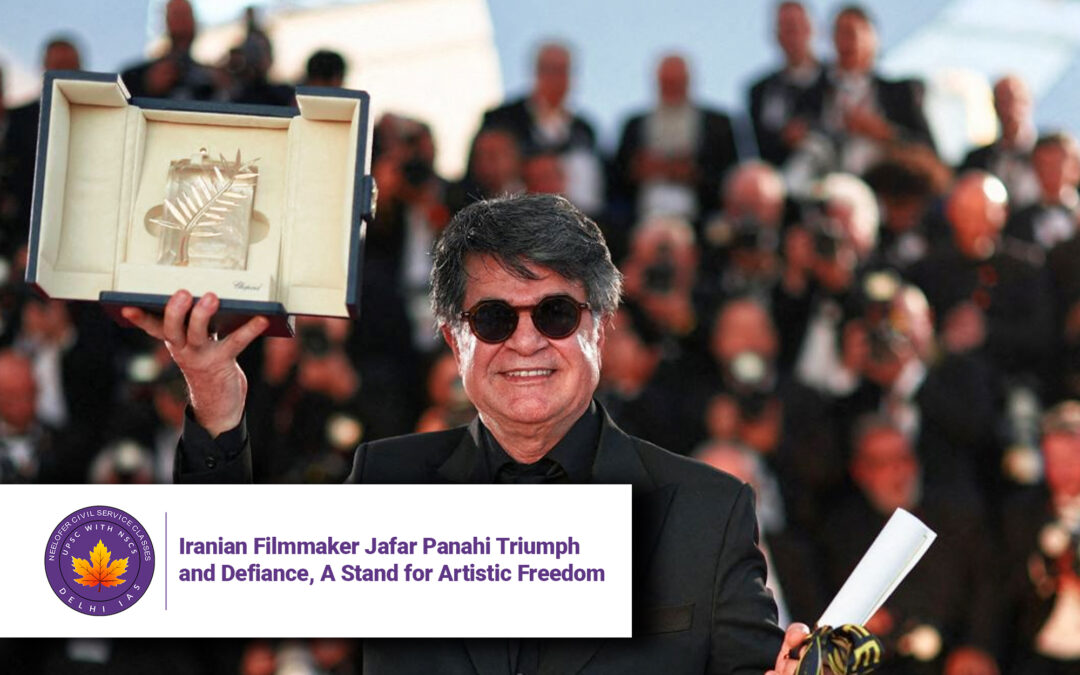
Iranian Filmmaker Jafar Panahi Triumph and Defiance, A Stand for Artistic Freedom
Why in News?
Acclaimed Iranian director Jafar Panahi won the Palme d’Or at Cannes 2025 for his film It Was Just an Accident, marking his first international appearance in 15 years after Iran’s top court overturned his conviction. The film, born from his prison experiences, spotlights Iran’s authoritarian crackdowns while Panahi vows solidarity with women protesting mandatory hijab laws.

Key Developments
-
Cannes Victory & Symbolism:
-
Panahi’s It Was Just an Accident—a “revenge thriller” inspired by his 2022 imprisonment—explores trauma from state torture and moral ambiguity.
-
The win underscores his decades-long defiance of Iran’s ban on his filmmaking (imposed in 2010 for supporting the 2009 Green Movement).
-
-
Covert Filmmaking:
-
Like past works (This Is Not a Film, Taxi Tehran), the movie was shot secretly without script approval, smuggled out of Iran.
-
Panahi’s films often depict real-life repression, including women’s resistance post-Mahsa Amini’s death (2022).
-
-
Return to Iran:
-
Despite risks, Panahi returned to Tehran, stating: “I must stand with women facing worse consequences for defiance.”
-
Conservative critics dismissed his win, while Iran sought “explanations” from France over its praise of the film.
-
Political Context & Risks
-
Crackdown on Dissent: Panahi was jailed in 2022 for “propaganda against the state,” reflecting Iran’s harsh stance on artists.
-
Women’s Protests: His post-prison films feature unveiled women, mirroring street protests against mandatory hijabs.
-
Uncertain Future: Though his conviction was quashed, Panahi could face new charges for bypassing censorship laws.
5 Critical Questions Answered
Q1: Why was Panahi banned from filmmaking?
A: For supporting the 2009 Green Movement and critiquing Iran’s regime in films like The Circle.
Q2: How does It Was Just an Accident reflect his activism?
A: It dramatizes prisoners’ trauma and moral dilemmas under authoritarianism, drawing from his jail experiences.
Q3: What risks does Panahi face upon returning to Iran?
A: Potential re-arrest for making films without state approval and showcasing dissent (e.g., unveiled women).
Q4: How has Iran reacted to his Cannes win?
A: Officials criticized it and questioned French diplomats, while conservatives downplayed its significance.
Q5: Why is Panahi’s work significant globally?
A: It exposes Iran’s repression while embodying resilience—smuggling art past censorship to reach audiences.
Conclusion
Jafar Panahi’s Palme d’Or is more than an artistic accolade; it’s a beacon for creative resistance. His return to Iran—despite threats—amplifies the courage of ordinary Iranians, especially women, fighting for basic freedoms. As Panahi’s lens continues to capture truth, the world watches whether Tehran will tolerate his defiance or silence him anew.
— With inputs from international media and film critics

