
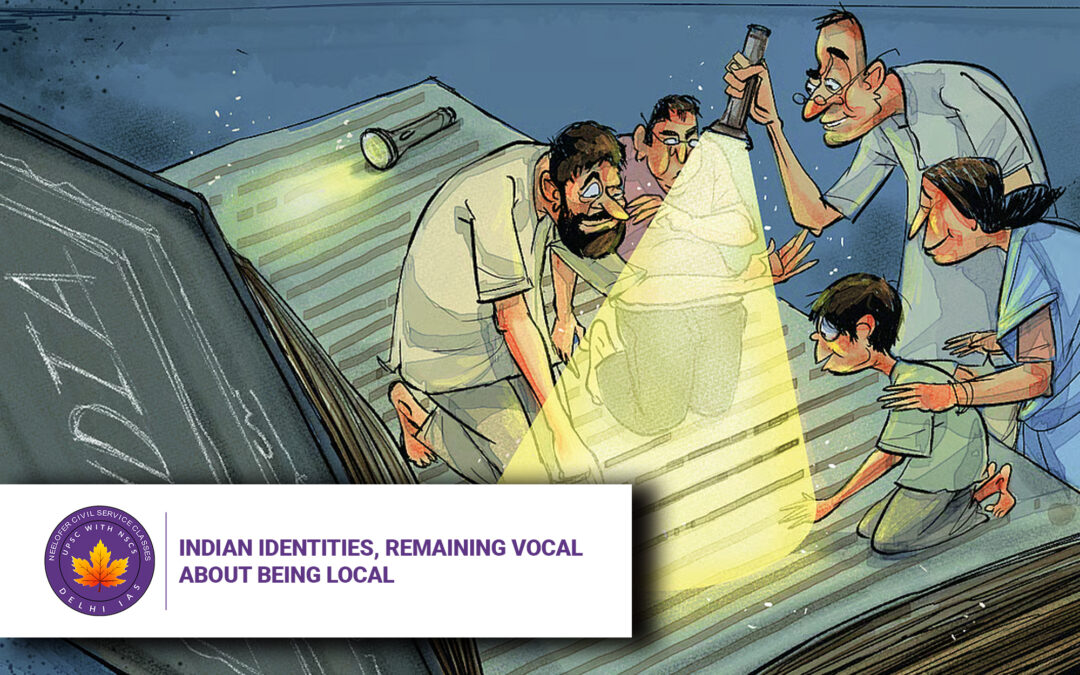
INDIAN IDENTITIES, REMAINING VOCAL ABOUT BEING LOCAL
Why in News?
A national conversation on Indian identity has been sparked by Punjabi singer-actor Diljit Dosanjh’s rising global popularity, especially his appearances at international stages such as The Tonight Show with Jimmy Fallon, the Coachella Festival, and the Met Gala. The discussion reflects the tension between national and local identities, as Dosanjh proudly embraces and projects his Punjabi roots on global platforms.
Introduction 
India is a land of immense diversity, home to multiple languages, customs, regions, and communities. In such a culturally layered society, identity is often rooted in local or regional affiliations before national consciousness comes into play. The article by Harish Bijoor highlights how Indians resonate deeply with their local roots, such as their village, language, or community, often more strongly than with a broader national identity.
The Local vs National Identity Debate
Diljit Dosanjh, a popular figure in Indian entertainment, has recently been lauded and questioned for projecting his Punjabi identity in international appearances. His image at the Met Gala — wearing a Punjabi kurta with a laced stole — and his stage performances using Punjabi lyrics have triggered a nationwide reflection.
Dosanjh’s proud proclamation of “putting Punjab on the world map” is not new, but it underscores the emotional and cultural significance of regional pride. The question arises — should national identity overshadow local expression, or can both coexist?
Sociological Perspective on Identity
A recent sociological study referenced in the article suggests that Indians often relate more to their village or town than the abstract concept of nationhood. This is particularly true in rural and semi-rural areas, where the village-level and local governance systems define people’s worldview.
Most people, when asked where they belong, refer first to their village, caste group, or community, rather than identifying with the state or nation. Identity, therefore, is highly localised and emotional.
The Role of Language and Community
Language plays a major role in shaping identity. From Punjabi to Tamil, Bengali to Assamese, India’s 22 official languages each create strong cultural bubbles. These linguistic and ethnic identities often overpower political ones.
Even within cities, people may group by region — Bengali associations, Kannada sanghas, etc. — to preserve language, food, and customs. The writer explains how identity is often based on the village of origin, with ownership of land and traditions strengthening one’s sense of belonging.
Conclusion
The reflection on identity is timely. With celebrities like Dosanjh leading the way in proudly showcasing their local roots on global stages, it’s a reminder that being Indian doesn’t mean erasing one’s cultural or regional uniqueness. In fact, India’s true strength lies in its unity in diversity, where the local enriches the national.
Q&A Section
1. Why was Diljit Dosanjh’s identity brought into discussion?
Because he proudly represented Punjabi culture at international events like the Met Gala and Coachella, sparking conversations on the balance between local and national identity.
2. What does the article suggest about how Indians relate to identity?
The article emphasizes that most Indians relate more deeply to their village, language, or region than to the abstract idea of the nation.
3. How does the idea of “community before country” play out in daily life?
People often identify themselves by their language, caste, or village, and local affiliations influence their views, trust levels, and even politics more than national symbols.
4. What role does language play in Indian identity?
Language is central — people form associations, consume media, and preserve traditions around their mother tongue, creating distinct regional cultural identities.
5. What is the article’s overall message about Indian identity?
That identity in India is layered, starting with the village and extending to the nation. Embracing one’s local culture doesn’t conflict with nationalism; instead, it enriches the Indian mosaic.
