
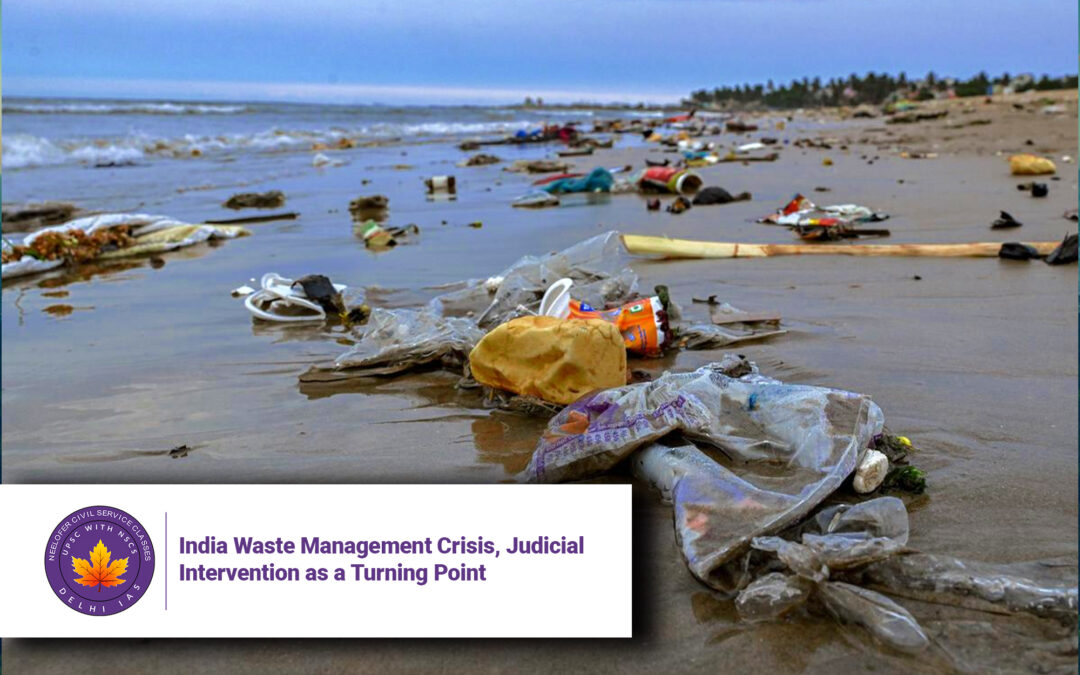
India Waste Management Crisis, Judicial Intervention as a Turning Point
Why in News?
India has emerged as the biggest plastic polluter globally, mismanaging around 9.3 million tonnes (MT) of plastic waste annually. A recent Supreme Court ruling has reinvigorated legal accountability in tackling this issue by enforcing the ‘Polluter Pays Principle’ and ordering compensation and restoration in pollution-hit areas. This judicial push is seen as a powerful step toward fixing India’s broken waste management system. 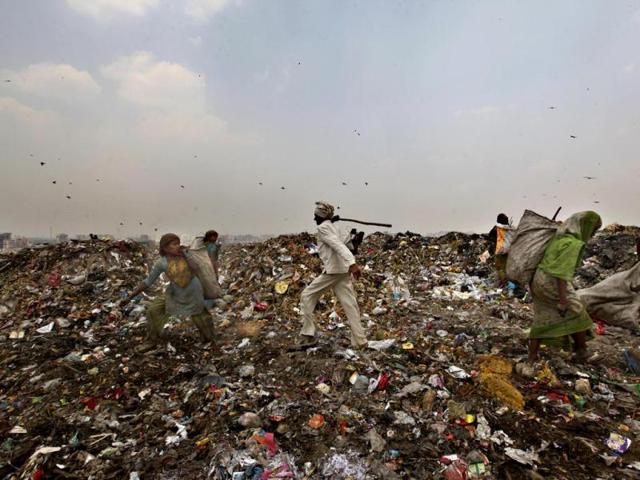
Key Highlights
-
Plastic Mismanagement: India’s per capita plastic waste generation is 0.12 kg/day, but actual waste collection is overestimated, and rural areas are largely excluded from national estimates.
-
Uncontrolled Dumping: Studies show open burning and illegal dumping outnumber sanitary landfills by 10:1.
-
Himalayan Plastic Crisis: A report titled “Mountains of Plastic Choke the Himalayas” spotlights alarming plastic buildup in Indian Himalayan states (March 4, 2024).
-
Judicial Verdict: On January 31, 2024, the Supreme Court ordered the Tamil Nadu government to pay for pollution damage caused by tanneries, reinforcing environmental compensation and restoration.
-
Polluter Pays Principle: The Court emphasized that polluters are responsible not only for harm caused but also for restoring damaged ecosystems.
Background and Issues
Waste Mismanagement:
-
Underestimated Data: Central and State Pollution Control Boards use inconsistent methodologies and rely on outdated figures.
-
Rural Neglect: National data does not account for waste burning and dumping in rural regions, skewing policy focus.
-
Flawed EPR Enforcement: Producers and brands fail to establish mandatory Extended Producer Responsibility (EPR) collection kiosks or waste segregation systems.
Policy-Implementation Gap:
-
Weak Local Institutions: Municipal bodies and Panchayats lack capacity to enforce Plastic Waste Management Rules 2016.
-
Non-compliance: Plans like Material Recovery Facilities (MRFs) remain unimplemented in most regions.
-
Limited Access: Only select areas have access to producer-led kiosks, leaving consumers with no safe disposal channels.
The Controversy
Critics Argue:
-
India’s plastic waste strategy lacks clarity, transparency, and time-bound execution.
-
Judicial guidelines are ignored at local levels, causing prolonged environmental degradation.
-
Waste data remains in public domain but isn’t acted upon, weakening planning.
Supporters Counter:
-
Supreme Court’s intervention provides much-needed legal clarity.
-
The January 31 verdict sets a precedent for enforcing ecological accountability at scale.
-
Ongoing judicial mandates can bring uniformity and discipline in monitoring environmental rules.
The Way Forward
Legal Enforcement:
-
Continue judicial mandates for time-bound compliance of EPR, MRF, and PWM guidelines.
-
Strengthen monitoring bodies with third-party audits and public participation.
Infrastructure Upgrade:
-
Set up nationwide EPR kiosks, accessible to both urban and rural communities.
-
Mandate real-time waste tracking and establish local-level waste segregation systems.
Equity and Environment:
-
Ensure polluters compensate not just for human harm but also for ecosystem restoration.
-
Promote data-driven policies, with annual waste assessments and state-wise compliance ratings.
Conclusion
India’s waste management system is at a breaking point, affecting millions of citizens and the environment alike. The Supreme Court’s proactive role offers a much-needed push toward accountability and systemic reform. As judicial action bridges gaps left by executive inertia, long-term sustainability will depend on consistent, localized implementation and environmental justice.
5 MCQs with Answers
Q1. According to the recent study, how much plastic waste does India mismanage annually?
A) 1.3 million tonnes
B) 4.9 million tonnes
C) 9.3 million tonnes
D) 12 million tonnes
Answer: C) 9.3 million tonnes
Q2. What legal principle did the Supreme Court reinforce in its January 31 ruling?
A) Public Trust Doctrine
B) Polluter Pays Principle
C) Environmental User Fee Model
D) Circular Economy Rule
Answer: B) Polluter Pays Principle
Q3. What infrastructure is essential for processing segregated plastic waste as per court directives?
A) Landfills
B) Thermal power plants
C) Material Recovery Facilities (MRFs)
D) Water treatment plants
Answer: C) Material Recovery Facilities (MRFs)
Q4. What is a key issue with India’s plastic waste data?
A) It is not accessible to the public
B) It excludes rural and hill regions
C) It uses AI for predictions
D) It is based on UN metrics only
Answer: B) It excludes rural and hill regions
Q5. What did the court suggest as a future strategy for improving waste governance?
A) Privatize sanitation services
B) Ban plastic production entirely
C) Continue judicial mandates and ensure compliance
D) Leave enforcement to NGOs
Answer: C) Continue judicial mandates and ensure compliance

