
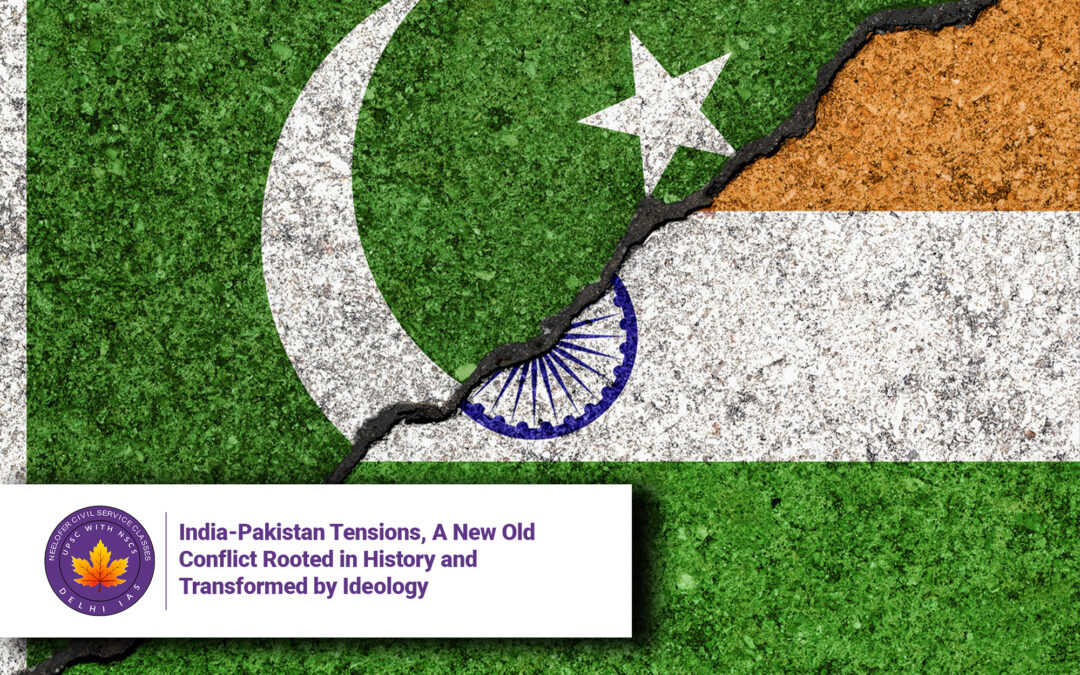
India-Pakistan Tensions, A New Old Conflict Rooted in History and Transformed by Ideology
Why in News?
Recent military and political confrontations between India and Pakistan have reignited global focus on their longstanding hostilities, which although rooted in historical grievances, are now shaped by new ideological forces. The article by Ashutosh Varshney explores how military technologies, religion-based nationalism, and global realignments have given an old conflict a new face. 
Introduction
India and Pakistan’s relationship has been marred by repeated military confrontations, terrorism, and failed peace efforts. While these hostilities have long existed, recent developments suggest a qualitative shift in the motivations, ideologies, and strategies used by both countries. The integration of advanced technologies and religious nationalism has moved the conflict beyond traditional geopolitical paradigms.
Key Issues and Historical Background
1. Military Technology and Drones
-
The introduction of drones and cyber warfare by both India and Pakistan marks a new chapter in warfare, making the conflict more complex and modern.
-
Unlike earlier wars, both nations now possess the ability to strike without crossing borders, increasing the volatility.
2. Rise of Ideological Nationalism
-
Pakistan’s military strategy has moved from secular nationalism to an Islamist ideological basis, beginning under General Zia-ul-Haq in the 1980s.
-
India, too, is witnessing the rise of Hindu nationalism, especially under the current political leadership aligned with the RSS and BJP.
3. Changing Domestic and Foreign Policy
-
India has avoided Western military intervention since independence, unlike Pakistan, which has often relied on external support, notably from the U.S. and China.
-
The Tashkent Agreement and Simla Agreement reflect India’s attempt to resolve conflict bilaterally, but ideological divergence keeps tensions high.
4. The Role of Religion
-
For Pakistan, the Islamisation of politics has blurred the lines between military strategy and religious doctrine.
-
India’s leadership has invoked Hindu civilizational ideas in political discourse, deepening divisions.
5. Global Ramifications
-
The shift from secular to religious nationalism in both countries is viewed with concern by international actors.
-
U.S. strategic interests in the region, including intelligence limitations and power balance, play a role in shaping future responses.
Challenges and the Way Forward
1. Ideological Inflexibility
-
As both countries increasingly frame their policies around religious identity, room for negotiation and compromise shrinks.
2. External Intervention Risks
-
Rising ideological tensions increase the chances of international involvement, especially if nuclear weapons or cross-border terrorism is used.
3. Need for People-to-People Engagement
-
Civil society, media, and youth engagement must be encouraged to counter governmental hardline positions.
4. Historical Clarity and Mutual Recognition
-
Understanding that both nations have competing historical narratives is crucial to forging mutual respect and long-term peace.
Conclusion
The India-Pakistan conflict is no longer just a matter of territory or history. It has transformed into a clash of ideologies, driven by religious nationalism and militarised politics. To avoid deeper escalation, both nations must recognize the dangers of ideological extremism, invest in dialogue, and seek inclusive, pragmatic solutions that respect pluralism and peace.
Q&A Section
Q1. What marks the new shift in the India-Pakistan conflict?
The conflict is now shaped more by religious nationalism and technological warfare than by traditional geopolitical disputes.
Q2. How has Pakistan’s military ideology changed since the 1980s?
Under General Zia-ul-Haq, Pakistan’s military shifted from secular nationalism to Islamist ideological control, merging state and religion.
Q3. How is India’s approach to nationalism evolving?
India, traditionally led by secular nationalism, is now witnessing the rise of Hindu civilizational politics, especially under the BJP-led government.
Q4. Why is Western intervention rare in India’s conflicts?
India has historically preferred bilateral or regional solutions, refusing to accept Western military interference, unlike Pakistan.
Q5. What role can civil society play in easing tensions?
Civil society can promote dialogue, understanding, and cultural exchange, helping to reduce animosity and foster peace.

