
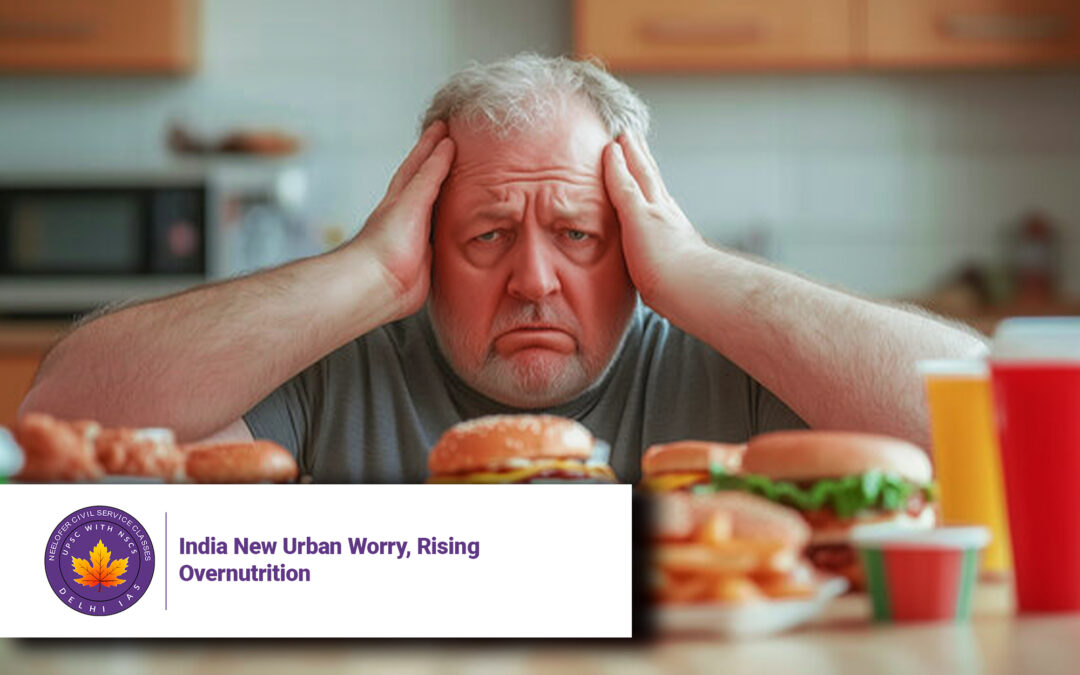
India New Urban Worry, Rising Overnutrition
Why in News?
A recent study published in Nature highlights a growing health crisis in urban India — the rising prevalence of Metabolic Dysfunction-Associated Fatty Liver Disease (MAFLD). With 8% of employees in Hyderabad showing signs of MAFLD and 75% overweight, the findings point to an emerging epidemic of overnutrition, driven by urban lifestyle shifts and unhealthy dietary habits. 
Introduction
India is facing a paradoxical nutritional crisis. While undernutrition still affects parts of the country, a silent epidemic of overnutrition is spreading across urban centers. Employees in technology sectors, especially, are showing high rates of overweight, obesity, and fatty liver disease due to stress, lack of sleep, poor diets, and sedentary routines. This dual burden of malnutrition poses serious challenges to public health and economic productivity.
Key Issues and Institutional Concerns
1. Urban Overnutrition Crisis
Urban India has seen a spike in non-communicable diseases (NCDs), especially among the working population. The World Health Organization (WHO) warned in 2024 that nearly 80% of NCD deaths occur in low- and middle-income countries like India. In cities, overnutrition now overshadows undernutrition as a major public health issue.
2. State-specific Alarming Data
In Tamil Nadu, nearly 50% of adults aged 15-49 are overweight or obese. Among adolescents aged 15-19, 28% of boys and 31% of girls are obese. Alarmingly, 24% of employees screened through the state’s Makkalai Thedi Maruthuvam (MTM) program were found to be overweight or obese.
3. Rising Metabolic Disorders
Alongside rising obesity, diseases such as diabetes, hypertension, and fatty liver have become more prevalent. These conditions are not only lifestyle-related but also linked to food systems high in sugar, fat, and salt.
Challenges and the Way Forward
Challenge 1: Unhealthy Diets and Food Systems
Unregulated food marketing, widespread availability of high-fat and high-sugar foods, and lack of clear labeling are worsening the crisis. Although India’s Food Safety and Standards Authority (FSSAI) introduced a Health Star Rating (HSR) system, its impact has been limited.
Challenge 2: Socioeconomic Inequalities
Obesity and NCDs now disproportionately affect the economically disadvantaged. The gap between urban poor and rich in health outcomes continues to grow, as poor diets and lifestyle stressors are more common among lower-income groups.
Challenge 3: Childhood Obesity
Childhood obesity is increasing rapidly. Between 2016 and 2021, obesity among children aged 5-19 surged by 24%. If not addressed, this generation could face a lifetime of chronic diseases.
Way Forward:
-
Health Screening Initiatives: Tamil Nadu’s MTM program is a promising model for early screening and intervention.
-
Food Labeling & Consumer Awareness: Enforcing front-of-pack labeling and public education can guide healthier consumer choices.
-
Multisectoral Coordination: Efforts must integrate health policy, agriculture, marketing regulations, and education.
-
Learning from Global Examples: Saudi Arabia, under its Vision 2030 plan, has implemented sugar and salt taxes, food labeling, and tighter advertising controls — offering a replicable model for India.
Conclusion
Overnutrition is now a silent epidemic in India’s cities, hidden behind the glamor of rapid economic growth. As the nation battles this nutrition paradox, it must balance food availability with food quality and awareness. Tackling the issue requires urgent, coordinated action across public health, education, food industries, and government policy. The question is no longer whether India has enough food — it’s whether we’re eating right.
Q&A Section
Q1: What new health crisis is emerging in urban India?
A: Rising overnutrition, particularly obesity and fatty liver disease among urban populations.
Q2: What is MAFLD and where has it been observed?
A: Metabolic Dysfunction-Associated Fatty Liver Disease; recently observed in 8% of tech employees in Hyderabad.
Q3: What is the dual burden India is facing?
A: Coexistence of undernutrition in some areas and overnutrition (obesity, NCDs) in urban centers.
Q4: What efforts has Tamil Nadu taken?
A: It launched the Makkalai Thedi Maruthuvam program to screen and monitor NCDs among citizens.
Q5: What are the key contributors to urban overnutrition?
A: Sedentary lifestyle, processed foods, stress, lack of sleep, and poor dietary choices.
Q6: What is the role of the FSSAI in this crisis?
A: Introduced the Health Star Rating (HSR) for packaged foods, but impact remains limited.
Q7: What are the effects on children?
A: Childhood obesity is rapidly rising, with long-term health implications.
Q8: How is socioeconomic status linked to overnutrition?
A: Lower-income groups are now more affected due to poor-quality diets and stress.
Q9: What global model can India learn from?
A: Saudi Arabia’s approach under Vision 2030, including sugar taxes and food labeling.
Q10: What is the proposed solution to this problem?
A: A multisectoral approach including better food policies, consumer education, and health interventions.

