
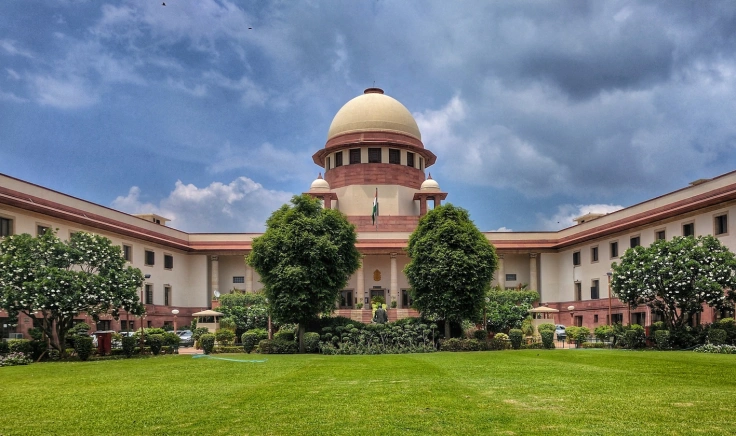
How and Why the Supreme Court Limited the Power of Arrest Under GST and Customs Acts
Why in News?
In March, the Supreme Court of India curtailed the powers of officers making arrests under the Customs Act, 1962, and the Central Goods and Services Tax (CGST) Act, 2017. The ruling has significant implications for arrest powers under economic and taxation laws in India. 
Introduction
The judgment in Radhika Agarwal v Union of India laid down important procedural safeguards limiting the arrest powers of customs and GST officers. These powers were likened to those of police officers under the Code of Criminal Procedure (CrPC), 1973, subjecting them to similar legal restrictions and requirements.
Key Features
-
Supreme Court Ruling
The apex court ruled that officers under the Customs Act and CGST Act exercise powers “analogous” to police officers regarding arrest, search, and seizure. Therefore, they must follow CrPC procedural safeguards, including:- Presenting an arrestee before a magistrate within 24 hours.
- Informing a family member or friend about the arrest.
- Allowing legal representation during interrogation.
-
Precedents Referred
- Arvind Kejriwal v Directorate of Enforcement (ED) (2023): The court ruled that arrest under the Prevention of Money Laundering Act (PMLA) requires strict compliance with statutory safeguards.
- The principles laid down in Kejriwal were applied in Radhika Agarwal to govern arrests under Customs and CGST Acts.
Specific Impacts or Effects
- Power of Arrest Clarified
- Both the Customs and CGST Acts classify specific offences as “cognisable,” allowing arrests without a warrant.
- Section 104(4) of the Customs Act, for example, classifies serious offences (like evading customs duty over ₹50 lakh) as cognisable.
- The court emphasized that despite this, arrest powers are not absolute and must follow due legal procedures.
The Three Key Requirements for Arrest (Expanded from PMLA Provisions)
-
Material in Possession
- An arrest can only take place when evidence in an officer’s possession “enables them to form an opinion, by recording reasons in writing, that the arrestee is guilty.”
- Officers must consider all material, including exonerating evidence.
- Customs officials must hold substantive material before concluding a crime has been committed.
-
Reasons to Believe
- The officer must record written “reasons to believe” based on case material that the arrestee is guilty.
- Unlike Customs and CGST Acts, which lack an explicit requirement, the court ruled this principle applies implicitly.
-
Providing Grounds of Arrest
- The grounds of arrest must be given to the arrestee so they can challenge their arrest, apply for bail, or take legal steps.
- Without this, the arrestee would be left without recourse.
Challenges and the Way Forward
Misuse of Power of Arrest
The court struck down the unrestricted arrest powers of CGST and Customs officials as sought by petitioners. It noted data showing GST offences filed since 2017, the amount recovered, and arrests made. The court found merit in concerns that taxpayers were compelled to pay tax as a condition for avoiding arrest.
SC’s Stand
- The SC declared it illegal for tax officials to coerce taxpayers into paying overdue taxes by threatening arrest.
- It stated individuals coerced in such a manner can approach courts to seek tax refunds, and the tax department must act against the erring officers.
- The court also directed the Central Board of Indirect Taxes and Customs (CBIC) to create guidelines ensuring no taxpayer is threatened unlawfully.
Conclusion
The Supreme Court’s decision in Radhika Agarwal v Union of India is a significant step toward protecting constitutional rights and preventing arbitrary arrests under the GST and Customs Acts. The ruling reinforces due process and fair procedures in economic offences, ensuring accountability and legal safeguards.
Questions and Answers
-
What is the Radhika Agarwal case about?
It is a Supreme Court case limiting arrest powers under the Customs and CGST Acts. -
Which law did the SC compare the arrest powers under these Acts to?
The Code of Criminal Procedure (CrPC), 1973. -
What key right must be ensured after an arrest under these Acts?
The arrestee must be presented before a magistrate within 24 hours. -
What did the SC say about arresting without material in possession?
Officers must have concrete material evidence before making an arrest. -
What is required to justify an arrest?
Written “reasons to believe” the person is guilty, based on the evidence. -
What is the significance of providing grounds of arrest?
It enables the arrestee to challenge the arrest or apply for bail. -
What example of a serious offence is mentioned under the Customs Act?
Evasion of customs duty over ₹50 lakh. -
What case laid the foundation for these requirements?
Arvind Kejriwal v Directorate of Enforcement under the PMLA. -
How does the SC propose to prevent coercive arrests?
By requiring CBIC to issue strict guidelines and ensuring action against officers violating them. -
What recourse does an individual have if coerced into paying taxes under threat of arrest?
They can approach the courts to seek a refund and legal redress.

