
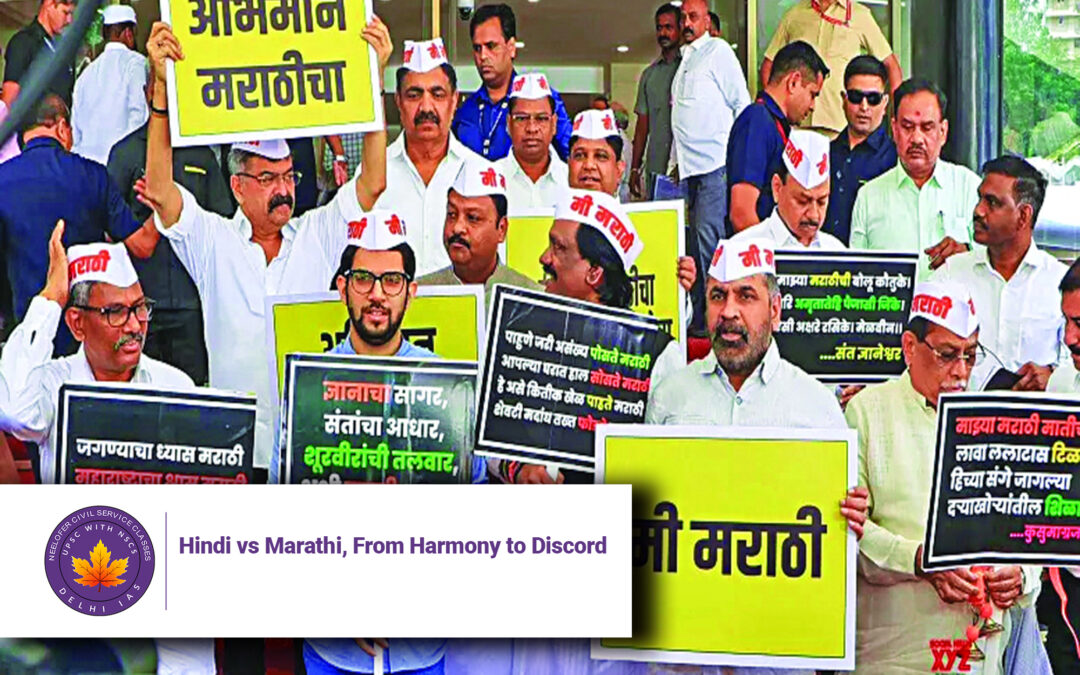
Hindi vs Marathi, From Harmony to Discord
Why in News?
As Maharashtra moves toward elections, a dangerous political narrative is intensifying — language is being weaponized as a tool to divide communities. Migrant workers from Hindi-speaking states are increasingly facing hostility and political targeting. This disturbing trend contradicts the inclusive and constitutional ethos of India. The issue has now moved from being a cultural concern to becoming a deeply politicized and volatile one.
Introduction
The politics of language in India is not new, but in Maharashtra, it has recently taken an aggressive turn. Language has long been manipulated by vested political interests to provoke regional sentiments and garner votes. The recent rise in linguistic hostility — particularly against Hindi-speaking migrants — underlines how divisive this issue has become.
In a state that once proudly symbolized unity in diversity, linguistic friction threatens its progressive image. With parties like Maharashtra Navnirman Sena (MNS) and the Uddhav Thackeray faction of Shiv Sena weaponizing language to stoke regional pride, tensions are growing. Migrant workers from Uttar Pradesh, Bihar, and other northern states are now becoming soft targets, facing verbal attacks, physical assaults, and employment discrimination.
Key Issues
-
Targeting Migrant Workers
Maharashtra’s industrial hubs like Mumbai and Pune have always attracted migrant labor, especially from Hindi-speaking states. These workers contribute significantly to Maharashtra’s economy. Yet, they are now being singled out as political scapegoats by parties hoping to inflame regional sentiments. Leaders of parties like MNS call themselves defenders of Marathi asmita (pride), portraying migrants as a cultural threat. -
Undermining National Unity
Political attacks on Hindi-speaking migrants damage not only social cohesion but also India’s federal character. India’s strength lies in its unity amidst diversity. The targeting of a language group questions this foundational idea. Promoting exclusionary linguistic pride directly contradicts India’s constitutional spirit. -
Loss of Employment and Dignity
Hindi-speaking migrant workers are increasingly facing discrimination in hiring and job retention. Companies are reportedly hesitant to hire people from northern states due to the political climate. This economic insecurity has created a sense of fear and alienation among lakhs of workers who once viewed Maharashtra as a land of opportunity. -
Dangerous Political Opportunism
By inflaming language-based pride, some political outfits seek to create vote banks ahead of elections. However, this short-term gain leads to long-term social instability. Using migrants as political tools for electoral gains may bring votes but destroys harmony. -
Neglecting Shared History and Culture

Maharashtra and Hindi-speaking states share deep cultural and linguistic bonds. Leaders like Lokmanya Tilak, Gopal Krishna Gokhale, and Kaka Kalelkar viewed Hindi as a unifying language and promoted its role as a link across India’s diverse communities. Ignoring this shared heritage undermines national integration.
Five Key Takeaways
-
Weaponization of Language Harms National Unity
Turning language into a political tool violates India’s ethos of unity in diversity. It pits communities against each other and feeds intolerance. -
Migrant Workers Bear the Brunt
Migrants from Hindi-speaking states are unjustly targeted. They contribute to Maharashtra’s economy but are now treated as outsiders. -
False Narratives Drive Electoral Politics
Claims of protecting Marathi pride often mask political opportunism. Fringe elements use the language card to stoke fear and win votes. -
Historical Harmony Ignored
Maharashtra and North India share deep cultural ties. Leaders from Maharashtra once championed Hindi as a bridge between regions. -
Need for Constitutional Vigilance
Judiciary, civil society, and media must challenge such narratives. Institutions must protect every citizen’s right to live and work freely anywhere in India.
Challenges and the Way Forward
India’s Constitution guarantees every citizen the right to move and work freely across the country. But growing linguistic nationalism is threatening these very rights.
Challenges:
-
Political parties continue to frame Hindi-speaking workers as “outsiders,” pushing them to the fringes.
-
Law enforcement often turns a blind eye to hate speech or physical violence.
-
Civil society responses remain muted, allowing hate to normalize.
-
Media platforms amplify divisive voices, giving them disproportionate attention.
-
Employment-based discrimination goes unreported and unaddressed, worsening migrant workers’ plight.
The Way Forward:
-
Firm Constitutional Enforcement: Law enforcement and judiciary must act decisively against those who promote or act on linguistic hate.
-
Political Responsibility: Parties must move beyond parochialism and adopt inclusive politics. Electoral gains cannot come at the cost of national unity.
-
Public Awareness Campaigns: Civil society, academics, and media must educate the public about the importance of cultural integration.
-
Workplace Protections: Employers should ensure non-discriminatory hiring and work conditions for migrant labor.
-
Promoting Linguistic Harmony: Hindi and Marathi both belong to the Indo-Aryan family and share common roots. Schools and cultural platforms must promote mutual respect and linguistic understanding.
Conclusion
Maharashtra stands at a crossroads. It must decide whether to embrace its legacy of inclusiveness or fall prey to narrow political agendas. Migrant workers have always contributed to the state’s development, and they deserve protection and respect.
Using language as a political weapon divides society and tarnishes India’s democratic values. India’s strength lies not in sameness, but in harmonious diversity. Upholding this ideal is essential for both Maharashtra and the nation.
As the state approaches elections, leaders must remember that real power lies in unity, not division. Maharashtra can once again lead by example — by embracing every Indian, regardless of language or origin.
Q&A Section
1. Why is the language issue becoming controversial in Maharashtra?
The language issue is being politicized by fringe parties like the Maharashtra Navnirman Sena and factions of Shiv Sena to target Hindi-speaking migrants. This tactic is used to stoke regional sentiments and gain votes by portraying migrants as a threat to Marathi culture.
2. What is the impact on Hindi-speaking migrant workers?
These workers are facing discrimination, job insecurity, and even violence. Though they contribute significantly to Maharashtra’s economy, they are being treated as outsiders and denied dignity and equal opportunity.
3. Has Maharashtra always had such tensions between Hindi and Marathi speakers?
No. Historically, Maharashtra and Hindi-speaking regions have shared strong cultural and linguistic ties. Leaders like Lokmanya Tilak and Kaka Kalelkar promoted Hindi as a bridge language to unite India. The current hostility is a recent political development.
4. How does this issue affect India’s constitutional values?
India’s Constitution guarantees every citizen the right to move and work freely across the country. Discrimination based on language violates these rights and undermines the federal and inclusive spirit of India.
5. What is the solution to this growing divide?
The solution lies in strict enforcement of constitutional rights, responsible political leadership, awareness campaigns promoting harmony, and public rejection of divisive narratives. Institutions and citizens alike must uphold the value of unity in diversity.

