

Good Governance Should Not Be So Slippery
Why in News?
The recent stampede at Bihar’s Buxar railway station on February 15, resulting in the deaths of at least 14 people, has once again highlighted the inefficiencies in India’s governance mechanisms. Despite the tragic incident, the focus appears to be more on shifting blame than addressing underlying systemic issues.
Introduction
India has witnessed multiple railway disasters in the past, often followed by routine blame games and committee inquiries. The underlying problem of governance—accountability, responsibility, and corrective measures—remains largely unaddressed. The latest tragedy and its aftermath exemplify the lack of genuine governance reform and the tendency to deflect blame rather than confront and fix root causes.
Key Features
-
Buxar Railway Tragedy
An inquiry committee was set up to investigate the stampede, but no connection between recent railway staff transfers and the incident was officially established. The ministry stated it was taking the matter seriously, yet quietly.
This incident reflects a broader pattern where fixing accountability takes a backseat to narrative control.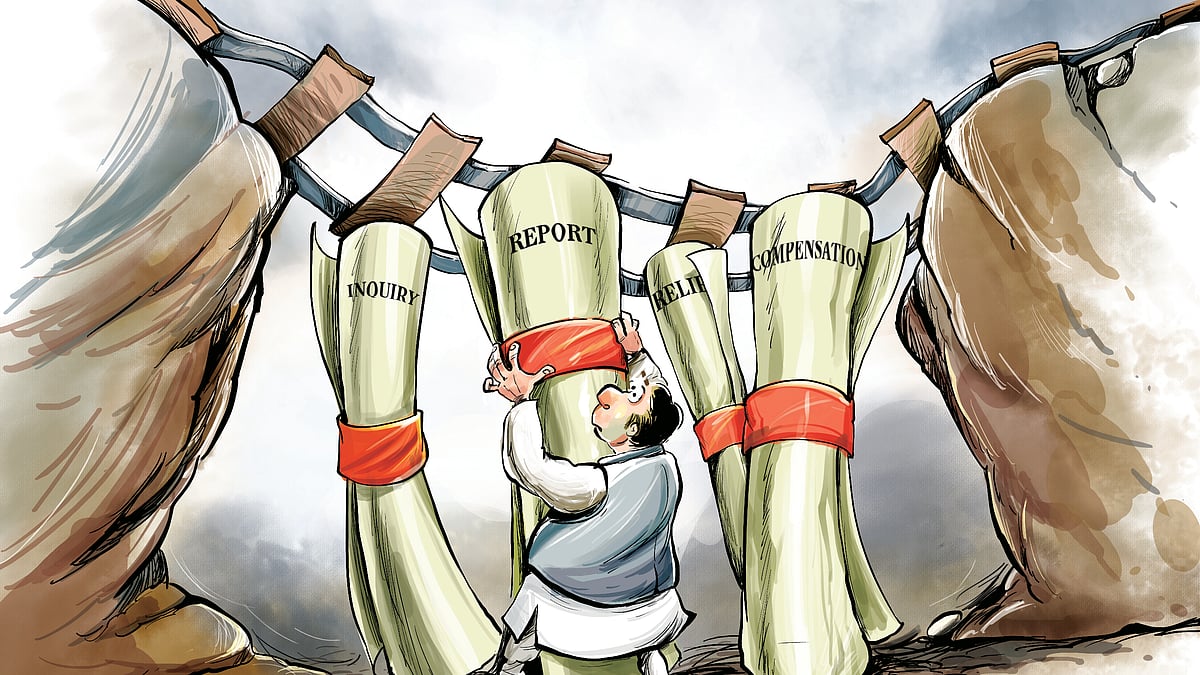
-
Historical Precedents
Past railway ministers such as Lal Bahadur Shastri and Nitish Kumar resigned following major railway accidents. Shastri resigned after a rail disaster in 1956 but returned to higher office. Nitish Kumar resigned after the Gaisal train collision in 1999.
However, such gestures of responsibility are becoming rare in modern times. -
Railway Safety Data
Minister Ashwini Vaishnaw, in response to parliamentary queries, cited data showing that over 350 people died in more than 500 accidents over the past five years.
This is not a flattering statistic for India’s railway safety record. -
Colonial Hangover in Governance
The reluctance to take responsibility and fix systemic problems is described as a colonial hangover. India’s governance structure continues to prioritize narrative control over accountability, leading to repeated failures in various sectors, including national security.
Specific Impacts or Effects
-
Public Trust Deficit
The public often perceives the government’s handling of such incidents as lacking sincerity and transparency, further eroding trust in institutions. -
Loss of Innocent Lives
Many railway accidents, including stampedes, result in preventable deaths. The failure to address root causes—whether incompetence, negligence, or corruption—leads to recurring tragedies. -
Lack of Corrective Action
While compensation and ex-gratia payments are often announced promptly, the lack of genuine investigations and corrective measures means these incidents are likely to be repeated.
Challenges and the Way Forward
Challenges
- Resistance to admitting failures and taking responsibility within government structures.
- Continued reliance on blame games and controlling the narrative rather than making structural changes.
- Absence of systemic governance reforms to enhance transparency and accountability.
Steps Forward
- The government must institutionalize responsibility and accountability at all levels.
- Independent, credible inquiries into such incidents must be ensured, with findings made public.
- Governance systems need to be reformed to prioritize people’s safety and wellbeing over damage control.
Conclusion
India needs to move beyond cosmetic governance and focus on deep structural reforms. Good governance demands transparency, accountability, and a readiness to accept responsibility. Without these, incidents like the Buxar railway stampede will continue to claim innocent lives. Only by embracing sincere reform can India fulfill its democratic ideals and truly serve its citizens.
Questions and Answers
-
What recent event highlighted issues in India’s governance?
The stampede at Bihar’s Buxar railway station on February 15, resulting in 14 deaths. -
What was the ministry’s response to the incident?
An inquiry committee was formed, and the ministry stated it was taking the matter seriously but quietly. -
Who were some past railway ministers who resigned after major accidents?
Lal Bahadur Shastri and Nitish Kumar. -
What does the author describe as a colonial hangover?
The tendency to suppress inquiry findings and avoid responsibility. -
How many railway accidents occurred in the past five years, according to official data?
Over 500 accidents with more than 350 deaths. -
What is often prioritized over fixing systemic issues in governance?
Narrative control and deflecting blame. -
What happens after such tragedies in terms of government response?
Ex-gratia payments are announced, but there is often no sincere effort to fix root causes. -
What is one major challenge in India’s governance structure?
A lack of accountability and systemic reform. -
What does the author suggest to improve governance?
Institutionalizing responsibility, ensuring transparent inquiries, and implementing genuine reforms. -
What is at stake if these governance issues are not addressed?
Repeated tragedies, loss of public trust, and failure to uphold democratic principles.

