
Global Crude Oil Prices Under Pressure: Weaker Demand Meets Higher Supplies
Why in News?
Brent crude spot prices have recently softened due to geopolitical uncertainties and decisions by major oil-producing countries to increase output. These developments, coupled with concerns over global demand, are significantly influencing the global oil market. 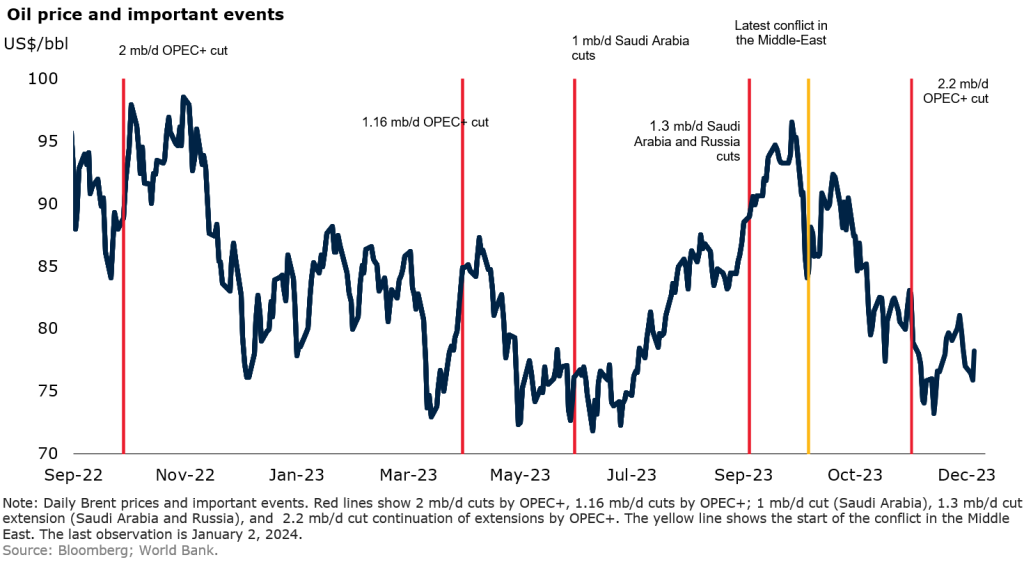
Introduction
Brent crude spot prices fell to $69.7 per barrel last week, reacting to escalating trade tensions sparked by US President Donald Trump’s tariff threats and the Organization of the Petroleum Exporting Countries (OPEC) along with its allies, who decided to increase oil production starting April. The situation raises critical questions about the future trajectory of oil prices, which have already been trending lower.
Key Features
-
Recent Price Trends
Global oil prices have been on a downward trajectory since the second half of 2024. After averaging $77 per barrel, prices rallied to $79.27 in January but subsequently fell to $75.44 in February.
Trump’s tariff threats further worsened market sentiments, weighing heavily on global crude prices. -
OPEC’s Role
OPEC and its allies, responding to US pressure, agreed to a “gradual and flexible return” of 2.2 million barrels per day (b/d) of oil production over 18 months.
This move resulted in a 12% drop in oil prices from their January highs. -
Geopolitical Considerations
Saudi Arabia, under US influence, convinced OPEC members to step up output despite low prices.
OPEC had previously delayed ending production cuts, which had helped stabilize prices by reducing supply since November 2022. -
Non-OPEC Supply Increases
Rising oil production in the US, Canada, Guyana, and Brazil has flooded the market.
Trump’s administration, by easing regulations, encouraged US energy companies to ramp up drilling and production.
Specific Impacts or Effects
-
Impact on Global Supply and Demand
OPEC’s decision to increase output by 2.2 million b/d adds 2% to global oil supplies, exacerbating an already weak demand scenario.
The increase in supply is likely to keep prices under pressure.
Additionally, US policies favoring increased domestic production further contribute to oversupply concerns. -
Economic Implications
For oil-importing countries like India, weaker crude prices could be beneficial, reducing energy import bills.
However, the incentive for US producers to continue drilling may be undermined if prices remain too low to be profitable.
Challenges and the Way Forward
Challenges
- Weaker global demand due to trade tensions and economic uncertainties.
- Oversupply concerns driven by both OPEC and non-OPEC countries increasing output.
- Potential geopolitical risks in West Asia, though currently assumed to be contained.
Steps Forward
- Monitor geopolitical tensions, especially in West Asia.
- Ensure a balance between supply and demand to avoid price volatility.
- Oil-importing countries should leverage low prices for strategic energy planning.
Conclusion
The outlook for Brent crude spot prices remains weak in the short to medium term. According to the US Energy Information Administration (EIA), Brent prices are expected to average $77 per barrel in Q1 this year, drop to $72 in Q4, and further decline to an average of $74.5 for the year. Prices may reach $66.5 per barrel by 2026. Despite geopolitical risks, the overall demand-supply imbalance suggests a continued downward trend in prices, benefiting energy-importing economies.
Questions and Answers
-
What is the current Brent crude spot price?
$69.7 per barrel. -
Why have oil prices dropped recently?
Due to US tariff threats and increased production by OPEC and its allies. -
What decision did OPEC make regarding oil production?
To gradually increase production by 2.2 million barrels per day over 18 months. -
How much did oil prices fall due to OPEC’s decision?
Prices fell by 12% from January highs. -
What role did Saudi Arabia play in OPEC’s decision?
Saudi Arabia, under US pressure, persuaded OPEC to increase output. -
How is US oil production contributing to the situation?
US policies encouraged domestic production, increasing global supply. -
What is the forecast for Brent crude prices by the end of this year?
Prices are expected to drift down to $72 per barrel in Q4. -
What is the long-term forecast for Brent crude prices?
Prices may decline to $66.5 per barrel by 2026. -
What is the potential source of upward pressure on prices?
Geopolitical tensions in West Asia. -
How will lower oil prices impact India?
It is good news for India as it depends on imports for its energy needs.

