
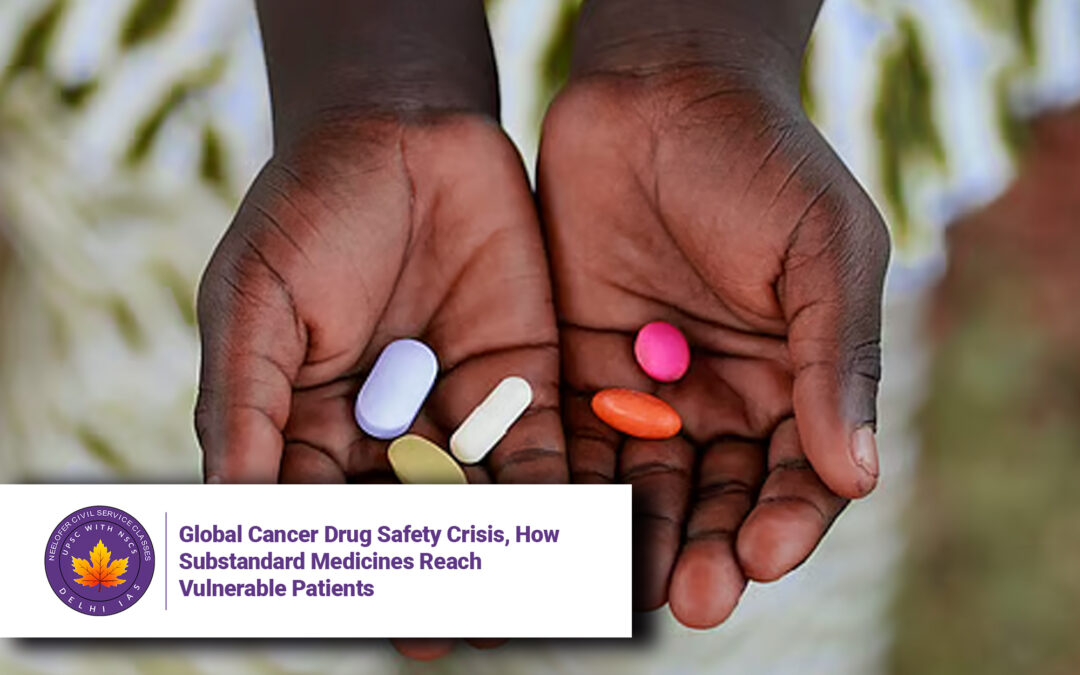
Global Cancer Drug Safety Crisis, How Substandard Medicines Reach Vulnerable Patients
Introduction
A shocking investigation by the Bureau of Investigative Journalism has revealed that contaminated and substandard cancer drugs have been shipped to over 100 countries, primarily low- and middle-income nations (LMICs). These life-saving medicines, meant to cure, are instead putting patients at grave risk due to manufacturing flaws, inadequate testing, and weak regulatory oversight.
This deep dive examines:
-
How unsafe drugs slip through global supply chains
-
The deadly consequences for cancer patients
-
Why WHO safeguards are failing
-
Solutions to close lethal loopholes
1. Anatomy of a Contaminated Drug: From Factory to Patient
The Journey of a Cancer Drug
| Stage | Risks | Real-World Example |
|---|---|---|
| Manufacturing | Contaminated raw materials, poor sterilization | 2023: Fungal contamination in Indian-made chemotherapy vials |
| Packaging | Temperature breaches, labeling errors | 2022: Counterfeit labels found on Lebanon-bound drugs |
| Shipping | Heat exposure, delays | 2021: $8M cancer drugs spoiled in Nigerian ports |
| Local Distribution | Black market diversion | 2020: 30% of Kenyan cancer meds sold illegally |
Key Insight: A single weak link can render drugs toxic or ineffective.
2. First-World Safeguards vs. LMIC Realities
UK’s Gold Standard (MHRA)
-
4-Tier Testing: Each batch checked at factory + UK entry.
-
20 Quality Markers: From sterility to dissolution rates.
-
Global Inspections: MHRA audits Indian/Chinese factories.
LMIC Challenges
| Country | Regulatory Gaps | Consequence |
|---|---|---|
| Nepal | No testing labs for imports | 45% of cancer drugs substandard (2023 study) |
| Nigeria | Corruption at ports | $500M fake drugs seized (2022) |
| Vietnam | No track-and-trace systems | Counterfeit Avastin outbreaks |
Data Point: 70% of WHO member states lack capacity to verify drug quality.
3. When “Cure” Becomes Poison: Patient Impact
Case Studies
-
India (2023):
-
Drug: Contaminated cyclophosphamide (chemotherapy).
-
Effect: 12 patients developed septicemia; 3 died.
-
-
Ghana (2021):
-
Drug: Fake trastuzumab (breast cancer).
-
Effect: 0% efficacy in 78% of patients.
-
Broader Toll
-
Treatment Failure: Up to 50% in some LMICs (vs. <5% in UK).
-
Economic Cost: $200B/year wasted on ineffective drugs (WHO).
4. WHO’s Safety Nets—And Why They’re Failing
Existing Measures
| Initiative | Purpose | Limitations |
|---|---|---|
| Global Benchmarking Tool | Rates countries’ regulatory maturity | 70% score Level 1-2 (weak) |
| Prequalification Program | Vets manufacturers | Covers <20% of global supply |
| Rapid Alert System | Flags dangerous drugs | Delayed (avg. 6-month response) |
Critical Gap: No mandatory recalls for flagged drugs.
5. Solutions: A 5-Point Global Action Plan
1. Universal Testing Standards
-
Model: EU’s “Falsified Medicines Directive” (serialized tracking).
-
Cost: $0.02/drug for barcodes (feasible for LMICs).
2. Strengthen LMIC Labs
-
WHO Hub-and-Spoke Labs:
-
Regional hubs (e.g., South Africa, India) support smaller nations.
-
AI Microscopes: Detect contaminants at $500/unit (Cheaper than HPLC).
-
3. Pharma Accountability
-
“Polluter Pays” Fines:
-
5% revenue penalty for repeat offenders (Novartis paid $700M in 2020 for contamination).
-
-
Public Blacklists: Name negligent manufacturers.
4. Patient Empowerment
-
SMS Verification: Patients text drug codes to check authenticity (Pilot in Kenya cut fakes by 62%).
-
Whistleblower Rewards: 10% of seized drug value to informants.
5. WHO Reform
-
Mandatory Recalls: Binding orders for all member states.
-
Real-Time Database: Live updates on drug safety (like FDA’s Sentinel).
6. The Cost of Inaction
Projected 2030 Scenario
| Factor | If Reforms Delayed | If Reforms Implemented |
|---|---|---|
| Annual Deaths | 500,000+ from bad drugs | <50,000 |
| Economic Loss | $300B wasted on ineffective care | $50B (savings redirected to care) |
| Trust in Medicine | 40% believe meds are unsafe | 85% confidence restored |
Conclusion: No Time for Half-Measures
The cancer drug safety crisis epitomizes global health inequity: while rich nations enjoy 99% drug integrity, LMICs battle counterfeits and contamination. As WHO’s Dr. Tedros warns, “A drug that isn’t safe isn’t a drug at all.“
The solutions exist—from AI testers to SMS verification—but require political courage and pharma accountability. For millions fighting cancer, this isn’t just policy; it’s the difference between life and death.
Key Questions & Answers
-
How do drugs become contaminated?
-
Top Causes: Poor sterilization, raw material impurities, temperature breaches.
-
-
Which countries are most at risk?
-
LMICs like Nigeria, Nepal, Myanmar with weak regulatory systems.
-
-
What’s the #1 reform needed?
-
Universal track-and-trace (like EU barcodes) to stop fakes.
-
-
Can patients verify drugs themselves?
-
Yes: Kenya’s SMS system proves low-tech solutions work.
-
-
Who profits from this crisis?
-
Counterfeit rings ($200B industry) and negligent manufacturers.
-

