
Gene Modified Pig Liver Transplantation, A Step Closer to Solving Organ Shortage
Why in News?
A groundbreaking medical experiment in China demonstrated that a gene-modified pig liver could function in a human body diagnosed with brain death. Conducted by researchers at the Fourth Military Medical University, Xi’an, the study evaluated the transplanted organ’s performance over a 10-day period. The findings, published in Nature, offer renewed hope for addressing the global shortage of donor livers. 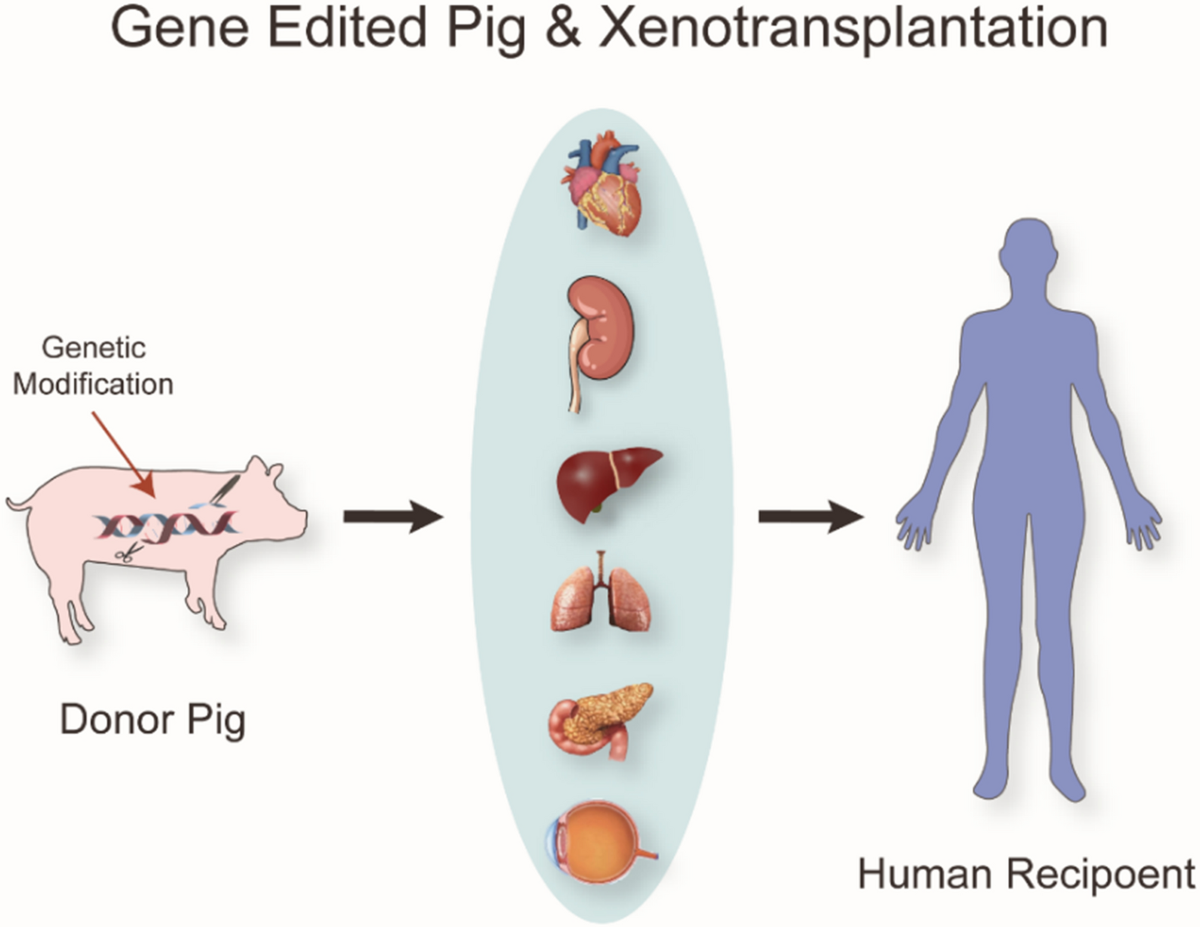
Introduction
Liver transplantation remains the most effective treatment for end-stage liver diseases. However, due to a chronic shortage of human donors, scientists are exploring xenotransplantation—transplanting organs from animals into humans—as a possible solution. This latest experiment, using a gene-edited liver from a miniature Bama pig, shows that gene-modified pig organs can temporarily function in human bodies, potentially serving as “bridge therapy” for patients awaiting human liver transplants.
Key Issues
-
Groundbreaking Xenotransplantation Trial
Researchers transplanted a gene-edited pig liver into a human patient with brain death to monitor functionality over 10 days under hospital ethics guidelines. -
Genetic Engineering for Compatibility
Six genes were edited in the pig liver—removing those responsible for rejection and inserting human-compatible ones, improving chances of success. -
Successful Basic Functioning
The pig liver produced bile and porcine albumin, maintained blood flow, and showed no signs of rejection, all while the recipient was administered immunosuppressants. -
Bridge Therapy Potential
Scientists believe such transplants can serve as short-term solutions for patients waiting for a human liver, buying crucial time in emergency cases. -
Need for Long-Term Studies
While early results are promising, the study only measured basic liver functions over a short duration. Experts caution that further research is needed to evaluate the organ’s performance over longer periods and its full range of capabilities.
Five Key Observations
-
Proof of Concept: The liver remained functional for 10 days without signs of rejection.
-
Bile and Albumin Production: Key liver products were successfully secreted by the transplanted pig liver.
-
Limited Duration: Only short-term data was collected; long-term viability remains uncertain.
-
Genetic Modifications Crucial: Edits to reduce rejection and improve compatibility were central to the success.
-
Growing Role of Pigs in Medicine: Due to physiological similarity, pigs are emerging as strong candidates for future organ sources.
Challenges and the Way Forward
Although gene-editing has made xenotransplantation more viable, the complexity of liver function means that challenges remain. Only basic liver operations were measured, and long-term survival and performance in living recipients remain unknown. Immunological compatibility, ethical concerns, and the risk of cross-species disease transmission must also be addressed. Nonetheless, the successful short-term experiment paves the way for deeper trials and potential life-saving applications.
Conclusion
The success of this gene-modified pig liver transplant marks a promising advancement in the field of regenerative medicine and organ transplantation. While it is not yet a permanent solution, the potential to use animal organs as temporary support systems could revolutionize emergency care for liver failure patients. Continued research and ethical oversight will be key to shaping the future of xenotransplantation.
Q&A Section
Q1. What was the objective of the pig liver transplant study in China?
To evaluate whether a gene-modified pig liver could function in a human body and serve as a bridge therapy for liver failure patients.
Q2. What genetic modifications were made to the pig liver?
Six genes were edited—removing rejection-triggering genes and inserting human-compatible ones to improve graft success.
Q3. How did the pig liver perform during the trial?
Over 10 days, it produced bile and albumin, maintained stable blood flow, and showed no rejection signs under immunosuppressants.
Q4. Why are pigs considered suitable for organ transplantation?
Pigs are physiologically compatible with humans and can be genetically modified, making them ideal candidates for organ donation.
Q5. What are the limitations of this experiment?
The study only lasted 10 days and measured basic liver functions. Long-term viability and full liver functionality in humans remain unproven.

