

From Kargil to PoK Strikes, India’s Strategic Evolution from Operation Vijay to Operation Sindoor
Why in News?
Following recent security challenges and terrorist activities originating from across the border, India’s military and strategic community has drawn comparisons between Operation Vijay (1999) and the more recent Operation Sindoor (2024). Both operations reflect India’s evolving approach in controlling escalation while achieving military objectives. 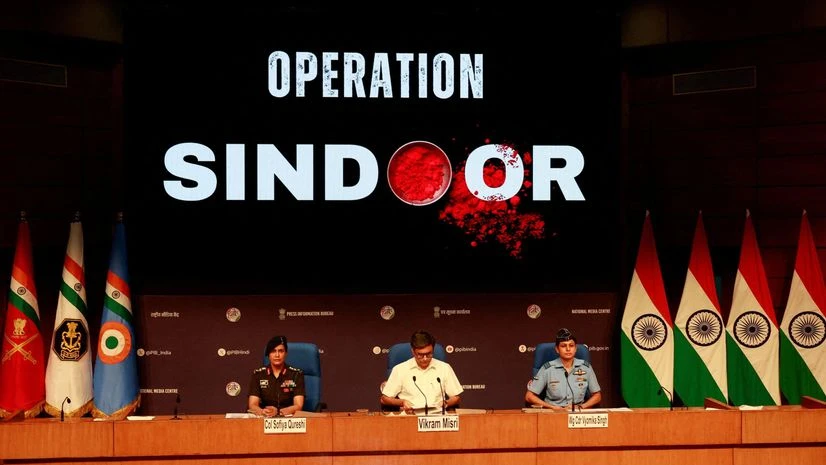)
Introduction
Military conflicts rarely follow the same script. The operational environment, geopolitical equations, and public expectations keep changing. Yet, India’s approach in both Operation Vijay and Operation Sindoor shows continuity in its controlled, calculated, and objective-driven response to threats—particularly from Pakistan.
Key Issues and Background
1. Operation Vijay (1999): A Landmark Response
-
Launched during the Kargil War, it was a conventional response to Pakistani intrusions in Indian territory.
-
India, despite provocations, chose not to cross the LoC, maintaining its strategic restraint and gaining global support.
-
It marked a shift from reactionary defense to assertive offense, laying the foundation for future strategic responses.
2. Operation Sindoor (2024): Modern-Day Grey Zone Warfare
-
Conducted in PoK to strike back at terror camps, it used non-contact warfare, leveraging modern tech, precision weapons, and cyber capabilities.
-
India did not escalate to full-scale war, yet demonstrated strategic depth and retaliation.
-
The response showed India’s adaptation to grey-zone warfare—conflicts that operate below traditional war thresholds.
The Core of the Concern
India faces persistent cross-border threats from terror groups operating with state backing. Traditional warfare isn’t always feasible or desirable, especially with nuclear-armed adversaries. The shift to non-contact, hybrid operations is designed to deter aggression while avoiding large-scale war.
Key Observations
-
Both operations reflect India’s restraint and resolve, balancing deterrence and escalation.
-
India uses a mix of military power, diplomacy, and psychological operations.
-
Grey-zone conflicts involve limited military action, cyber attacks, covert strikes, and influence operations, aimed at imposing costs without war.
-
General Malik emphasized the role of non-kinetic tools—economic coercion, cyber defense, and information warfare in modern conflicts.
Challenges and the Way Forward
Challenges:
-
Managing public expectations in the age of instant media and social platforms.
-
Avoiding strategic miscalculations in a nuclear environment.
-
Ensuring international diplomatic support while taking unilateral military actions.
Steps Forward:
-
Enhance capabilities in cyber, space, and unmanned warfare.
-
Institutionalize grey-zone doctrine in Indian military strategy.
-
Strengthen joint operational planning across armed forces and intelligence.
-
Build resilience against information warfare and economic coercion.
Conclusion
India’s military doctrine has undergone a strategic evolution. From the measured yet forceful Operation Vijay to the surgically precise Operation Sindoor, India has mastered the art of controlled escalation. The focus now lies in leveraging multi-domain warfare to deter threats while maintaining peace and strategic superiority.
Q&A Section
-
What was Operation Vijay?
India’s 1999 military operation to flush out Pakistani intruders from the Kargil sector. -
What is Operation Sindoor?
A 2024 operation targeting terror camps in Pakistan-occupied Kashmir using non-contact warfare. -
What is grey-zone warfare?
Conflicts that operate below the threshold of conventional war using cyber, psychological, and economic tools. -
How does India manage escalation?
By applying controlled and proportionate force, maintaining international legitimacy, and avoiding full-scale war. -
What is the biggest strategic shift in India’s military approach?
The move from traditional kinetic war to hybrid, grey-zone strategies that integrate technology, deterrence, and diplomatic coordination.

