
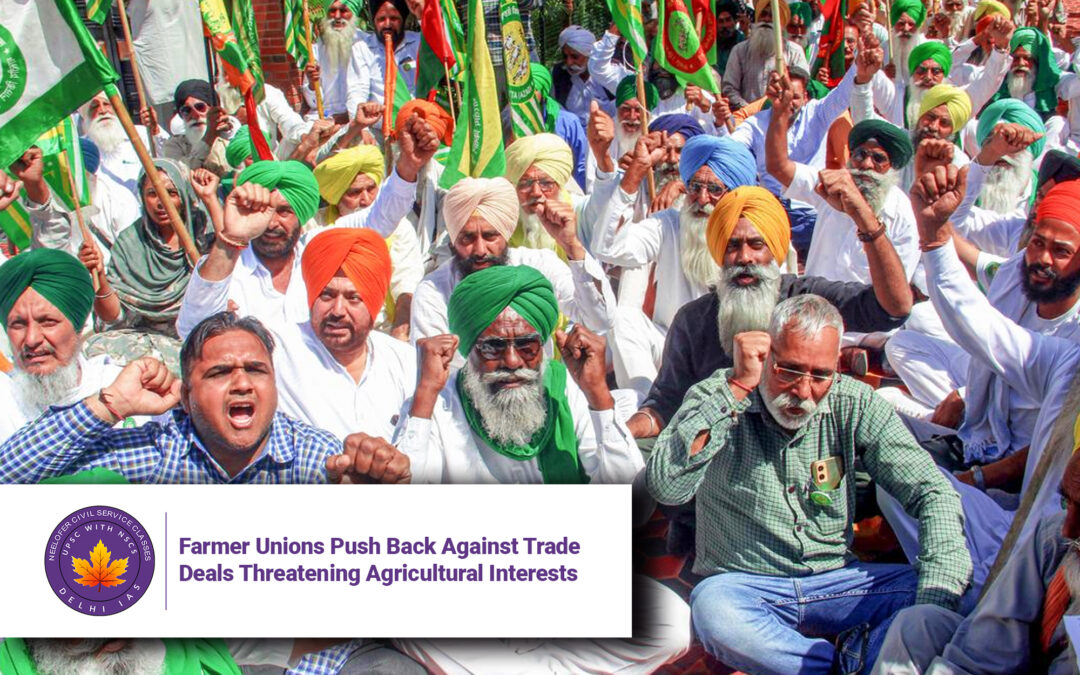
Farmer Unions Push Back Against Trade Deals Threatening Agricultural Interests
Why in News?
Farmer unions across India are expressing deep concern over the ongoing trade agreement negotiations by the central government, particularly with countries such as the UK and the EU. They demand consultation before any trade pact is finalized, citing fears that such agreements could adversely affect Indian agriculture, especially the livelihoods of small and marginal farmers. 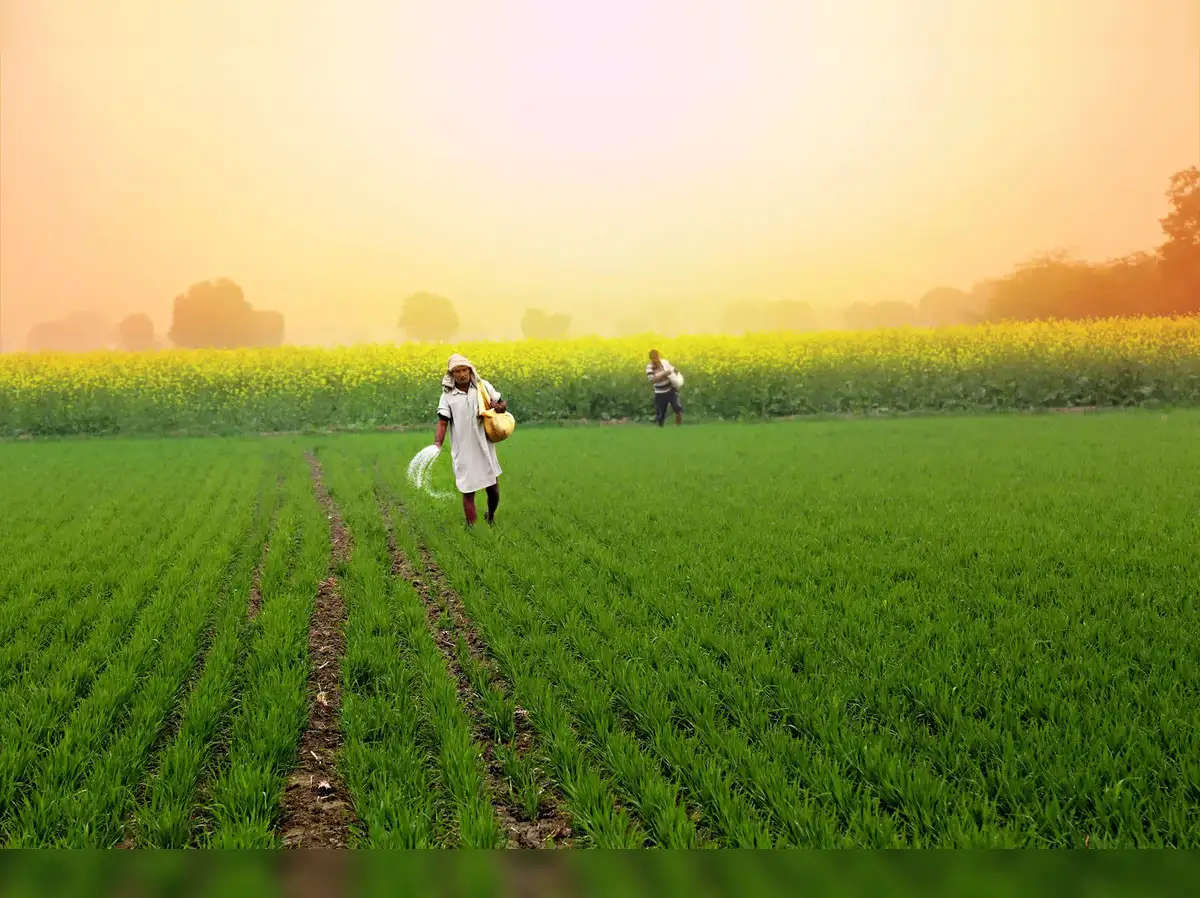
Introduction
The National Democratic Alliance (NDA) government’s push for new trade deals, including bilateral agreements with the UK and EU and multilateral frameworks like RCEP (Regional Comprehensive Economic Partnership), is being met with resistance from farmer unions. These groups are wary of opening up India’s agriculture sector to cheaper imports, which they fear could destabilize prices, threaten food security, and harm local producers.
Key Concerns of Farmer Unions
-
Cheap Imports Threaten Local Producers:
Past trade deals with Sri Lanka and ASEAN have led to surges in cheap agricultural imports such as tea, coffee, pepper, and rubber, negatively impacting local farmers. Unions now fear a similar trend with new agreements. -
Market Access for Foreign Crops:
Farmers are especially concerned about US soybean access. With over 6 million Indian farmers cultivating soybeans, allowing large-scale imports from the US could lead to market saturation and price crashes. -
Pressure on Dairy and Sensitive Items:
India’s dairy sector, largely run by small farmers and women, could suffer if low-tariff access is granted to foreign dairy producers. Currently, India’s import duties protect the domestic market from subsidized milk and dairy from abroad. -
Non-Tariff Barriers and Standards:
Countries like the US often demand reductions not only in tariffs but also in non-tariff barriers, such as health and safety standards. These could impact domestic production practices and compliance burdens. -
Lack of Consultation:
The unions argue that negotiations are happening without proper consultation or transparency. They seek involvement in the talks to ensure their interests are protected.
Government’s Position and Challenges
India has taken a defensive stance in agricultural trade discussions, often refraining from opening up its market completely. While India has signed several FTAs, agriculture has generally remained a sensitive sector. Experts suggest that consulting with stakeholders like farmer unions can result in more acceptable and inclusive deals.
India has also been cautious in the face of demands from developed nations for greater access to agriculture, dairy, and poultry markets, as these sectors are not as subsidized or industrialized as in the West.
The Broader Economic Context
-
Agriculture still sustains over 40% of India’s population.
-
Indian agri-exports have grown, but remain vulnerable due to pricing and quality challenges.
-
Growth in allied sectors like horticulture, fisheries, and food processing is promising but not yet robust enough to absorb shocks caused by cheap imports.
-
There is pressure on India to modernize and integrate with global markets, but not at the cost of smallholder livelihoods.
Conclusion
The current debate over agricultural trade red lines reflects a fundamental tension between global trade integration and domestic livelihood security. As India pursues new FTAs, balancing farmer interests with strategic economic goals is crucial. Broad-based consultations, transparency in negotiations, and careful phasing of import relaxations may help mitigate risks and build a more resilient agri-economy.
5 Questions & Answers
Q1: Why are Indian farmer unions opposing the current trade negotiations?
A: They fear that increased imports of cheap agricultural goods will hurt domestic producers and destabilize farm incomes.
Q2: Which agricultural products are most at risk from new FTAs?
A: Soybean, dairy products, edible oils, and pulses are seen as particularly vulnerable due to potential import liberalization.
Q3: What has been India’s traditional stance on agricultural trade in FTAs?
A: India has largely taken a defensive approach, protecting agriculture as a sensitive sector in trade negotiations.
Q4: What is the unions’ main demand before any deal is signed?
A: They seek formal consultation and inclusion in discussions to avoid post-deal outcomes that hurt farmers.
Q5: How does agriculture’s structure in India differ from countries like the US or EU?
A: India’s sector is dominated by small and marginal farmers, making it more vulnerable to competition from large-scale, subsidized foreign producers.
